Poland · The Polish cause
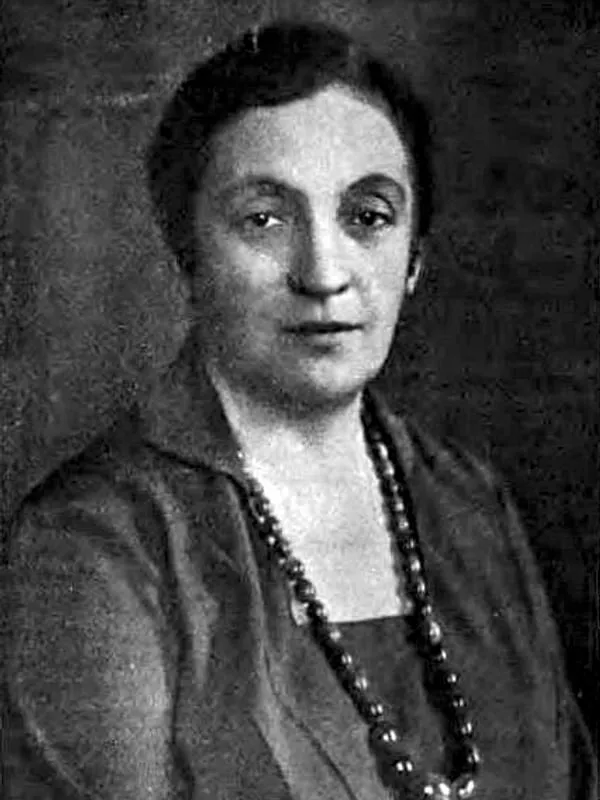
Aleksandra Szczerbińska
Commander of the women's intelligence and courier unit of the First Brigade of the Legions (1914–1915), activist of the Polish Military Organisation (1915–1918)
- Born:
- 12 December 1882, Suwałki (Kingdom of Poland)
- Died:
- 31 March 1963, London
- Author:
- Łukasz Skowroń
- Photo:
- autor nieznany, domena publiczna, Wikimedia Commons

Aleksandra Szczerbińska, “Ola” in the underground, belonged to a generation of women who did the same work in the independence movement as men: they carried weapons and illegal literature, gathered intelligence and sat in prisons. In the years of the 1905 revolution she was a PPS fighter, before the war she was active in the Riflemen’s movement, and in 1914 she took charge of the women’s intelligence and courier unit of the First Brigade of the Legions. Her couriers carried reports, orders and weapons across the front line. For her work in the Polish Military Organisation the Germans imprisoned her in 1915–1916. From 1906 she was bound up with Józef Piłsudski, with whom she had a daughter in 1918 and whom she married in 1921. As Aleksandra Piłsudska she later became known for her social work.
Before the war
She was born on 12 December 1882 in Suwałki, into a family of modest noble means. Her parents died when she was a child, and she was brought up by her grandmother and aunt. After her school-leaving examination at the Suwałki gymnasium she moved to Warsaw, where she completed commercial courses and attended lectures of the Flying University, supporting herself by office work in a factory and by private lessons. In 1904 she joined the Polish Socialist Party and took the pseudonym “Ola”. On 13 November 1904 she took part in the demonstration in Grzybowski Square, during which PPS fighters opened fire on Russian gendarmes in Warsaw for the first time since the January Uprising.
In the PPS Combat Organisation she dealt with distributing literature, smuggling weapons, ammunition and explosives across the partition borders, and with weapons depots in Warsaw. In May 1906 she met Piłsudski. In 1907 she was arrested and held in Pawiak, but was released after several months for lack of evidence. She took part in preparing the Bezdany raid in September 1908, among other things reconnoitring the ground and moving the seized money to Galicia. She then settled in Lviv, where she worked in an office, co-founded a society to help political prisoners, translated military manuals for the Union of Active Struggle, and in the autumn of 1911 joined the women’s section of the Lviv Riflemen’s Association.
Commander of the couriers
On 1 August 1914 she reported to the Riflemen’s command in Lviv and helped to train volunteers. On Piłsudski’s orders she went to Kraków on 4 August, and from there to Kielce, which the Riflemen had taken on 12 August. From August she served in the intelligence section of the 1st Regiment of the Legions, and from December in the First Brigade. After the Legions withdrew from Kielce on 30 October 1914 she took over, from Kazimierz Sawicki, command of the women’s intelligence and courier unit. According to Marta Sikorska-Kowalska, 46 women served in it, many of them with experience from the Riflemen’s Association.
The couriers crossed the front into the Kingdom of Poland, gathered information on Russian troop movements, carried out propaganda and transported weapons and reports of the Warsaw Polish Military Organisation, the underground subordinate to Piłsudski. Szczerbińska coordinated the work of couriers and agents, assigned tasks, organised intelligence missions and kept the unit’s funds. In the spring of 1915, on 25 March according to the Józef Piłsudski Museum in Sulejówek, in April according to other accounts, the Austrian military authorities disbanded the unit. Szczerbińska wanted to join the sappers, but Piłsudski refused, and her couriers went on carrying the Commandant’s orders.
In a German prison
When in the summer of 1915 the Germans took Warsaw, Szczerbińska returned to underground work in the city. She sat on the board of the Warsaw Women’s League of War Readiness (PL) and worked in the POW, which recruited volunteers for the Legions. At the end of 1915, in November according to the Sulejówek Museum, in December according to the Polish Wikipedia, the German police arrested her during a recruitment drive at the PPS club “Kuchnia Społem”. She was charged with agitating for recruitment into an illegal organisation “known by the name POW”.
From Pawiak she was taken to the camp at Szczypiorno (PL) near Kalisz, where conditions were far worse than in the Warsaw prison, and then to Lauban in Silesia. She was released in the autumn of 1916, according to the Sulejówek Museum two days before the proclamation of the Act of 5 November, in which the Central Powers announced the creation of a Kingdom of Poland.
1917–1918
Back in Warsaw she resumed her work in the Women’s League, inspecting its branches in the provinces. In December 1916 Piłsudski came to Warsaw and joined the Provisional Council of State, and from then on they were closely bound together. Piłsudski was still married to Maria née Koplewska, who refused to agree to a divorce. According to the Polish Wikipedia, in 1917–1918 Szczerbińska worked for the POW as a courier of explosives and as an intelligence agent. Other accounts stress that after Piłsudski’s arrest in July 1917, as the person closest to him, she was under constant surveillance by the German police and had to curtail her activity.
While pregnant she worked in the office of a vegetable-drying plant in Praga. On 7 February 1918 she gave birth to a daughter, Wanda. Piłsudski learned of it from a letter that reached Magdeburg several weeks later, and saw his daughter for the first time after his return to Warsaw on 10 November 1918.
After the war
In February 1920 a second daughter, Jadwiga, was born. After Maria Piłsudska’s death, Aleksandra and Józef married on 25 October 1921 in the chapel of the Palace on the Isle in Łazienki. In 1922 she received the Silver Cross of the Virtuti Militari “for courage and fortitude shown in the work for independence”, and from 1926 she sat on the chapter of the order. She lived with her family in Sulejówek, carried out extensive social work, among others in the “Military Family” association, and co-edited memoirs of women from the struggle for independence. In 1939 she and her daughters escaped through Wilno, Kaunas, Riga and Sweden to Great Britain. In exile she was active in the Józef Piłsudski Institute in London. She died in London on 31 March 1963, and in 1992 her ashes were laid in Warsaw’s Powązki Cemetery.
Assessment
For a long time Aleksandra Piłsudska was remembered mainly as the Marshal’s wife. Historians of women’s part in the struggle for independence, such as Marta Sikorska-Kowalska, nevertheless show her own path: from PPS fighter through commander of the Legions’ women’s intelligence to prisoner of German camps. Piłsudski thought highly of the courage and skills of her couriers. The Sejm of the Republic of Poland recognised her merits by declaring 2023 the Year of Aleksandra Piłsudska.
Sources
Spotted a mistake?Report an error
Often appears with
People who appear in the same events.