Key event
Russians capture Trebizond
- Category:
- Military operations
- Front:
- Middle East
- Date:
- 17 April 1916
- Author:
- Łukasz Skowroń
- Battle:
- Trebizond offensive
- Tags:
- Russia, Ottoman Empire, Caucasus, Black Sea
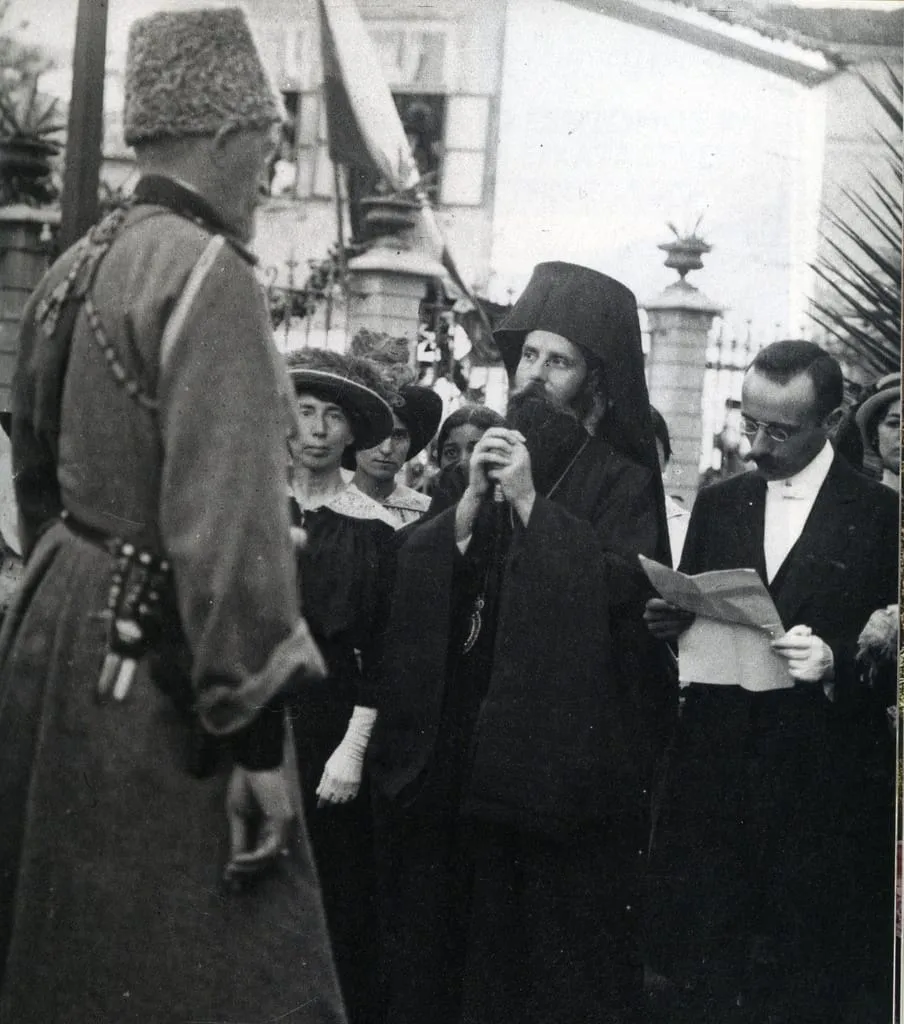
In mid-April 1916 the Russian Caucasus Army captured Trebizond, today’s Trabzon, the largest port on the northern coast of Anatolia. The town was undefended. After the lost battle on the Kara Dere river, the Turkish troops abandoned it on the night of 15–16 April, and General Vladimir Lyakhov’s Russian Coastal Detachment entered it on 18 April, 5 April by the Julian calendar then in use in Russia. A British chronology of the war records the capture of Trebizond under 17 April. On that day Lyakhov’s troops were standing a dozen or so kilometres from the town, resting after the pursuit and not yet knowing that the way was open.
The last position
Since February Lyakhov’s detachment had been advancing along the Lazistan coast with the support of ships of the Black Sea Fleet. At the end of March it reached the Kara Dere river near the small town of Sürmene, where the Turks had taken up their last strong position before Trebizond. According to the British historians W. E. D. Allen and Paul Muratoff, they had about 12,000 men there with 20 guns. At the beginning of April the Russians brought two brigades of plastuns, Kuban Cossack infantry, by sea from Novorossiysk, and Lyakhov’s detachment grew to about 20,000 infantry with 30 guns.
Before dawn on 14 April the Russians crossed the Kara Dere. The main blow fell in the mountains, where the 19th Turkestan Rifle Regiment and the plastuns took the Ahu Dağ heights, the key to the Turkish position, with the bayonet. According to Allen and Muratoff, this cost the Russians about a thousand killed and wounded. On the coast the old battleships Rostislav and Panteleimon, the former Potemkin, fired 1,220 shells at the Turkish trenches that day, and in the afternoon the defenders began to fall back. On 15 and 16 April the Russians advanced along the coast behind the retreating Turks, who abandoned one position after another after a few rounds from the ships. On 16 April the leading units stood in the village of Dorana, 11–13 kilometres from Trebizond. The battleships, having fired off their ammunition, sailed away, and Lyakhov gave his troops a day’s rest.
Entering the town
The Turkish commander made no attempt to defend Trebizond. Apart from a few unfinished coastal batteries, the town had no fortifications, and its defenders were in no state to resist after the defeat on the Kara Dere. According to Allen and Muratoff and to Turkish studies, the Ottoman troops abandoned it on the night of 15–16 April and withdrew into the mountains towards Gümüşhane. Most of the Muslim population fled after them. On 18 April a delegation of local Greeks came to the Russian lines with the news that the Turks had left the town.
That same morning the leading Russian units entered Trebizond, and from the sea the commander of the Caucasus Army, General Nikolai Yudenich, arrived from Batumi on a destroyer. General Yevgeny Maslovsky, who accompanied him, recalled that the Greeks, who made up a large part of the inhabitants, and the few Armenians, led by the Greek Metropolitan Chrysanthos and the clergy, welcomed the Russians with flowers. Yudenich walked through the narrow streets to the Orthodox cathedral, where a service was held for the Tsar and the victory of Russian arms. Lyakhov brought only a few battalions into the town to keep order, and sent the rest of his troops south, to cut the road to Gümüşhane, and west, to the Bay of Platana.
Significance
The capture of Trebizond was the Caucasus Army’s second great success of 1916, after Erzurum. The Turks lost the shortest route by which reinforcements and supplies reached their Third Army from Constantinople, by sea and then by road through Bayburt. The Russians gained a port through which they could supply troops standing deep in Anatolia, hundreds of kilometres from the nearest railway. In May and June they brought further brigades here by sea, and the Black Sea Fleet set up a base in the town. A year and a half earlier the Black Sea Fleet had only been able to shell the town; now it had become a Russian base.
In Russia and in the Entente countries the news was received with joy, all the more so because in those same days the British were trying in vain to relieve the besieged garrison of Kut. The Russians held Trebizond until the disintegration of their army after the revolution. Ottoman troops returned to the town in February 1918.
Remember the articles you have read? Only in this browser; nothing is sent anywhere.How it works
Read ·
Spotted a mistake?Report an error
Meanwhile
(04)Elsewhere in the same days.
- 18 April 1916 · War at seaUS note on the SussexOn 18 April 1916 Washington threatened to break with Germany unless it gave up its present submarine warfare methods. Next day Wilson addressed Congress.
- 15 April 1916 · Balkan FrontSerbian army begins moving to SalonikaIn mid-April 1916 the rebuilt Serbian army began to be shipped from Corfu to Salonika. The high command moved there gradually, until the summer.
- 19 April 1916 · AfricaBritish take Kondoa IrangiOn 19 April 1916 the Germans abandoned a burning Kondoa Irangi. Van Deventer's exhausted horsemen took it, but were long stuck there without horses or food.
- 20 April 1916 · Western FrontRussian troops in MarseilleOn 20 April 1916 the first men of General Lokhvitsky's 1st Special Infantry Brigade reached Marseille, having come from Moscow via Siberia and the Indian Ocean.
Related events
(04)The same battle, people or subject.
- 6 April 1916 · Middle EastStart of the advance on TrebizondOn 6 April 1916 a flotilla with two plastun brigades sailed from Novorossiysk to Lazistan, covered by the Black Sea Fleet. Russia was moving on Trebizond.
- 4 March 1916 · Middle EastRussian landing at AtinaAt dawn on 4 March 1916 Russian plastuns landed at Atina, behind a Turkish position on the Black Sea. The Turks fled and the road to Rize lay open.
- 16 March 1916 · Middle EastRussians take MamahatunOn 16 March 1916 a Russian outflanking detachment entered Mamahatun on the Erzurum–Erzincan road, taking 800 prisoners and five guns, per Allen and Muratoff.
- 31 May 1916 · Middle EastOttoman troops retake MamahatunAt the end of May 1916 Vehip Pasha surprised the Russians on the Erzincan–Erzurum road. The Turks broke the thinly held front and retook the town of Mamahatun.