1914: Przemyśl, the San and the Vistula
Second siege of Przemyśl
- Dates:
- 10 November 1914 – 22 March 1915
- Front:
- Eastern Front
- Location:
- Fortress of Przemyśl and its approaches on the San, Galicia, Austria-HungaryOn the battle map →
- Sides:
- Austria-HungaryHermann Kusmanek von BurgneustädtenRussian EmpireAndrei Selivanov
- Result:
- Russian victory. After failed relief attempts and a failed break-out, the garrison destroyed the forts and capitulated. About 117,000–120,000 soldiers were taken prisoner.
- Author:
- Łukasz Skowroń
The second siege of the fortress of Przemyśl was the longest siege of the First World War in Europe. It began in November 1914, less than a month after the relief that had ended the first siege. When the Austro-Hungarian armies again fell back westwards and into the Carpathians, about 130,000 soldiers under General Hermann Kusmanek von Burgneustädten and more than ten thousand civilians remained in the fortress on the San. This time the Russians did not try to take the forts by storm but decided to starve the garrison out. Throughout the winter Austria-Hungary tried to break through to Przemyśl across the Carpathians and lost hundreds of thousands of men in the fighting. On 22 March 1915, after a failed attempt to break out of the encirclement, the starving garrison blew up the forts and surrendered. It was one of the largest capitulations of the war.
Dates of the siege
On this page we use the dates 10 November 1914 – 22 March 1915. We take the start date from the British chronology of the war, which records the beginning of the second siege under 10 November. The encirclement of the fortress, however, took several days. Polish studies most often give 5 November, when Russian units began to cut the fortress off, and other sources 8 or 9 November, when the ring closed completely. The capitulation is dated unanimously to 22 March 1915, although according to some Polish studies the formal act was signed at Russian headquarters only the next morning. Depending on the start date adopted, the siege therefore lasted from 133 to 137 days.
The fortress before the second siege
The few weeks between the sieges were not enough to prepare the fortress for a long defence. Przemyśl, an important railway junction, was crossed by troops fighting on the San and at Chyrów, who drew on its depots. More than two hundred supply trains reached the fortress, but stocks could not be replenished to the required levels. On 4 November, when it was already clear that the field armies were withdrawing, the authorities ordered civilians who were not essential and had no supplies of their own to leave the town. The evacuation was hurried and chaotic, and many inhabitants stayed in the town anyway.
At the beginning of the second siege the fortress held, according to Polish studies, about 131,000 soldiers, more than 20,000 horses and about 2,000 Russian prisoners. The number of civilians is given variously, from over 18,000 to 30,000. Before the war Przemyśl had about 54,000 inhabitants. Almost half were Poles, about 30 per cent Jews, and the rest Ukrainians.
The besiegers
The Russians did not want to tie down their best field divisions at Przemyśl. They entrusted the blockade of the fortress to a specially created Siege Army, later renamed the Eleventh Army. It was commanded by General Andrei Selivanov, a general of nearly seventy who before the war had sat on the State Council and had received the command at Przemyśl in October 1914. According to Polish estimates his forces numbered about 100,000 men and 300 guns and consisted mainly of reserve divisions made up of older reservists. The strength of the siege army changed during the siege.
Selivanov, unlike General Dimitriev in the autumn of 1914, did not throw infantry against the forts. He surrounded the fortress with a ring of trenches, cut it off from supplies and waited for the garrison to run out of food.
Sorties of the garrison
The garrison’s task was to tie down as many Russian forces as possible. Kusmanek therefore sent strong sorties out of the fortress, especially to the west and south-west, towards Bircza, from where help might come. As early as 14 and 20 November a dozen or so battalions attacked the Russian positions. The most serious operations came in December. After the Battle of Limanowa the Austro-Hungarian Third Army of General Svetozar Boroević advanced across the Carpathians towards Sanok, and the garrison was to come out to meet it. From 15 to 18 December a group of more than twenty battalions under the Hungarian general Árpád Tamásy attacked towards Bircza and took some of the hills on the road to it. But the relief did not come, because the Russians stopped Boroević’s army, and the units from the fortress had to return. The last major sortie of 1914 was made on 27–28 December.
The winter of hunger
From the end of December to February there was almost no fighting at Przemyśl. The defenders’ enemies became hunger, cold and disease. Rations were gradually reduced. The garrison began to slaughter its horses. According to various figures between about 10,000 and nearly 20,000 were killed during the siege. More and more additives were mixed into the bread. The town lacked salt, soap, candles, matches, leather for boots and warm clothing, and what could still be bought fetched enormous prices. Makeshift workshops were set up in the fortress, producing among other things boots, clothing and hand grenades.
Civilians and ordinary soldiers suffered most. Exhausted reservists fell ill, desertion spread, and a cholera epidemic broke out in the town. Officers lived noticeably better than their men, which aroused growing resentment. From December Russian aircraft bombed the fortress. Over the whole siege they are said to have dropped about 275 bombs on it in total. Przemyśl was linked to the outside world above all by aircraft and balloons. Airmen from the fortress carried mail, reports and important passengers over the Russian lines, and soldiers’ postcards were also sent out in unmanned balloons. It was one of the first regular airmail services in history.
Relief across the Carpathians
Saving Przemyśl became a matter of prestige for the Austro-Hungarian command. The chief of the general staff, Franz Conrad von Hötzendorf, had to hurry, because the fortress’s supplies would last until March at most. So in the second half of January 1915 he launched an offensive in the Carpathians that was to break through to the fortress from the south. The soldiers attacked in deep snow and severe frost, without proper equipment, along the few mountain roads. Thousands of them froze to death or died of exhaustion and disease. After initial successes the attack collapsed. A second attempt was made at the end of February and a third in March, when General Eduard von Böhm-Ermolli’s Second Army was to reach Przemyśl by 12 March. Both ended in failure.
The losses of the Austro-Hungarian army in the Carpathian fighting from January to April 1915 are estimated at about 600,000–800,000 killed, wounded, sick, frostbitten and taken prisoner. Most of them fell not to bullets but to frost and disease. The Russians also suffered enormous losses, but could replace them more easily. The offensive that was meant to save Przemyśl destroyed much of what was left of the pre-war Habsburg army.
The last attempt
When the relief failed and the Russians brought heavy artillery up to the fortress, the garrison’s position became hopeless. In the first half of March Russian infantry took some of the defenders’ forward positions, especially in the northern sector of the fortress. Food was left for a few days. Kusmanek, with the consent of the high command, decided to try to break out of the encirclement.
The sortie began on the morning of 19 March. The core of the assault force was the Hungarian 23rd Honvéd Infantry Division (PL). It struck east, along the highway through Medyka towards Mościska, that is, deep into the Russian rear rather than towards its own troops in the Carpathians. The direction was meant to surprise the Russians, but the starving soldiers, who could barely march, had no chance of breaking through the Russian positions. After several hours of bloody fighting the survivors returned to the fortress. According to Polish studies, of about 8,500 soldiers of the division fewer than 2,700 returned, and the total losses of the sortie amounted to about 5,500 killed, wounded and missing.
Destruction of the fortress and capitulation
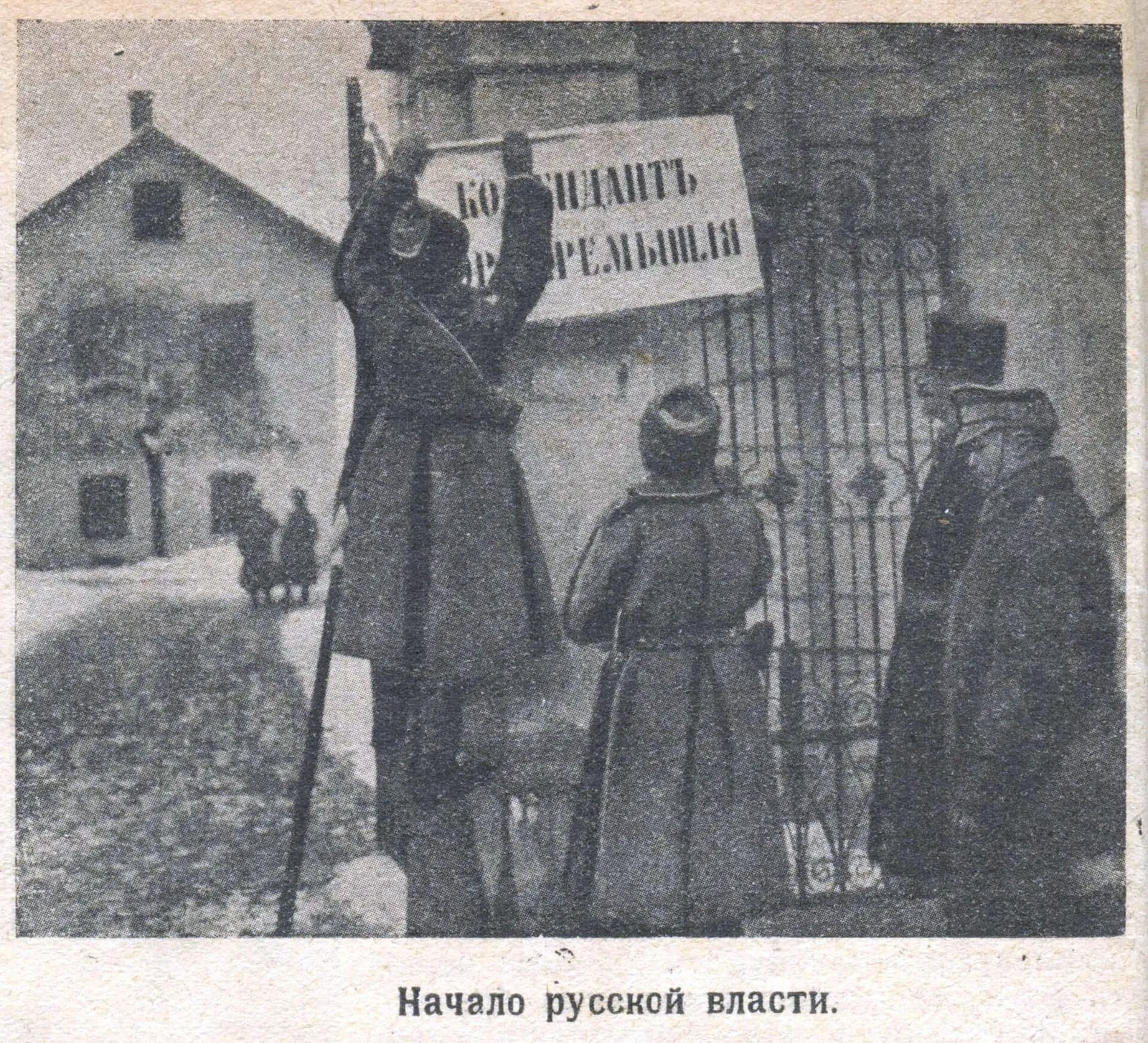
After the failure of the sortie Kusmanek ordered the destruction of everything that might be of use to the Russians. From 19 March documents and money were burned, and weapons, equipment and the remaining stores were destroyed. On the morning of 22 March, between about 5 and 6 a.m., sappers blew up the forts, guns, ammunition depots and the bridges over the San. The inhabitants remembered the powerful explosions that shook the town. A few hours later white flags appeared on the fortifications, and at about 9–10 a.m. the first Russian units entered the ruined town.
According to the most frequently quoted figures, 9 generals, 93 staff officers, about 2,500 other officers and about 117,000 NCOs and other ranks went into Russian captivity. The Russians gave higher figures, from about 120,000 to 130,000. Kusmanek himself was taken prisoner, and with him, among others, the Hungarian poet Géza Gyóni, author of famous poems from the besieged fortress. The prisoners were separated by nationality and sent deep into Russia, many as far as Turkestan. Kusmanek returned to Vienna only in 1918.
Under Russian rule
For the civilians the capitulation did not mean the end of their suffering. Cossacks carried out a pogrom of the Jewish population in the town, and in April 1915 the Russian authorities deported thousands of Jews from Przemyśl into the interior of the empire, according to some estimates about 17,000. At the end of April Tsar Nicholas II visited the fortress to celebrate the victory. The Russians held Przemyśl for only a little over two months. After the breakthrough at Gorlice, German and Austro-Hungarian troops retook the town on 3 June 1915.
Significance
The fall of Przemyśl was one of the greatest defeats in the history of the Habsburg monarchy. The fortress, which in the autumn of 1914 had been a symbol of resistance, became a symbol of its weakness. A whole army went into captivity, and the attempts to save it in the Carpathians cost Austria-Hungary even more soldiers. After that winter the Austro-Hungarian army never fully recovered and depended more and more on German help. In Russia the capture of Przemyśl was celebrated as a great victory, and many expected that the road to Hungary lay open. These hopes were dashed by the spring offensive of the Central Powers.
For Poles the siege of Przemyśl was one of the most dramatic episodes of the war on Polish soil. Thousands of Poles from Galician regiments served in the fortress, and for more than four months the inhabitants of the town shared hunger, cold and disease with the soldiers. The remains of the forts around Przemyśl are today among the most important First World War monuments in Poland.
Spotted a mistake?Report an error