Key event
Attack at Fromelles
- Category:
- Military operations
- Front:
- Western Front
- Date:
- 19 July 1916
- Author:
- Łukasz Skowroń
- Battle:
- Battle of Fromelles
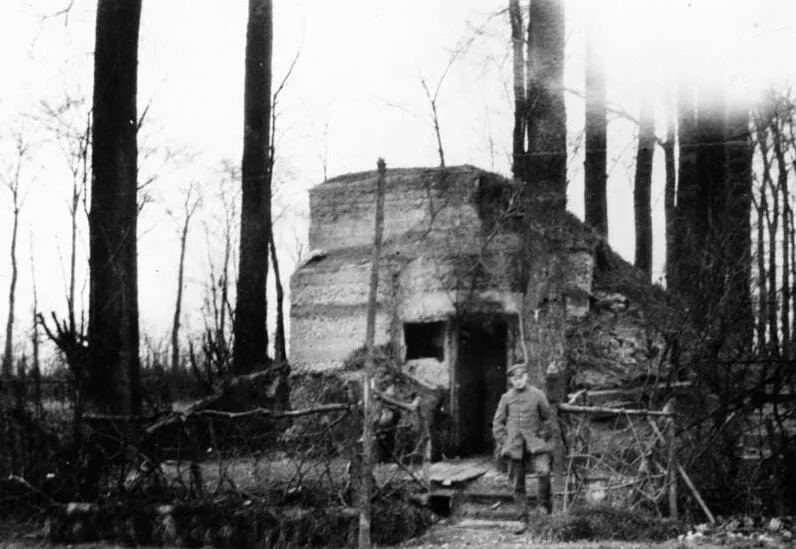
At 6 p.m. on 19 July 1916, in the full light of a summer day, twelve battalions of the British 61st Division and the 5th Australian Division attacked the German trenches on the flat, marshy plain opposite the village of Fromelles in French Flanders. It was a subsidiary attack: the Battle of the Somme had been going on for three weeks, and the British command wanted to convince the Germans that here too, 80 kilometres further north, an offensive threatened them, and so keep their troops away from the Somme. The attack went in roughly where the British had lost the Battle of Aubers Ridge in May 1915, and against the same Bavarian division. For both attacking divisions it was their first action on the Western Front, and for many of the men the first of their lives. The next morning the survivors were making their way back to their own trenches, and no man’s land was strewn with dead and wounded. The night of 19–20 July is regarded in Australia as the blackest 24 hours in the country’s history.
Seven hours of bombardment
The attack had twice been postponed because of rain and mist, which prevented the artillery from registering on its targets. On the morning of 19 July the mist lifted and a fine day followed. At 7 a.m. the staff of General Richard Haking’s XI Corps fixed the start of the bombardment for 11 a.m. This meant that the infantry would go over after seven hours, at about 6 p.m., with three hours of daylight still left. Almost 300 field guns and 78 heavy guns began destroying the wire and the sandbag breastworks that here took the place of trenches, because water lay just below the surface. At 2.35 p.m. the fire of heavy howitzers was additionally directed at the Sugarloaf salient, the strongest point of the German line. Four times the artillery feigned lifting its fire to the rear, while the infantry showed bayonets and dummies above the parapet to lure the Germans to their posts. The Bavarians were not taken in.
On the other side stood the 6th Bavarian Reserve Division. Its historians admit that the bombardment destroyed many stretches of the defences and caused the defenders losses, but in the 16th Bavarian Reserve Infantry Regiment 60 of the 75 concrete shelters in the breastwork survived. Before noon the German artillery, supported by batteries of neighbouring divisions, began shelling the British and Australian front lines, communication trenches and the Rue Tilleloy road, on which the observation posts stood. Between 4 and 5 p.m. it hit batteries and blew up several hastily established ammunition dumps. The Bavarian official history later wrote that it had already then “broken the back” of the British attack, before the infantry left the trenches.
The British before the Sugarloaf
At about 5.30 p.m. the infantry began moving out into no man’s land, which here was between about 90 and 370 metres wide. The units with the longest distance to cover went first. The battalions of the British 61st Division, a second-line Territorial division from the South Midland counties, averaged 550 men each, because the division had earlier given up drafts to its first-line division. They were to go out through narrow ground-level sally ports in the breastwork, and where German riflemen were waiting ready, each of these became a trap.
On the right flank the 182nd Brigade was lucky. Two companies of the 2/7th Battalion, Royal Warwickshire Regiment, crept to within 50 metres of the German line before the artillery lifted and broke into thoroughly wrecked trenches, taking the surprised defenders prisoner. They even reached the second line, but there machine-gun fire from the flank and German shelling pinned them down. The neighbouring 2/6th Battalion was halted before uncut wire at the Wick salient and cut down by fire at close range. In the centre two Gloucestershire battalions of the 183rd Brigade lost men while still in the jumping-off trenches, then under shrapnel fire abandoned the sally ports and went over the top, across the breastwork. Only a few men reached the German wire.
It was worst before the Sugarloaf. The 184th Brigade lost 140 men to shellfire before even leaving the trenches. The 2/4th Battalion, Royal Berkshire Regiment, was spotted and mown down as it filed out through the sally ports, and its commander, Lt-Col J.H. Beer, was killed on the parapet directing the movement of his men. A battalion from Buckinghamshire pushed out into no man’s land along the long Rhondda Sap, but it too was stopped by fire from the salient. Captain H. Church’s company reached the German breastwork and fought on it until all had been killed or wounded. Their bodies were found long afterwards under the German wire. The Bavarian sentries had not been paralysed by the bombardment: according to the history of the 16th Bavarian Reserve Infantry Regiment, its riflemen opened fire while the British were still “disentangling themselves” from the sally ports in the breastwork.
The Australians
The Australians, whose battalions were at full strength, went over the breastwork straight away in extended order, without squeezing through narrow passages. Their three brigades moved off between 5.43 and 5.53 p.m., according to the distance they had to cover.
On the right flank, next to the British, attacked General Harold Elliott’s 15th Brigade (from Victoria). It faced the widest stretch of no man’s land, about 400 metres of meadow, crossed by the shallow Laies brook. When the first waves went out at 5.45 p.m., the artillery was to keep pounding the German trenches for another quarter of an hour. But the machine guns in the Sugarloaf had not been destroyed and fired sideways, along the ranks. The 59th Battalion was stopped after about 270 metres; the 60th Battalion reached the German wire and could do no more. The commander of the 60th Battalion, Major G.G. McCrae, was killed, and the commander of the 59th Battalion was badly wounded. The survivors dug in where they lay.
In the centre Colonel Harold Pope’s 14th Brigade (from New South Wales) fared better. Its 53rd and 54th Battalions crossed the German breastwork almost without a check, taking prisoners and two machine guns. On the left flank the 31st and 32nd Battalions of General Edwin Tivey’s 8th Brigade, under fire from front and flank, also broke into the German line. Beyond the breastwork, however, a surprise awaited them. British maps showed a dense network of trenches, but behind the first line stretched flat fields with flooded ditches. The Germans had long since abandoned their rear trenches and kept their reserves in fortified farm ruins a few hundred metres further back. The Australians, mostly without officers, chose one of the ditches as their line of defence, in different places the first, second or third, and began strengthening it with sandbags filled with mud, because there was no dry earth. The 8th Brigade seized the end of the sandbagged Kastenweg communication trench, which led towards Delangre Farm. At the same time engineers and infantry began digging two communication trenches across no man’s land to link the captured ground with their own line.
Evening: the cancelled assault
At about 7 p.m. the commander of the 61st Division, General Colin Mackenzie, knew of the success on his right flank, and other reports claimed that in the centre and at the Sugarloaf too his men were holding scraps of the German line. At 7.30 p.m. Haking ordered him to extend his gains at the Sugarloaf to help the Australians. It then turned out that there was not a single British soldier in the salient. A fresh assault by the whole division was prepared for 9 p.m., but at 8.20 p.m. Haking cancelled it and ordered everyone to be withdrawn from the German trenches after dark. The order held back the last company of the 2/7th Royal Warwickshire. Of the three companies that had been in the German trenches, only a few stragglers and lightly wounded returned; the rest were surrounded by the Bavarians and killed or captured.
The 15th Australian Brigade was to co-operate in the 9 p.m. assault and, with the consent of General James McCay, commander of the 5th Australian Division, threw its 58th Battalion into an attack east of the Sugarloaf. The news that the British attack had been cancelled reached brigade headquarters too late. The battalion, led by the young Major A.J.S. Hutchinson, a graduate of the military college at Duntroon, went on alone, carried part of the 59th Battalion with it and was shattered by fire from the salient. Hutchinson was killed while trying to urge the last wave forward. During the night the remnants of Elliott’s three battalions drifted back to the Australian trenches.
At 9 p.m. Haking received a report from an observation aircraft of the Royal Flying Corps, which had seen signal rockets at the Sugarloaf. These were taken to be from British soldiers, although they were most probably fired by the Germans. Haking therefore changed his decision: at 10 p.m. his chief of staff agreed with McCay that the Australians would hold the captured trenches and the 61st Division would attack the salient once more before dawn. At 3 a.m. the commander of the 184th Brigade reported that his trenches were under heavy fire and he would not be ready before dawn. The last assault was cancelled.
Night in the German trenches
Meanwhile the Australians in the German line were increasingly isolated. Their right flank, where after the repulse of the 15th Brigade only broken, officerless groups of the 53rd Battalion remained, was in the air. The Bavarian divisional commander ordered a counter-attack for 8 p.m., but in the darkness and under British shellfire his battalions assembled slowly. At about 1 a.m. companies of the Bavarian reserve began arriving on the right flank of the 14th Brigade. Step by step, with grenades, they worked along their old front line, getting round behind the Australians.
Command on this sector was taken over by Lt-Col W.E.H. Cass of the 54th Battalion, a Gallipoli veteran. His reports to brigade headquarters show how the situation deteriorated. At 3.22 a.m. he wrote: “Position serious, as we have no bombs and the enemy is preparing to attack.” At 3.45: “Position very serious. 53rd are retiring. Enemy behind them.” At 4.20: “Position almost desperate. I have collected the 55th and some of the 54th and have checked the enemy for the moment. But please get our guns going at once.” The Bavarians were already near the end of the communication trench across no man’s land, the brigade’s only line of retreat. Sergeant F.T. Stringer with a handful of men stopped them, throwing grenades from the top of the parapet, and Lieutenant W. Denoon of the 55th Battalion drove the Germans back several dozen metres before he himself was wounded.
On the left flank the 8th Brigade, helped by men of the 29th and 30th Battalions carrying ammunition, beat off the first counter-attacks from the direction of Delangre Farm. But here too the Bavarians of the 21st Reserve Infantry Regiment, reinforced by two companies of the 20th Regiment, pressed along the Kastenweg and from the flank, while machine guns fired from Delangre Farm and from the defences to the east.
Dawn on 20 July
At dawn the Germans struck the 8th Brigade from the front and the left flank. The 32nd Battalion began withdrawing across no man’s land, followed by the 31st. Many groups fought their way through to their own lines; others were cut off and taken prisoner. According to Bavarian accounts, by about 6 a.m. the line on this sector was already in their hands.
At 5 a.m. at Sailly, General Charles Monro, commander of the First Army, was conferring with Haking and the divisional commanders about a new attack by the 61st Division. It was then that McCay learnt by telephone of the 8th Brigade’s retreat. Monro called off the operation and ordered the 14th Brigade to be withdrawn. At 5.40 a.m. the artillery surrounded the sector it held with a “box” of fire so that the Germans could not enter it, but the order to retire reached Cass only at 7.50 a.m., and some groups never received it. The Germans were already deep behind the right flank, so anyone who tried to return over the top came under fire. Salvation came from the communication trench, which the engineers and pioneers had almost completed during the night. By 9 a.m. most of the remnants of the 53rd, 54th and 55th Battalions were back. Six Vickers machine guns had to be abandoned. At about 8.10 a.m. the Bavarian units counter-attacking from two directions joined hands and the whole of the old line was German again.
The night’s toll
When the shelling died down before noon, both sides began repairing their defences. In no man’s land, especially in front of the 15th Brigade, lay hundreds of dead and wounded, and for the next three days Australian soldiers went out on their own initiative to bring them in. According to the Australian official history, the 5th Australian Division lost 5,533 officers and men in a single night, and the 61st Division 1,547. Of the 887 men of the 60th Battalion, one officer and 106 men answered the roll call. The Bavarians lost, according to various estimates, from fewer than 1,500 to 2,000 men, and took 481 prisoners, including about 400 Australians. On one of the dead or prisoners they found Haking’s order, which revealed that the attack was only a feint.
The Australian official historian Charles Bean observed that probably no infantry in the world could have crossed no man’s land where the 15th Brigade was stopped, and that digging communication trenches across no man’s land at night, under heavy fire, was a rare achievement. The British official history says plainly that it is only a pity that this battle “need never have been fought”. Haking, on the other hand, considered that the artillery preparation had been adequate and that the failure was due to the lack of training of both divisions.
Remember the articles you have read? Only in this browser; nothing is sent anywhere.How it works
Read ·
A voice from the front
“Dear Mother, The time is near at hand for a great offensive and, should I fall, I will be proud to know I did so in the cause of Righteousness and Justice […]. Owen! give every assistance to Mother as a last request. […] Dad! I have kept your wishes; neither smoked nor taken liquor.”
Spotted a mistake?Report an error
Meanwhile
(02)Elsewhere in the same days.
- 20 July 1916 · Balkan FrontReports of a new Entente loan to GreeceA British chronology says the Zaimis government concluded an £800,000 loan with the Entente on 20 July 1916. Other sources do not confirm the agreement.
- 20 July 1916 · PoliticsDismissal of SazonovOn 20 July 1916 the Tsar dismissed the foreign minister Sazonov, advocate of Polish autonomy. His post went to Stürmer, favourite of the Tsarina and Rasputin.
Related events
(04)The same battle, people or subject.
- 23 July 1916 · Western FrontBattle of Pozières Ridge beginsOn the night of 23 July 1916 the 1st Australian Division took most of Pozières on the Somme, the only success of the great British attack that night.
- 3 September 1916 · Western FrontEnd of the Battle of Pozières RidgeOn 3 September 1916 the Australians attacked Mouquet Farm for the last time. They held it for a few hours, but kept only a stretch of trench on the ridge.
- 17 July 1916 · Western FrontBattle of Bazentin Ridge endsOn 17 July 1916 the Battle of Bazentin Ridge ended. The British held the German second position but lost High Wood and failed to take all of Longueval.
- 15 July 1916 · Western FrontBattle of Delville Wood beginsOn 15 July 1916 Lukin's South Africans broke into Delville Wood near Longueval. By afternoon they held almost all of it, and the Germans counter-attacked.