Japan · The Entente
Ōkuma Shigenobu
Prime Minister of Japan (1914–1916)
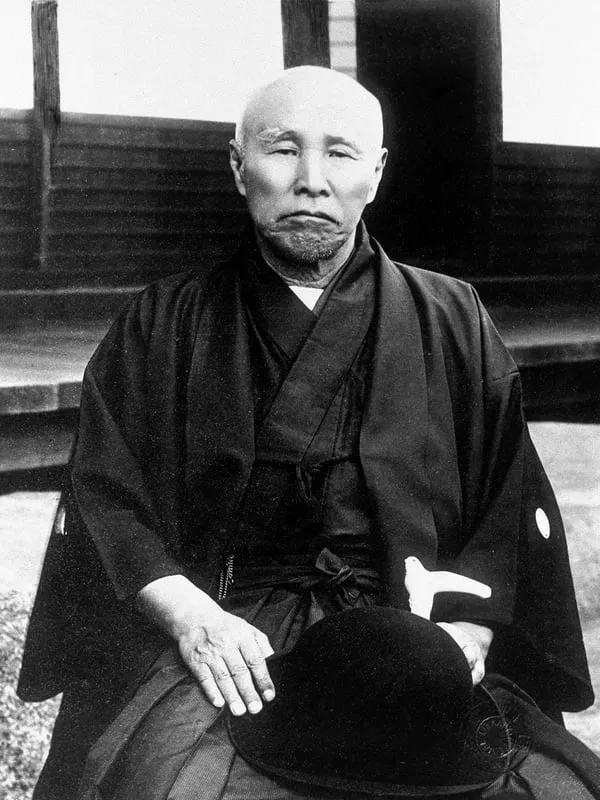
- Born:
- 11 March 1838, Saga (Japan)
- Died:
- 10 January 1922, Tokyo
- Author:
- Natalia
- Photo:
- autor nieznany, domena publiczna, Wikimedia Commons

Ōkuma Shigenobu was one of the fathers of modern Japan and the most popular politician of his era. When in April 1914, aged 76, he became prime minister for the second time, he was already a legend: the creator of Japan’s first liberal party, the founder of the college that grew into Waseda University, and a veteran who had lost a leg in an assassination attempt. His government brought Japan into the Great War on the side of the Entente, captured the German fortress of Tsingtao and the Pacific islands, and in 1915 presented China with the “Twenty-One Demands”, which poisoned relations between the two countries for a long time. Foreign policy, however, was in practice directed by his minister Katō Takaaki, and Ōkuma himself was less a strategist than a popular leader who won elections for his cabinet.
Before the war
He was born on 11 March 1838 in Saga, in the domain of Hizen on the island of Kyushu, into a samurai family of middle rank. Expelled from the domain school for insubordination, he studied at a school of Dutch learning, and in Nagasaki learned English and law from the American missionary Guido Verbeck. After the Meiji Restoration in 1868 he quickly made a career in the new government, although he did not come from the Satsuma and Chōshū domains that dominated it. From 1873 to 1880 he was finance minister: he unified the currency, published the first state budget and supported nascent industry, including the Mitsubishi concern.
In 1881 he demanded the swift introduction of a parliament and a government responsible to the majority, on the British model, and his rivals, led by Itō Hirobumi, removed him from the government. In 1882 he founded the Constitutional Reform Party (Rikken Kaishintō) and the Tokyo Senmon Gakkō school, later Waseda University. As foreign minister in 1888–1889 he conducted negotiations with the powers for the abolition of the unequal treaties. His concessions provoked the anger of nationalists, and in October 1889 a member of a secret society threw a bomb at his carriage. Ōkuma survived but lost his right leg. In 1898 he headed the first party government in Japanese history, which collapsed after four months. After that he remained out of power for years, served as president of Waseda and was one of the best-known commentators in the country.
When at the beginning of 1914 a corruption scandal in the navy, the so-called Siemens affair, brought down the government of Admiral Yamamoto Gonnohyōe, the elder statesmen, the genrō, led by Field Marshal Yamagata Aritomo, looked for someone who through his popularity would take the majority away from the opposition party, the Rikken Seiyūkai. The choice fell on Ōkuma. On 16 April 1914 he formed a government based on the Rikken Dōshikai party, whose leader Katō Takaaki took the foreign ministry.
1914: war with Germany
When war broke out in Europe, it was Katō who persuaded the government, Emperor Yoshihito and the genrō that Japan should stand by Great Britain, invoking the Anglo-Japanese Alliance, and take Germany’s possessions in Asia. The decision was taken at a cabinet meeting without prior consultation of the genrō, which angered Yamagata. On 15 August Japan presented Germany with an ultimatum, demanding the withdrawal of its warships from Far Eastern waters and the handing over of the Kiautschou leasehold, and on 23 August declared war on it.
For Japan the war was short and victorious. In the autumn the Japanese navy occupied the German islands in the Pacific north of the equator, and on 7 November, after a siege with British participation, the fortress of Tsingtao capitulated. When the allies began asking for Japanese divisions for Europe, Ōkuma’s government refused, explaining that the army served solely to defend the country. In December Katō declared in parliament that the fate of the captured islands would be decided only by the peace conference, which meant that Japan would come to it as their possessor. At home the government lost a vote in December on the creation of two new army divisions, and on 25 December Ōkuma dissolved the lower house.
1915: elections and the Twenty-One Demands
The election campaign of early 1915 was Ōkuma’s masterpiece. He was the first Japanese prime minister to tour the country by train and address crowds at stations, and his speeches were even recorded on phonograph cylinders. On 25 March the government parties won a great victory, taking about two-thirds of the seats. The victory, however, was also owed to ruthless pressure on voters, organised by the home minister Ōura Kanetake. It disappointed even liberals sympathetic to the government.
At the same time negotiations with China were under way. On 18 January 1915 the Japanese minister in Peking handed President Yuan Shikai the list of Twenty-One Demands. Japan demanded the takeover of the German rights in Shantung, the extension of its leases in Manchuria, shares in Chinese industry, and in the fifth, most far-reaching group, among other things, Japanese advisers in the Chinese government. According to Japanese historians Ōkuma had in mind a more modest programme, but Katō included the army’s demands in the list and did not consult the genrō on its final form, and the prime minister, who saw him as his successor, accepted this without objection. When the Chinese procrastinated, Japan set aside the fifth group and on 7 May presented China with an ultimatum. China gave way, and on 25 May the Sino-Japanese treaties were signed. Ōkuma later defended the demands as rights due to Japan, but their result was a wave of boycotts of Japanese goods in China and the distrust of Great Britain and the United States.
In the summer the Ōura scandal broke: he was accused of bribing opposition deputies over the divisions. On 30 July the whole government resigned, but the Emperor, without consulting the genrō, asked Ōkuma to stay on. The prime minister reshuffled the cabinet, and Katō left the government; the genrō had long wanted to be rid of him. On 10 August Ōkuma took over the foreign ministry himself, and in October handed it to the career diplomat Ishii Kikujirō. A few days later Japan acceded to the Pact of London and undertook not to conclude a separate peace with Germany. In November 1915 Ōkuma, despite his artificial leg, took part in the long coronation ceremonies of Emperor Yoshihito in Kyoto.
1916: Yuan Shikai and resignation
At the end of 1915 Yuan Shikai accepted the imperial throne. Ōkuma’s government officially expressed fears of unrest in China, but according to historians it above all did not want Yuan strengthened. On 12 January 1916 a group of nationalists threw a bomb at the prime minister’s carriage, but the device did not explode and Ōkuma came out of the attempt unharmed. In March the government decided to work for Yuan’s removal from power, and Japanese money went to his opponents. A few weeks later Yuan renounced the throne.
In February his government refused to send destroyers to Europe, as the British had asked, but strengthened patrols in the Indian Ocean, and in July concluded an agreement with Russia on cooperation in the Far East, although the idea of an alliance with Russia was promoted rather by Yamagata. The cabinet, however, grew weaker month by month. The genrō pressed for the prime minister to step down, and he wanted to hand power to Katō. In July 1916 he received the title of marquis. On 4 October he resigned and in the letter of resignation itself named Katō as his successor. The genrō ignored this recommendation, and on 9 October Field Marshal Terauchi Masatake, a protégé of Yamagata, became prime minister.
After the war
Ōkuma withdrew from politics and devoted himself to Waseda University and to writing. He died on 10 January 1922 in Tokyo, aged 83. His funeral in Hibiya Park was the first great “people’s funeral” in Japan for a politician rather than a ruler or a war hero, and drew enormous crowds.
Assessment
Japanese and Western historians see Ōkuma above all as a pioneer of parliamentary government and Japan’s first mass politician, who understood the power of the press and public opinion. His American biographer Joyce Lebra called him the prototype of the popular statesman. His government broke the long dominance of the Seiyūkai and helped make party government, for which he had fought since 1881, the norm in Japan in the following years.
His wartime role is judged much more harshly. Ōkuma let Katō conduct foreign policy without supervision, and the Twenty-One Demands, although they brought Japan gains, made it China’s chief enemy in Chinese eyes and undermined the allies’ trust. Critics also reproach him for building the election victory of 1915 on abuses that contradicted the ideas he himself proclaimed. The war, in which Japan at little cost won Shantung and the Pacific islands, strengthened its position as a great power, but also strengthened at home the advocates of expansion on the Asian continent.
Sources
Spotted a mistake?Report an error
Mentioned in battles
(01)Often appears with
People who appear in the same events.