United Kingdom · The Entente
Edward Grey
Foreign Secretary of the United Kingdom (1905–1916), from 1916 Viscount Grey of Fallodon
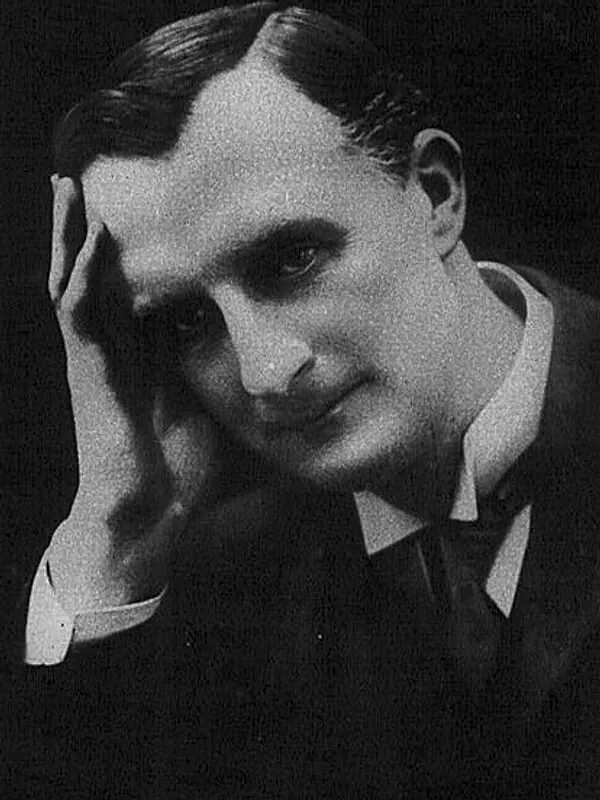
- Born:
- 25 April 1862, London
- Died:
- 7 September 1933, Fallodon (Northumberland)
- Author:
- Natalia
- Photo:
- autor nieznany, domena publiczna, Wikimedia Commons

Sir Edward Grey directed British foreign policy for eleven years, from December 1905 to December 1916, longer without a break than anyone before or since. It was he who built the agreements with France and Russia, who in July 1914 tried to stop the war with a conference of the powers, and who on 3 August made the speech in the House of Commons that convinced Parliament and a divided government that Britain could not leave France and Belgium to their fate. During the war he conducted the secret diplomacy of the Entente: he negotiated Italy’s entry, courted the Balkan states, promised Constantinople to Russia and signed the agreement partitioning Asiatic Turkey. Weary and losing his sight, he left the government together with Asquith.
Before the war
He was born on 25 April 1862 in London into a family with strong Whig and Liberal traditions. His great-grandfather was the brother of the Prime Minister Charles Grey, and his grandfather, Sir George Grey, a long-serving minister. After the death of his father, and then of his grandfather, he inherited at the age of twenty the baronetcy and the Fallodon estate in Northumberland. He finished his studies at Oxford without much enthusiasm, but became university champion at real tennis. In 1885, aged 23, he entered the House of Commons as Liberal member for Berwick-upon-Tweed and represented the seat for more than thirty years. From 1892 to 1895 he was Under-Secretary of State at the Foreign Office.
In private he was a countryman, an angler and an ornithologist, author of a book on fly fishing. He had little command of foreign languages and was reluctant to travel abroad. In February 1906, a few weeks after taking over the ministry, he lost his beloved wife Dorothy in a carriage accident.
As Foreign Secretary in the governments of Henry Campbell-Bannerman and, from 1908, Herbert Henry Asquith, he continued the rapprochement with France begun by the Entente Cordiale. During the Moroccan crises he backed Paris and agreed to secret staff talks, of which most of the Cabinet knew nothing for years. In 1907 he concluded the agreement with Russia on Persia, Afghanistan and Tibet. In November 1912 he exchanged letters with the French ambassador Paul Cambon in which the two countries promised to consult each other in the event of a threat, but without any commitment to fight together. He always stressed that Britain kept a free hand. During the Balkan Wars he chaired the conference of ambassadors in London, which helped to avert a war between the powers. That success was his model in July 1914.
The July Crisis
After the assassination in Sarajevo the Cabinet was preoccupied above all with the threat of civil war in Ireland. Grey grasped the gravity of the situation only after the Austro-Hungarian ultimatum to Serbia. On 24 July he proposed mediation by the four powers not involved in the dispute, and on 26 July a conference of ambassadors in London. France and Italy agreed, but Germany refused. On 29 July Grey warned the German ambassador, Prince Karl Max Lichnowsky, that if France were drawn into the war Britain could not stand aside for long, and the next day he rejected the German bid to secure British neutrality. He called such a bargain at the expense of France and Belgium a disgrace.
At the same time he would not, and in a divided government could not, give France a binding promise. Most Liberal ministers opposed intervention. On 31 July Grey asked Paris and Berlin whether they would respect Belgian neutrality. France answered yes, Germany evasively. On 1 August, according to ministers’ accounts, Grey threatened to resign if the Cabinet committed itself to non-intervention in all circumstances. On 2 August, after a stormy meeting, he obtained consent to a promise that the Royal Navy would protect the French coasts.
At 3 p.m. on 3 August he spoke in the House of Commons. He spoke for almost an hour, calmly and without rhetoric. He recalled the talks with France and stressed that they did not bind the country, but asked whether Britain could stand by while the German fleet bombarded the undefended coasts of a friend. He gave most attention to Belgium and the guarantees of the Treaty of London of 1839. The House received the speech with support. That evening, watching the lamps being lit from his window, he is said to have remarked: “The lamps are going out all over Europe; we shall not see them lit again in our lifetime.” The next day, after the Germans entered Belgium, he had an ultimatum delivered in Berlin. At 11 p.m. London time Britain was at war.
Coalition diplomacy
The war took away much of the Foreign Office’s former role, but Grey remained one of the most important men in the government. He sat on the War Council and later on the War Committee. On 5 September 1914 he signed with the French and Russian ambassadors the Declaration of London, in which the allies undertook not to conclude a separate peace. After Turkey entered the war he assured the Russians that the fate of Constantinople and the Straits would be settled in accordance with their interests, and in March 1915 he agreed to a Russian Constantinople, reversing a century of British policy. He believed London could give no greater proof of friendship.
The Balkans were the hardest. Grey promised Greece lands in Asia Minor, and in October 1915 even Cyprus, courted Bulgaria and Romania, and promised Serbia Bosnia and Herzegovina, demanding concessions in Macedonia in return. These efforts largely failed. Greece remained neutral, and Bulgaria, to which Germany could promise more at others’ expense, entered the war on the side of the Central Powers. His conciliatory speech on Bulgaria of 28 September 1915 caused a storm in Athens. He was more successful in Rome. After several weeks of bargaining, on 26 April 1915 he signed the Treaty of London, which brought Italy into the war in return for the promise of Austro-Hungarian territory.
Grey also put his name to the promises made to the Arabs and to the partition of Turkey. In October 1915 he authorised the High Commissioner in Egypt, Sir Henry McMahon, to promise recognition of Arab independence within boundaries whose vagueness later became a source of great disputes. On 16 May 1916 his letter to Cambon concluded the British-French part of the Sykes–Picot Agreement. In it he wrote that acceptance of the scheme meant “the abandonment of considerable British interests”, but that the price was worth paying for an Arab rising.
The blockade and America
Grey’s second great task was to keep good relations with the United States while tightening the naval blockade of Germany. The blockade hit American trade, and Washington protested in note after note. Grey answered them patiently, tightening the control of trade step by step so as not to cross the line beyond which America might do more than protest. As a result he was accused in London of running a leaky blockade, with the Foreign Office ordering the release of detained ships. In February 1916 blockade matters were taken over by a separate minister. Grey was a friend of President Woodrow Wilson’s adviser Colonel Edward House, and in February 1916 agreed with him a memorandum on possible American mediation. He was one of the few British politicians who took seriously the idea of a peace with American participation, but the Cabinet and the allies did not share his interest.
Departure
Grey bore the burden of the war badly. He had suffered from eye trouble for years and was gradually losing his sight. In July 1916, to lighten his load, he accepted the title of Viscount Grey of Fallodon and moved to the House of Lords, and in the summer Lord Crewe partly deputised for him. Critics accused him, like the Prime Minister, of lacking energy. When in December 1916 Asquith resigned, Grey left with him. His successor in Lloyd George’s government was Arthur Balfour.
After the war
From 1918 he presided over an association supporting the League of Nations. In 1919 he went to Washington for a few months as ambassador to win Americans over to the Treaty of Versailles and the League, but he could not even meet Wilson, paralysed by a stroke. In 1923–1924 he was leader of the Liberals in the House of Lords, and from 1928 Chancellor of the University of Oxford. In 1925 he published his memoirs, “Twenty-Five Years”, and two years later a highly regarded book on birds. He died almost blind at Fallodon on 7 September 1933.
Assessment
The dispute over Grey is at bottom a dispute over whether the war could have been prevented. His critics, from German publicists of the 1920s to some present-day historians, reproach him for not saying clearly for too long whose side Britain would take. Had he warned Berlin earlier and firmly, Germany might have restrained Austria-Hungary. Had he, on the other hand, clearly refused to support France and Russia, they might have acted more cautiously. Others accuse him of drawing the country, through secret staff talks and moral commitments to France, into a war that the government and Parliament could not freely decide on. Lloyd George wrote in his memoirs that Grey was unfit for anything that called for decision and energy.
Grey’s defenders, among them his latest biographer Thomas Otte, point out that he acted within the limits allowed by a deeply divided Cabinet and Liberal Party. An earlier declaration of support for France might have broken up the government, and an earlier warning to Berlin need not have changed its decision. Historians almost unanimously credit him with honesty, moderation and skill in negotiation, less often with courage and breadth of vision. During the war his diplomacy won Italy for the Entente and kept good relations with America, but the secret promises made at the same time to the Russians, Italians, Greeks, Serbs, Arabs and French left many contradictions after the war.
Sources
Spotted a mistake?Report an error
Often appears with
People who appear in the same events.
On the timeline
(112)The 40 most important of 112 events. All tagged “Edward Grey” (39) →
1906
1907
1908
1911
1913
1914
July
August
- 02
- German troops enter LuxembourgOn the morning of 2 August 1914 German troops occupied neutral Luxembourg despite the protests of Grand Duchess Marie-Adélaïde and the government.
- Britain guarantees protection of the French coastOn 2 August 1914 the British government promised France that the Royal Navy would defend its coasts against the German fleet in the North Sea and the Channel.
- 03
- Belgium rejects German demandsOn the morning of 3 August 1914 Belgium rejected the German ultimatum. It held that allowing troops to pass through would mean the loss of the nation's honour.
- Britain pledges to defend Belgian neutralityOn 3 August 1914 Sir Edward Grey set out Britain's obligations to Belgium and France in the Commons. London promised support for the Belgians.
- 04
- Great Britain issues an ultimatum to GermanyOn 4 August 1914 London demanded that Germany respect Belgian neutrality by midnight. The chancellor called the treaty a "scrap of paper".
- Key eventBritain declares war on GermanyAt 11 p.m. London time on 4 August 1914 the ultimatum expired. Britain and its whole empire found themselves at war with Germany.
September
October
- 03
- British marines arrive in AntwerpOn 3 October 1914 Winston Churchill arrived in Antwerp. That night the Royal Marine Brigade arrived and took up positions on the Nete near Lier.
- British lay mines off the Belgian coastIn early October 1914 the Royal Navy laid its first minefield in open waters, between the Goodwin Sands and Belgium, to protect the Channel routes.