Russia · The Entente
Sergey Sazonov
Minister of Foreign Affairs of Russia (1910–1916)
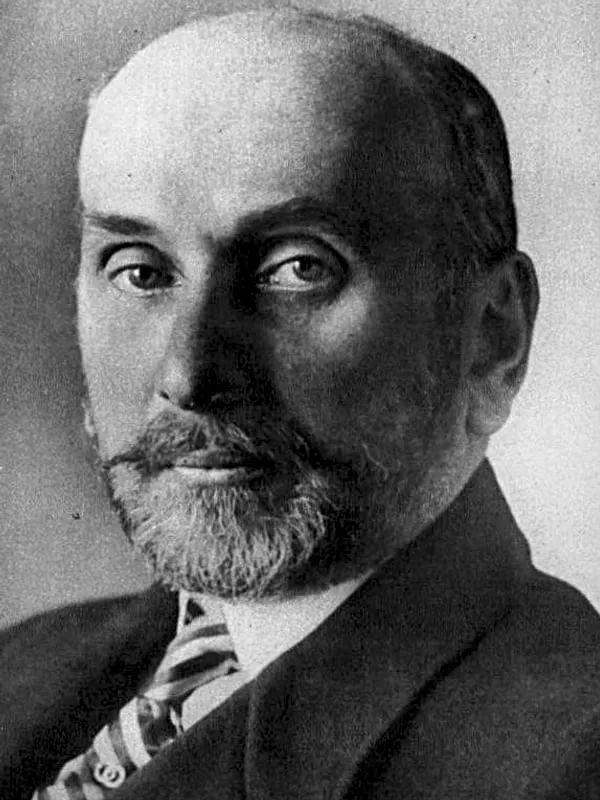
- Born:
- 10 August 1860, Ryazan Governorate (Russian Empire)
- Died:
- 25 December 1927, Nice (France)
- Author:
- Łukasz Skowroń
- Photo:
- autor nieznany, domena publiczna, Wikimedia Commons

Sergey Dmitriyevich Sazonov directed Russian foreign policy throughout the July Crisis of 1914 and the first two years of the war. It was he who persuaded Tsar Nicholas II to order the general mobilisation that made war with Germany certain. He then became the advocate of Entente unity, negotiated the future partition of Turkey, secured for Russia the promise of Constantinople and sought an alliance with the Balkan states. In Russia he was one of the few ministers who looked for an understanding with the Duma, and on the Polish question he urged the Tsar to proclaim autonomy for the Kingdom of Poland. He paid for it with his dismissal in July 1916. To the Allies he was the guarantor of Russia’s loyalty; to his opponents, especially the Germans, one of those to blame for the outbreak of the war.
Before the war
He was born on 10 August 1860 (29 July in the Julian calendar) on the family estate in Ryazan Governorate, into an old but impoverished noble family. He graduated from the elite Alexander Lyceum and in 1883 joined the Ministry of Foreign Affairs. He served at the embassy in London and for more than a decade at the mission to the Holy See, which he headed from 1906. His marriage helped him to a great career: his wife Anna was the sister of the wife of Prime Minister Pyotr Stolypin. In 1909 Sazonov became deputy to the minister Alexander Izvolsky, and in the autumn of 1910 his successor.
Russia had only just suffered humiliation in the Bosnian crisis, and the new minister was cautious. He concluded an agreement with Germany on Persia and the Baghdad Railway, improved relations with Japan and supported the rapprochement with Britain. In the Balkans he sponsored the alliance of Serbia and Bulgaria from which the Balkan League grew, but during the Balkan Wars of 1912–1913 he restrained the Serbs and the Pan-Slavists who were counting on Russian intervention. At the end of 1913 he opposed the dispatch of a German military mission under General Otto Liman von Sanders to Constantinople, believing that it would give Germany control of the Straits, through which most of Russia’s grain exports passed.
The July Crisis
On the morning of 24 July 1914 Sazonov read the Austro-Hungarian ultimatum to Serbia and, according to his colleagues, exclaimed: “This is a European war!”. That same day he persuaded the Council of Ministers that Russia could not allow Serbia to be destroyed. At the same time he advised Belgrade to give a moderate reply. He wanted to deter Austria-Hungary with a threat: he proposed a partial mobilisation of four military districts against the Habsburg monarchy, which was meant to show Berlin that Russia did not intend to attack Germany. The generals argued that such a mobilisation was technically impracticable and would paralyse the mobilisation of the whole army if Germany entered the war.
On 29 July, when the Austrians were already shelling Belgrade and a warning had arrived from Berlin that further Russian preparations would force Germany to mobilise, Sazonov concluded that war with Germany was almost inevitable. On the afternoon of 30 July he went to Peterhof and after a long conversation persuaded the Tsar to order general mobilisation. He immediately telephoned the decision to the Chief of the General Staff. On the evening of 1 August the German ambassador, Count Friedrich von Pourtalès, asked him three times whether Russia would halt its mobilisation, and after three refusals handed him the declaration of war. According to Sazonov’s account the ambassador, with whom he had been on good terms for years, then burst into tears.
Wartime diplomat
At the beginning of the war Sazonov presented to the ambassadors of France and Britain, Maurice Paléologue and George Buchanan, Russia’s vision of the future peace, known as the Sazonov plan (PL). It envisaged weakening Germany, reshaping Austria-Hungary, enlarging Serbia, France and Belgium, and uniting the Polish lands under the Tsar’s sceptre. On the Polish question he was one of the most conciliatory members of the government and supported the vague promises of the Grand Duke Nicholas’s proclamation.
He courted Russia’s neutral neighbours. In the autumn of 1914 he concluded a secret agreement with Romania, which promised it Austro-Hungarian territory in return for benevolent neutrality, and together with the Allies tried to keep Turkey neutral until Turkish warships attacked Russian ports. When the Allies struck at the Dardanelles at the beginning of 1915, Sazonov demanded that London and Paris consent to the annexation of Constantinople and the Straits by Russia. The Allies gave that consent in the spring. He also blocked Greek participation in the expedition against Constantinople. In the negotiations with Italy he defended the Slav coast of Dalmatia, which Serbia wanted, and the Treaty of London gave Italy less in Dalmatia than it had demanded. In May 1915, on his initiative, the Allies issued a joint declaration which called the massacres of the Armenians crimes of Turkey “against humanity and civilisation” and announced the personal responsibility of members of the Ottoman government.
The greatest failure of his diplomacy was Bulgaria. Sazonov long believed that a country liberated by Russia would not side with its enemies, and as late as September 1915, when Bulgaria was announcing its mobilisation, he opposed a pre-emptive strike by the Serbs. In October Russia broke off relations with Sofia, and the Bulgarians soon attacked Serbia. In the following months Sazonov negotiated with the British and French the partition of Asiatic Turkey, under which Russia was to receive Turkish Armenia and part of Kurdistan, and on 3 July 1916 he signed with Japan an agreement on cooperation in the Far East.
The minister and the court
In domestic politics Sazonov belonged to the liberal wing of the government. In the summer of 1915 he supported concessions to the Duma and was one of eight ministers who in a collective letter asked the Tsar not to assume the supreme command and not to leave the capital. He also demanded the removal of Prime Minister Ivan Goremykin. Empress Alexandra Feodorovna never forgave him for this, and Grigori Rasputin, whom the minister made no secret of loathing, kept saying that he “had had enough of Sazonov”.
Sazonov’s last battle was the Polish question. After the loss of the Kingdom in 1915 he feared that the Germans and Austrians would themselves proclaim some form of Polish statehood and win the Poles over to their side. In July 1916, at Headquarters, he persuaded the Tsar to accept a plan for autonomy: the Kingdom was to have a viceroy, its own government and a bicameral diet, and in future to be enlarged by the lands of the Austrian and Prussian partitions. When he went to Finland to rest, Prime Minister Boris Stürmer and the Empress persuaded Nicholas II to change his mind. On 20 July 1916 the Tsar dismissed Sazonov, citing the minister’s fatigue, despite the personal intervention of the French and British ambassadors. The manifesto was never published, and a few months later the Central Powers issued the Act of 5 November, as Sazonov had feared.
After the war
In January 1917 Sazonov was appointed ambassador in London, but he did not manage to leave before the February Revolution, after which nothing came of the appointment. After the Bolshevik coup he joined the Whites. In 1918 he advised General Anton Denikin, and in 1919 he was foreign minister in the government of Admiral Alexander Kolchak and represented the Whites in Paris during the peace conference. There he defended the principle of a Russia one and indivisible, which made it harder for the Whites to reach an understanding with Finland and the Baltic states. In emigration in France he wrote his memoirs, published in 1927. He died in Nice at the end of December 1927. Most sources give the date as 25 December, some the night of 23–24 December.
Assessment
The judgement of Sazonov depends largely on how a historian sees the blame for the outbreak of the war. German writers after 1918, and in more recent literature Sean McMeekin among others, hold him responsible for a premature mobilisation that forced Germany to act and attribute to him the ambition of seizing the Straits. Others, such as Christopher Clark, see him as a politician who acted under the pressure of events and did not always master them, but did not seek war at any price. Still others stress that before 1914 he several times restrained Russia’s Balkan allies and that in July he acted in the conviction that yielding to Austria-Hungary would destroy Russia’s position as a great power.
The Allies valued him as a loyal and courteous partner, thanks to whom the Entente survived difficult negotiations with Italy and the Balkan states. He was criticised for mistakes in Balkan policy, especially towards Bulgaria. Polish historiography appreciates that he was the tsarist government’s minister most favourable to the Poles, while noting that his plan for autonomy assumed a permanent union of the Kingdom with Russia, not independence.
Sources
Spotted a mistake?Report an error
Often appears with
People who appear in the same events.