Germany · The Central Powers
Gottlieb von Jagow
State Secretary of the Foreign Office of the German Empire (January 1913 – November 1916)
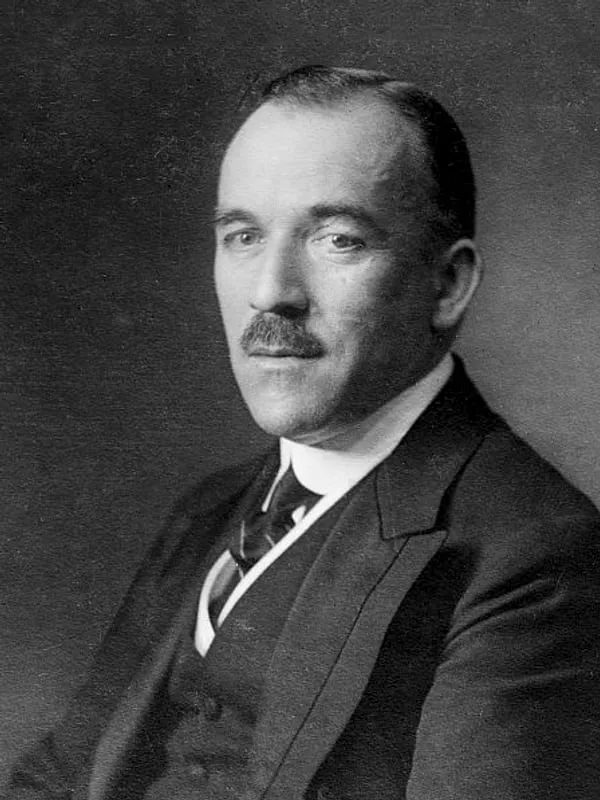
- Born:
- 22 June 1863, Berlin (Kingdom of Prussia)
- Died:
- 11 January 1935, Potsdam
- Author:
- Natalia
- Photo:
- Bain, domena publiczna, Wikimedia Commons

Gottlieb von Jagow led German diplomacy in the most important years of its history. As State Secretary of the Foreign Office (Auswärtiges Amt), in practice the foreign minister of the Reich, in the summer of 1914 he helped shape the policy that was meant to confine Austria-Hungary’s war with Serbia to the Balkans and instead led to a European war. It was he who conveyed to the British the refusal to take part in the conference they proposed, and he who gave Belgium and Britain the answers after which Germany found itself at war with the British Empire. During the war he belonged to the moderates: he opposed extreme annexations and above all unrestricted submarine warfare, which was bound to draw the United States into the war. He lost that dispute and had to go in November 1916. His fears came true a few months later.
Before the war
He was born on 22 June 1863 in Berlin into an old noble family from Brandenburg. His father, Karl von Jagow, was a cavalry captain and the owner of the Rühstädt estate. Gottlieb studied law, among other places in Bonn (PL), and began work in the Prussian administration. In 1895, encouraged by Bernhard von Bülow, he moved to the diplomatic service. He spent most of the next eleven years at the embassy in Rome, with shorter postings in Munich, Hamburg and The Hague. In 1906 he was transferred to Berlin, where he was secretary to Bülow, then chancellor, and at the end of 1907 he became envoy in Luxembourg. In May 1909 he returned to Rome as ambassador. During the Italo-Turkish War he held talks with the Italian government and, according to some accounts, helped avert a conflict between Italy and Austria-Hungary, Germany’s two allies.
In January 1913, after the sudden death of State Secretary Alfred von Kiderlen-Waechter, Emperor Wilhelm II appointed him in his place. According to his biographer Hellmut Seier, Jagow accepted the office reluctantly and knew his limits. He was slight, sickly and prematurely aged, a poor speaker who kept away from the Reichstag. He saw his role as that of executor of the policy of Chancellor Theobald von Bethmann Hollweg, with whom he worked closely. In 1914 he also became a Prussian minister of state. He believed that Europe faced a clash between the Germanic and Slavic worlds, and so he sought rapprochement with Britain and supported Austria-Hungary against Russia. In 1913–1914 he negotiated agreements with London on colonial and Near Eastern questions, helped to contain the Second Balkan War and opposed the naval expansion demanded by Alfred von Tirpitz. At the beginning of 1913 he warned, without effect, of the drawbacks of the Schlieffen Plan, which by violating Belgian neutrality ruled out hopes of an understanding with the British. In May 1914 the Chief of the General Staff, Helmuth von Moltke, argued to him that in two or three years Russia would complete its armaments and Germany would no longer be able to match its opponents, so a preventive war should be fought while it could still be won.
The July Crisis
On 18 June 1914 Jagow married Countess Luitgard zu Solms-Laubach. He learned of the assassination in Sarajevo on his honeymoon. When Vienna’s envoy came to Berlin, the talks were conducted by Under-Secretary of State Arthur Zimmermann, and the Emperor promised Austria-Hungary full support. Jagow returned on 6 July, when the decision to give Vienna a free hand against Serbia had already been taken. He accepted it and became one of its chief executors. He counted on “localising” the conflict: Russia was to back down and Austria-Hungary to score a success. On 18 July he wrote to the ambassador in London, Prince Karl Lichnowsky, that Russia was not yet ready for war and that Germany did not want a preventive war, but that if it came to a fight, it must not flinch. Seier stresses that Jagow saw the risk of a world war and did not expect Britain to remain neutral. He nevertheless considered war with Russia inevitable in the future, and putting it off unfavourable to Germany.
When Foreign Secretary Edward Grey proposed a conference of the powers, Jagow replied on 25 July that he had passed the proposal on to Vienna, but that with the ultimatum’s deadline expiring an extension did not seem possible. On 27 July he told the British ambassador, Edward Goschen, that the conference would in practice be a court of arbitration before which Germany could not bring its ally, and together with the chancellor he rejected the British proposal. On 31 July, the day of the proclamation of the state of imminent danger of war, he explained its meaning to the French ambassador Jules Cambon and prepared the dispatches to other capitals on the ultimatum to Russia. On 2 August he had the German ultimatum delivered to Belgium, striking out of it the promise of compensation at France’s expense and cutting the time for a reply from 24 to 12 hours.
On 4 August he admitted to the Belgian envoy that Belgium could not be reproached with anything, but that a rapid passage through its territory was a matter of life and death for Germany. The same day he told Goschen that Germany would not withdraw its troops from Belgium, and when the ambassador brought him the British ultimatum, he replied that even with a longer deadline the answer would be the same, and expressed regret that his whole policy of rapprochement with Britain was collapsing. As Seier writes, in the decisive days “the reins slipped from his hands”. After the fall of Liège he also asked the American ambassador, James W. Gerard, to pass on to the Belgians an offer of peace and compensation in return for letting the German troops through. The offer reached the Belgians through the Netherlands and came to nothing.
State Secretary during the war
After the Battle of the Marne Jagow looked to the future pessimistically. He opposed extreme annexationist plans, preferring the vision of a Central Europe (Mitteleuropa) under German leadership and indirect forms of rule, and he wanted to push Russia’s border far to the east. On the Polish question he first leaned towards the Austro-Polish solution, that is, uniting the Kingdom of Poland with the Habsburg monarchy. Later he favoured an autonomous Poland under German control and the annexation of Lithuania and Courland to the Reich. He left office a little over two weeks after the Act of 5 November 1916, which announced a Kingdom of Poland without a king and without defined borders.
In the spring of 1915 Berlin tried to keep Italy out of the war by pressing Vienna to agree to territorial concessions. The efforts failed, but as late as 21 May 1915, through the efforts of Bülow, the ambassador in Rome, Jagow concluded with the Italian ambassador in Berlin, Riccardo Bollati, an agreement on mutual respect for the property and rights of each other’s citizens. Thanks to it Italy and Germany were not formally at war until August 1916.
The most important matter of his tenure, however, became the United States. Jagow signed the German reply to the American protest, dated 16 February 1915, which presented submarine warfare around the British Isles as a defence against the British blockade. After the sinking of the Lusitania in May 1915 he defended Germany’s position, but he saw ever more clearly that submarine warfare could lead to a break with America. After the sinking of the Arabic in August 1915, together with Bethmann Hollweg and against Tirpitz, he pushed through stricter orders for submarine commanders, and on 25 August he assured Gerard that Germany would disown the sinking if it had happened as the British press reported and would pay compensation. He considered unrestricted submarine warfare the greatest mistake Germany could make.
In the spring of 1916, after the torpedoing of the Sussex, Jagow received from Gerard on the evening of 20 April the sharp American note. He said that it meant a break, and according to the ambassador he called it “fate” and said nothing more could be done. Germany gave way once more and restricted submarine operations, but from the end of August the army was led by Paul von Hindenburg and Erich Ludendorff, and the advocates of submarine warfare had ever stronger support in the Reichstag and the press. Gerard recalled that the campaign against Jagow was started by those who claimed that in the Reichstag he defended the government’s policy too weakly, while he himself did not cultivate the deputies and, because of his poor health, could do no more than the daily duties of his office.
On 22 November 1916 the Emperor dismissed him. Officially it was a matter of health, but Seier writes that when Jagow tried to prevent unrestricted submarine warfare and a break with America, he was dismissed on a pretext. His successor was Zimmermann, who took office the same day and was regarded as closer to the Supreme Army Command. In January 1917 Germany decided to begin unrestricted submarine warfare, and in April the United States declared war on it.
After the war
Jagow never returned to high politics. According to Gerard, after his dismissal he took charge of a hospital at Libau in occupied Russian territory. He became a member of the Prussian House of Lords (PL). After the war he joined the dispute over responsibility for its outbreak. In his book “Ursachen und Ausbruch des Weltkrieges” (1919) he defended German policy of the summer of 1914, and in “England und der Kriegsausbruch” (1925) he shifted part of the blame onto Britain. He also wrote articles for German political journals. He died on 11 January 1935 in Potsdam.
Assessment
His contemporaries did not rate Jagow highly. Bülow and Tirpitz portrayed him in a very unfavourable light in their memoirs, but Seier considers this picture a caricature that cannot be sustained. Jagow was a conscientious official who ran his office in the spirit of the chancellor’s policy. Gerard believed that he understood foreign nations better than his successor and judged the mood of the Americans more accurately. His weakness was his reading of the situation before and during the July Crisis. Seier reproaches him for misjudging the international position and for defending the primacy of politics over the military too weakly.
The dispute over his responsibility for the war is part of the wider debate about Germany’s role in 1914. Historians of the school of Fritz Fischer see him as a co-author of the policy that in July 1914 deliberately accepted the risk of a European war. Others point out that Jagow counted on a local war and was more the executor of the decisions of the Emperor, the chancellor and the military than their author. What is beyond doubt is that in 1915–1916 he was one of the most important opponents of unrestricted submarine warfare in the German leadership, and that his departure opened the way to the decision that settled America’s entry into the war.
Sources
Spotted a mistake?Report an error
Often appears with
People who appear in the same events.
On the timeline
(14)1914
July
- 31
- Germany sends an ultimatum to RussiaOn 31 July 1914 Germany demanded that Russia halt its mobilisation within 12 hours. At the same time it asked France whether it would remain neutral.
- Germany proclaims a state of imminent danger of warOn 31 July 1914 Germany proclaimed a "state of imminent danger of war" (Kriegsgefahr), the last step before mobilisation. The chancellor admitted it meant war.