German Empire · The Central Powers
Theobald von Bethmann Hollweg
Chancellor of the German Empire and Minister-President of Prussia (1909–1917)
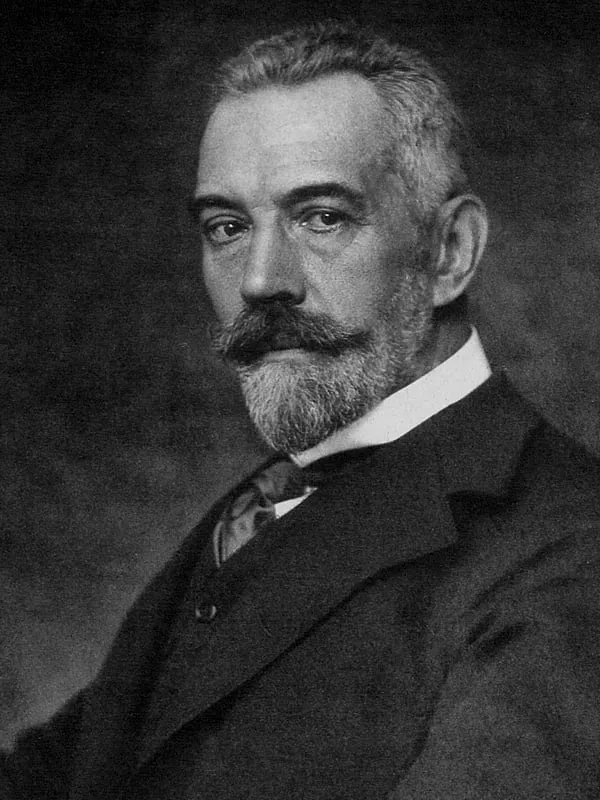
- Born:
- 29 November 1856, Hohenfinow (Germany)
- Died:
- 2 January 1921, Hohenfinow
- Author:
- Łukasz Skowroń
- Photo:
- autor nieznany, CC BY-SA 3.0, Wikimedia Commons

Theobald von Bethmann Hollweg was Chancellor of the German Empire for eight years, from July 1909 to July 1917. It was he who directed German policy in the July Crisis of 1914, he who admitted in the Reichstag that the invasion of Belgium was a wrong, and he who called the guarantee of its neutrality “a scrap of paper”. During the war he tried to steer between the advocates of sweeping annexations and the Social Democrats, held back unrestricted submarine warfare for two years and in December 1916 announced the peace offer of the Central Powers. In the end, however, he lost to the military. For a hundred years historians have argued whether he was a helpless philosopher dragged into war by the generals or a politician who knowingly risked a world war.
Before the war
He was born on 29 November 1856 on the family estate of Hohenfinow in Brandenburg. His grandfather, the lawyer August von Bethmann-Hollweg, had been Prussian Minister of Culture, and the family descended from the Bethmann banking dynasty of Frankfurt. He attended the elite school of Schulpforta, studied law in Strasbourg, Leipzig and Berlin and made a meteoric career in the Prussian administration: he was a Landrat, in 1899 the youngest provincial Oberpräsident in Prussia, in 1905 Prussian Minister of the Interior and in 1907 State Secretary of the Reich Office of the Interior and Vice-Chancellor. In 1889 he married Martha von Pfuel. His wife died in May 1914, and in December of that year their eldest son was killed on the Eastern Front.
Emperor Wilhelm II appointed him chancellor in July 1909, after the fall of Bernhard von Bülow. Bethmann belonged to no party and wanted to pursue a “policy of the diagonal” between the conservatives and the left. He tried to reform the Prussian three-class franchise, which favoured the wealthiest, but was defeated in the Prussian Landtag in 1910. In foreign policy he sought an understanding with Britain and a limit on the naval arms race, which put him at odds with Admiral Alfred von Tirpitz. The mission of the British minister Richard Haldane in 1912 produced no agreement, however, because Berlin demanded a promise of neutrality from London. At the same time the chancellor steered the great army expansion bills of 1912–1913 through the Reichstag. At the end of 1913, after the affair in Zabern in Alsace, where the army had unlawfully detained civilians, the Reichstag passed a vote of no confidence in him for siding with the army. The chancellor stayed in office, because in the Empire he depended only on the confidence of the monarch.
The July Crisis
After the assassination in Sarajevo Bethmann agreed with the Emperor that Austria-Hungary had to be supported. On 5 July 1914 at Potsdam Wilhelm II promised Vienna full support, and the next day the chancellor formally confirmed this to the Austro-Hungarian ambassador. He hoped the conflict could be confined to the Balkans if Austria-Hungary struck quickly and Russia was not yet ready for war. His adviser Kurt Riezler noted in his diary that the chancellor called this policy “a leap into the dark” and was aware that it might lead to a world war. So as not to alarm Europe, Bethmann asked the Emperor not to break off his cruise in Norwegian waters.
When Serbia accepted most of the Austrian demands and London proposed a conference of the powers, Berlin rejected it. The chancellor played a double game: he did not want Germany to look like a state that rejected every mediation, but nor did he want to restrain Austria. The Emperor’s proposal that the Austrians halt in Belgrade he passed on to Vienna late and in a watered-down form, when war on Serbia had already been declared. On the evening of 29 July he offered the British an agreement: if they stayed neutral, Germany would take no French territory in Europe. The offer betrayed that Berlin was counting on an attack on France through Belgium. When during the night a warning came from Edward Grey that Britain would not stand aside, Bethmann began pressing Vienna to accept mediation, writing that Germany would not let itself be drawn frivolously into a world conflagration. It was already too late. Russia announced mobilisation, and the Chief of the General Staff, Helmuth von Moltke, demanded an immediate answer.
On 1 August Germany declared war on Russia. Bethmann insisted on a formal declaration of war, but he could not change the military plan, which provided for a march through Belgium. On 4 August he admitted in the Reichstag that the invasion of Belgium violated international law, because “necessity knows no law”, and promised to make good the wrong. In the evening, in his last conversation with the British ambassador Sir Edward Goschen, he protested indignantly that Britain was going to war with a kindred nation over a single word, “neutrality”, and over “a scrap of paper”. British propaganda turned these words into proof that Germany did not respect treaties. Bethmann himself admitted after the war that the phrase had been unfortunate.
War chancellor
Bethmann’s most important domestic achievement was the “fortress peace” (Burgfrieden). He rejected proposals to arrest the leaders of the Social Democrats at the outbreak of war and won over the SPD, which in August 1914 voted for the war credits. In return he promised a “new orientation” after the war, with reform of the Prussian franchise at its head.
In September 1914, when Berlin expected a swift victory over France, the chancellor signed a memorandum on war aims, later called the September Programme. It envisaged weakening France, making Belgium a dependency, pushing Russia back to the east and German economic domination of Central Europe. Its authorship is usually attributed to Riezler, and Bethmann himself avoided binding public declarations, speaking of Belgium as a “pledge”. Against the extreme annexationists of the Pan-German League he passed for a moderate, and his enemies on the right accused him of defeatism. In the spring of 1915 the Grand Duke of Oldenburg even urged the King of Bavaria to demand his dismissal from the Emperor in the name of the German princes.
From the beginning of 1915 the main field of dispute was submarine warfare. The chancellor did not believe that U-boats could decide the war and feared the entry of the United States. After the sinking of the Lusitania and of the Arabic he brought about a concession to Washington in September 1915, and in March 1916, threatening to resign, he forced through a postponement of unrestricted submarine warfare. Tirpitz then resigned, his most dangerous opponent. After the torpedoing of the Sussex, Germany in May 1916 pledged to the United States that it would not sink merchant ships without warning.
The same policy had a dark side. When German diplomats in Constantinople raised the alarm about the massacres of Armenians and the ambassador demanded intervention, the chancellor noted in December 1915 that Germany’s only aim was to keep Turkey on its side until the end of the war, regardless of whether Armenians perished as a result. Germany did nothing to stop the Armenian genocide.
Hindenburg, Poland and the peace offer
In the summer of 1916, after the failures at Verdun and in the face of the Brusilov Offensive, Bethmann backed the replacement of Erich von Falkenhayn by Paul von Hindenburg. He hoped that the popularity of the “victor of Tannenberg” would help him persuade the Germans to accept a negotiated peace, because only Hindenburg would be believed if he said that no more could be achieved. On 29 August Hindenburg became Chief of the General Staff, with Erich Ludendorff as his closest collaborator. This proved a mistake. The new Supreme Army Command soon began to impose its will in politics as well.
This could be seen in the Polish question. From the start of the war Bethmann had supported annexing to Prussia a border strip of the Kingdom of Poland, and for a long time he refused to decide the future of the rest of the country, hoping for a separate peace with Russia. In the summer of 1916 he agreed with the Austro-Hungarian Foreign Minister István Burián on the principle of creating a Kingdom of Poland, but wanted to proclaim it only after the war. Ludendorff, who was counting on Polish recruits, pressed for haste, and the chancellor gave way. On 5 November 1916 the Act of 5 November was proclaimed. Riezler summed up the dispute briefly: the general pushes, the chancellor hesitates.
On 12 December 1916, after the capture of Bucharest, Bethmann announced in the Reichstag the peace offer of the Central Powers. It stated no terms, and in confidential correspondence with Vienna the chancellor envisaged, among other things, annexations in the east and guarantees in Belgium. The Entente rejected it.
Pless and downfall
The rejection of the offer gave the upper hand to the supporters of submarine warfare. On 9 January 1917, at the conference with the Emperor at Pless (Pszczyna), Bethmann no longer put up a real fight. He said that submarine warfare was “the last card” and that if the military authorities considered it necessary, he was in no position to oppose them. Unrestricted submarine warfare began on 1 February, and on 6 April the United States declared war on Germany. The chancellor thought of resigning but stayed, explaining later that his departure would have changed nothing.
He devoted his last months in office to domestic reform. After the February Revolution in Russia he persuaded the Emperor to issue the Easter Message of 7 April 1917, which announced the abolition of the three-class franchise, though still without a word about equal suffrage. In July, as the Reichstag was preparing its peace resolution, he secured an imperial decree on equal suffrage in Prussia. The conservatives regarded him as a traitor, and some deputies of the Centre and the National Liberals as an obstacle to peace. Hindenburg and Ludendorff threatened to resign if the chancellor stayed. On 13 July 1917 Bethmann asked to be relieved, and the Emperor, though reluctantly, accepted. His successor was a little-known official, Georg Michaelis, a candidate acceptable to the generals.
After the war
Bethmann withdrew to Hohenfinow and devoted himself to his estate. In 1919 he published the first volume of his memoirs, “Reflections on the World War”, in which he wrote of the shared guilt of all the powers. In June of that year he asked the Allies to put him on trial instead of the Emperor, since as chancellor he had borne constitutional responsibility for the policy of the Reich. The victors left his request unanswered. He also testified before the committee of the National Assembly investigating the causes of the war and the defeat. He died of pneumonia on 2 January 1921 at Hohenfinow, without finishing the second volume of his memoirs.
Assessment
For decades Bethmann was seen as a tragic figure: a cultured, doubt-ridden “Hamlet” who wanted peace but could not stand up to the military. This picture was fixed by, among others, Gerhard Ritter, who contrasted the chancellor’s “good statecraft” with Ludendorff’s “bad craft of war”. The right in the Weimar Republic, and later the Nazis, saw him instead as a weakling and defeatist, guilty of the defeat.
In the early 1960s Fritz Fischer, on the basis of the September Programme and documents from the July Crisis, argued that Bethmann had knowingly risked a great war and sought German hegemony in Europe, and that his moderation was mainly tactics towards the Social Democrats and foreign countries. The American historian Konrad Jarausch called him “the enigmatic chancellor” and described his policy in July 1914 as a “calculated risk” that spun out of control. Most scholars agree today that the chancellor did not want a world war but knowingly took the risk that it would break out, and that during the war his aims, though more modest than the demands of the annexationists, assumed a lasting German supremacy on the continent. The dispute is over how much in him was conviction and how much the calculation of a politician who in the Empire depended on the monarch, the army and an increasingly bellicose public opinion.
Sources
Spotted a mistake?Report an error
Often appears with
People who appear in the same events.
On the timeline
(48)The 40 most important of 48 events. All tagged “Theobald von Bethmann Hollweg” (12) →
1911
1914
July
- 28
- Key eventAustria-Hungary declares war on SerbiaOn 28 July 1914 Austria-Hungary declared war on Serbia by telegram. That same night Belgrade was shelled and the First World War began.
- German government rejects British conference proposalOn 28 July 1914 Chancellor Bethmann Hollweg confirmed that Germany would not take part in the conference of the powers proposed by Britain.
- 31
- Austria-Hungary orders general mobilisationOn 31 July 1914 Austria-Hungary, responding to Russia's mobilisation, ordered general mobilisation. Its first day was set for 4 August.
- Germany sends an ultimatum to RussiaOn 31 July 1914 Germany demanded that Russia halt its mobilisation within 12 hours. At the same time it asked France whether it would remain neutral.
- Germany proclaims a state of imminent danger of warOn 31 July 1914 Germany proclaimed a "state of imminent danger of war" (Kriegsgefahr), the last step before mobilisation. The chancellor admitted it meant war.
August
- 02
- Germany delivers an ultimatum to BelgiumOn the evening of 2 August 1914 Germany demanded that Belgium allow its troops to pass through, giving it 12 hours to reply.
- German troops enter LuxembourgOn the morning of 2 August 1914 German troops occupied neutral Luxembourg despite the protests of Grand Duchess Marie-Adélaïde and the government.
- 04
- Great Britain issues an ultimatum to GermanyOn 4 August 1914 London demanded that Germany respect Belgian neutrality by midnight. The chancellor called the treaty a "scrap of paper".
- Key eventGermany declares war on BelgiumOn 4 August 1914 Germany announced to Belgium that it would use force and entered its territory. The chancellor admitted he was breaking international law.