Russia · The Entente
Boris Stürmer
Chairman of the Council of Ministers of Russia (February–November 1916), Minister of the Interior (March–July 1916) and of Foreign Affairs (July–November 1916)
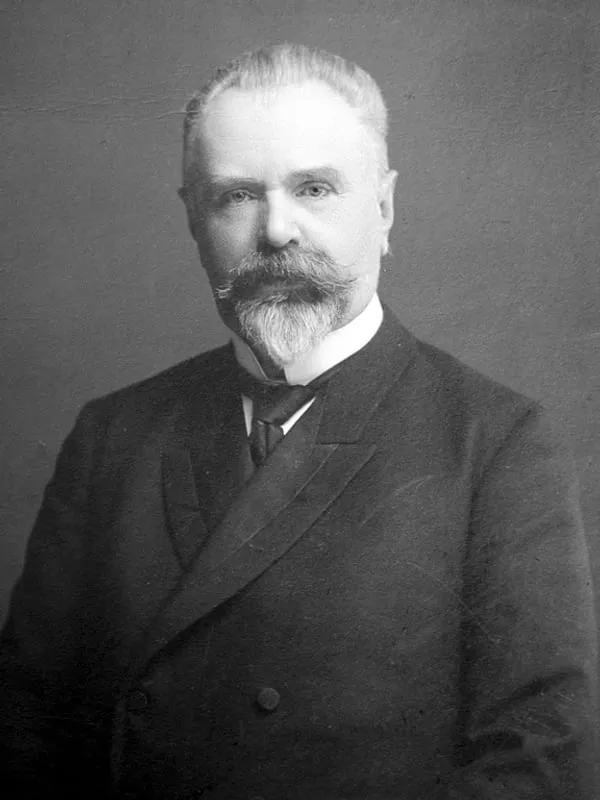
- Born:
- 27 July 1848, Bajkowo, Tver Governorate (Russian Empire)
- Died:
- 2 September 1917, Petrograd
- Author:
- Łukasz Skowroń
- Photo:
- autor nieznany, domena publiczna, Wikimedia Commons

Boris Vladimirovich Stürmer headed the Russian government for less than ten months of 1916, but he became one of the symbols of the decay of tsarist rule. He was an aged courtier and governor with no experience of national politics, and he was made prime minister by Tsar Nicholas II, who was looking for an obedient executor of his will. Contemporaries were convinced that the appointment had been arranged by the Empress Alexandra Feodorovna and Grigori Rasputin. For several months Stürmer combined the offices of prime minister, minister of the interior and later minister of foreign affairs. His German surname and rumours of a separate peace with Germany led the opposition in the Duma to accuse him publicly of treason in November 1916. No evidence was ever found, but his dismissal could no longer save the monarchy.
Before the war
He was born on 27 July 1848 (15 July by the Julian calendar) on the Bajkowo estate in Tver Governorate. His father, a retired cavalry captain, came from a family of German origin, his mother from the Russian Panin family. After studying law in St Petersburg, which he completed in 1872, he worked in the Senate and the Ministry of Justice, and from 1879 for over a decade he ran ceremonial affairs at the Ministry of the Imperial Court. Among other things he prepared the coronation of Alexander III in 1883. He then returned to his home province, where he chaired the zemstvo board and earned a reputation as a skilful mediator between the liberal landowners and the conservative governor.
In 1894 he became governor of Novgorod, and in 1896 of Yaroslavl. In 1902 the minister of the interior, Vyacheslav von Plehve, brought him to St Petersburg as a department director. After Plehve’s assassination in 1904 Stürmer was mentioned as his successor, but the ministry went to someone else. Instead the Tsar appointed him to the State Council, although he did not meet the customary conditions for such an appointment. A circle of right-wing dignitaries and officials met weekly in his flat, and from it grew the organisations of the conservative nobility. Stürmer was regarded as a supporter of autocracy, but avoided ties with the far right. He was interested in history and archaeology and presided over two regional archaeological congresses. His enemies, such as Vladimir Lopukhin, later a department director at the Ministry of Foreign Affairs, described him as a schemer and a bribe-taker.
Prime minister
At the turn of January and February 1916 the Tsar dismissed the 76-year-old prime minister Ivan Goremykin and entrusted the leadership of the Council of Ministers to the almost equally old Stürmer. The decree is dated 20 January by the Julian calendar, that is 2 February by the Gregorian. The choice surprised the capital. The new prime minister had earlier asked the monarch for permission to change his surname to Panin, after his mother’s family, but the Tsar put the matter off. According to the British historian Dominic Lieven, the appointment was decided above all by a lack of candidates: Nicholas II wanted at the head of the government a loyal old official who would neither oppose him nor conspire with the Duma. Most contemporaries, and many historians after them, attributed it, however, to the influence of the Empress and of Rasputin, with whom Stürmer kept in contact. The French ambassador Maurice Paléologue noted that the new prime minister was “worse than mediocre”, cunning and obsequious.
Stürmer began with gestures of reconciliation. On 22 February, at the opening of the session of the State Duma, the Tsar came to the Tauride Palace for the first time ever, but the prime minister’s speech disappointed the deputies. Only the right responded to his invitation to a reception marking his appointment. As head of his chancellery Stürmer chose the journalist and former police agent Ivan Manasevich-Manuilov, a man of appalling reputation. In March, after a scandal surrounding the minister of the interior, Alexei Khvostov, who according to contemporary accounts had plotted to have Rasputin killed, Stürmer took over his ministry as well. In the same month the minister of war, Alexei Polivanov, left office; he had cooperated with the Duma and public organisations. In the summer Nicholas II, instead of appointing a minister of state defence with broad powers, as General Mikhail Alekseyev had proposed, gave Stürmer vague powers to coordinate the affairs of the front and the rear. According to scholars he never used them, but in the capital people began to call him a dictator.
Minister of foreign affairs
In July 1916 Stürmer exploited the dispute over autonomy for the Kingdom of Poland. The foreign minister, Sergey Sazonov, had persuaded the Tsar to issue a manifesto, while the prime minister and the conservatives opposed it. In Sazonov’s absence Stürmer had a private talk with the monarch, and the Empress backed him. On 20 July the Tsar dismissed Sazonov and entrusted foreign affairs to Stürmer, who kept the premiership and handed the Ministry of the Interior to Alexander Khvostov. The manifesto on Polish autonomy never appeared. The news of the change caused consternation in Petrograd and in the Allied capitals, because Sazonov was seen as the guarantor of Russia’s loyalty to the Entente.
Stürmer did not, however, change course, and his diplomacy shows rather a consistent pursuit of gains for Russia in the event of victory. In August he concluded the negotiations with Romania, which signed a treaty with the Entente and declared war on Austria-Hungary, and in September he accepted the agreement with Britain on the partition of Asiatic Turkey. Some critics later blamed him for Romania’s premature entry into the war, which ended in defeat. Russian authors sympathetic to Stürmer argue, on the other hand, that Allied diplomats disliked him precisely because of his persistent insistence on Russian interests. When on 5 November Germany and Austria-Hungary proclaimed the Act of 5 November, it was to Prime Minister Stürmer that the heads of the Allied governments telegraphed their assurances of solidarity.
Downfall
In the autumn of 1916 high prices, bread queues and the paralysis of the railways were added to the hardships of the war. There was a growing conviction that the country was ruled by the “dark forces” at court, and the prime minister’s German surname, satirical ditties and gossip about secret talks with Berlin made him an ideal target. When the Duma met on 14 November, the Kadet leader Pavel Milyukov listed the government’s abuses, including the release of Manasevich-Manuilov from custody, and after each charge asked: “Is this stupidity or treason?” He also quoted a Viennese newspaper according to which Stürmer’s appointment had been a victory for the court party gathered around the Empress. The prime minister and the ministers had left the chamber before these speeches. Stürmer wanted to dissolve the Duma and arrest Milyukov, but found no support in the government. Members of the dynasty demanded his departure, and the Tsar wrote to his wife that the prime minister acted on the Duma and the whole country like a red rag. On 23 November at Mogilev Nicholas II accepted his resignation, and the next day it was announced publicly. Alexander Trepov became the new prime minister. Stürmer kept the monarch’s favour: in 1916 he received the highest court rank of Ober-Chamberlain.
Prison and death
After the outbreak of the February Revolution Stürmer was arrested in March 1917 and held in the Peter and Paul Fortress. His case was taken up by the Extraordinary Commission of Inquiry of the Provisional Government, which investigated the abuses of the tsarist ministers. One of its members recalled that when the commission wanted to release him, Alexander Kerensky opposed it, fearing the reaction of the street. Gravely ill with uraemia, the former prime minister died on 2 September 1917 (20 August by the Julian calendar) in a prison hospital. Sources differ as to whether it was the hospital of the Peter and Paul Fortress or of the Kresty prison. He was buried in the cemetery of the Alexander Nevsky Lavra. The accusations of treason were never proven.
Assessment
History has not been kind to Stürmer. The British historian Bernard Pares, who was in Russia during the war, and many later authors saw him as an incompetent reactionary and a puppet of the Empress and Rasputin, and regarded his assurances of cooperation with the Duma as a sham. This picture was fixed by the memoirs of Sazonov and Paléologue. Dominic Lieven judges him more leniently: as a competent governor and a loyal servant of the crown who was, however, completely helpless as head of a wartime government. In the view of scholars of revolutionary symbolism such as Orlando Figes and Boris Kolonitskii, Stürmer fell victim to injurious rumours of treason, but precisely because in the eyes of society he embodied the “dark forces”, his fall struck not only him but the whole monarchy.
Sources
Spotted a mistake?Report an error
Often appears with
People who appear in the same events.