Russia · The Entente
Pavel Milyukov
Leader of the Constitutional Democratic Party and of the Progressive Bloc in the Duma, foreign minister of the Provisional Government (March–May 1917)
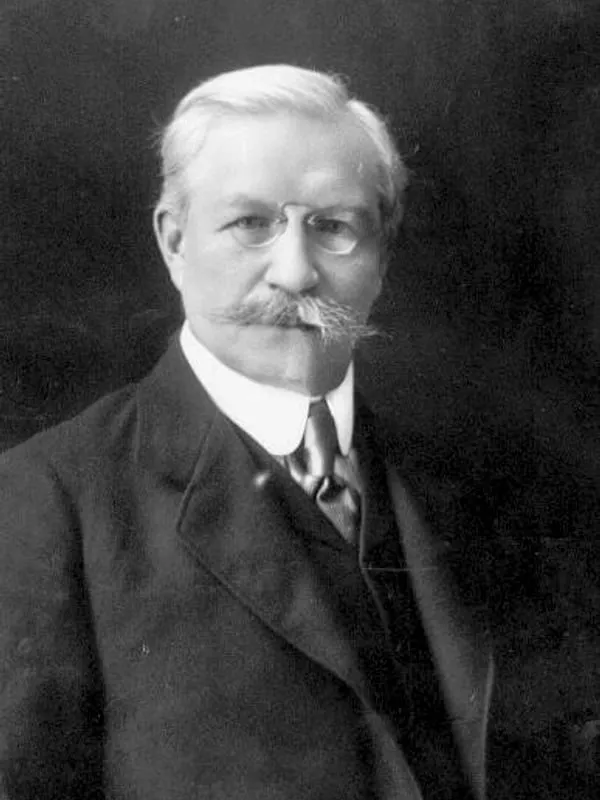
- Born:
- 27 January 1859, Moscow (Russian Empire)
- Died:
- 31 March 1943, Aix-les-Bains (France)
- Author:
- Łukasz Skowroń
- Photo:
- Фотография ателье Буллы, domena publiczna, Wikimedia Commons

Pavel Nikolayevich Milyukov was the most eminent Russian liberal of his age: a historian, a publicist and for many years the leader of the Kadets, the Constitutional Democratic Party. During the war he was a champion of fighting on to victory alongside the Allies and of Russian control over Constantinople and the Straits, for which he was nicknamed “Milyukov of the Dardanelles”. In 1915 he became the head of the opposition Progressive Bloc in the Duma, and in November 1916 he delivered the “stupidity or treason?” speech, which became one of the harbingers of the fall of tsarism. After the February Revolution he became foreign minister, but his promise to honour Russia’s wartime commitments provoked the first crisis of the new government, and after two months he had to go. He spent the rest of his life in emigration.
Before the war
He was born on 27 January 1859 (15 January in the Julian calendar) in Moscow, into the family of an architect who taught at the Moscow School of Painting, Sculpture and Architecture. He studied history and philology at Moscow University under Vasily Klyuchevsky and Paul Vinogradoff. His work on the Russian state economy in the era of Peter the Great’s reforms and his three-volume “Outlines of Russian Culture” won him fame as one of the leading Russian historians. In 1895 he was stripped of the right to lecture for his political views and exiled to Ryazan. He then lectured in Sofia, carried out archaeological research in Macedonia and gave lecture series in the United States. He was imprisoned several times, and with Pyotr Struve he helped found the liberal journal “Osvobozhdenie”, published in Stuttgart.
During the Revolution of 1905 he was one of the founders of the Kadet party, and from 1907 he chaired its central committee. He was also the de facto director of the party daily “Rech”. From 1907 he sat in the Third and Fourth State Dumas as a deputy for St Petersburg and chairman of the Kadet group, which called itself “His Majesty’s Opposition” and not an opposition to His Majesty. He was considered the Duma’s best expert on foreign policy, especially Balkan policy. In 1913 he sat on the international commission of the American Carnegie Endowment that investigated the crimes committed during the Balkan Wars. He was a penetrating analyst, but also a doctrinaire and conceited man. His associates admitted that no one in the party dared to argue with him.
Loyal opposition
In July 1914 Milyukov warned against Russia committing itself to the defence of Serbia. When war broke out, however, at the extraordinary session of the Duma on 8 August (26 July in the Julian calendar) he declared on behalf of the Kadets that for the duration of the war they were suspending their struggle with the government and standing behind the defence of the country. He saw the war as an opportunity: Russia was to win Constantinople and the Straits, and the Slav peoples of Austria-Hungary their liberation. He proclaimed these aims openly at a time when ministers were still speaking cautiously. His younger son Sergei, a student who had volunteered for the army, was killed at the front in the summer of 1915.
The defeats of 1915 and the revealed shortage of ammunition changed the mood. After the dismissal of the war minister Sukhomlinov Milyukov put forward the slogan of a “government of public confidence”, that is, a cabinet that would enjoy the support of the Duma, though not necessarily be responsible to it. In August 1915 he was one of the chief creators of the Progressive Bloc, a coalition of liberals and moderate conservatives that brought together a majority of the Duma and the State Council. The Tsar responded by assuming the supreme command, which left power in the capital in the hands of the Tsarina Alexandra Feodorovna, and a few days later by prorogating the Duma. Milyukov tried to keep the bloc united and within the bounds of legal opposition. In the spring of 1916 he travelled with a Duma delegation to Britain, France and Italy. In the summer he lectured at Cambridge, where he received an honorary doctorate, and met Tomáš Masaryk. During the journey he also gathered abroad rumours of supposed efforts by the Russian court to obtain a separate peace.
“Stupidity or treason?”
In the autumn of 1916 the mood in the country was growing more radical, and part of the Progressive Bloc demanded an attack on the whole system. Milyukov, criticised by provincial Kadets for his caution, chose a middle way: to strike at the prime minister, Boris Stürmer. On 14 November (1 November in the Julian calendar), at the opening of the new session, he listed from the Duma rostrum the government’s failures and abuses, from the Sukhomlinov affair to the release from custody of the prime minister’s secretary, and after each charge asked: “What is this: stupidity or treason?”. From the benches the answer came back now one way, now the other. He also named Rasputin and the “court party”, and he quoted in German, from a Viennese newspaper, a sentence about the victory of the party gathered around the young Tsarina, so that the presiding officer would not cut him off. He announced that the opposition would fight the government by all legal means until it went.
The censors banned the printing of the speech, but copies of it, often supplemented with charges he had not made, circulated throughout the country and at the front. Ten days later the Tsar dismissed Stürmer. Milyukov himself admitted in his memoirs that his listeners answered “treason” even where he himself was not sure. Historians regard the speech as a turning point: for the first time the highest circles of power had been accused of treason from the parliamentary rostrum, and no consequences followed for such an accusation.
Foreign minister
When the Petrograd garrison mutinied in March 1917, Milyukov joined the Provisional Committee of the Duma and conducted the negotiations with the Petrograd Soviet on forming a new government. On 15 March he announced the composition of the Provisional Government, headed by Prince Georgy Lvov, and himself took foreign affairs. He wanted to preserve a constitutional monarchy with the young Alexei on the throne and Grand Duke Michael as regent, and the next day, together with Alexander Guchkov, he was the only one to urge Michael to accept the crown. He remained in the minority.
As minister he assured the Allies that Russia would honour its commitments and fight on to victory, and he received the recognition of the new government by the United States, Britain, France and Italy. He also presented to the government the draft of the proclamation to the Poles, issued on 30 March, in which Russia recognised the right of the Polish nation to an independent state, bound to her by a free military alliance. At the same time he made no secret of wanting the agreements concluded by the tsarist regime to be carried out, the promise of Constantinople included. The Petrograd Soviet, which demanded a peace without annexations, forced on the government the declaration of 9 April, deliberately worded vaguely. When it was demanded that this be passed to the Allies, Milyukov attached on 1 May a note of his own assuring them that the Russian people wished to carry the war to a decisive victory. The publication of the note provoked the April Crisis: soldiers with the slogan “Down with Milyukov” surrounded the seat of the government, and shots were fired on Nevsky Prospect. His colleagues in the government did not defend him. Guchkov resigned, and on 15 May Milyukov left too, having refused to move to the ministry of education. A few days later the first coalition government, with the participation of socialists, was formed.
After leaving the government
Milyukov remained leader of the Kadets and an advocate of restoring discipline in the army. At the State Conference in Moscow in August 1917 he supported the programme of General Lavr Kornilov, and during the Kornilov affair he proposed to the prime minister, Kerensky, mediation and the handing over of power to General Mikhail Alekseyev. After the Bolshevik coup he was elected to the Constituent Assembly, but left for the Don, where he helped build the political base of the White Volunteer Army. In May 1918, in Kiev, occupied by the Germans, he opened talks with the German command on a joint struggle against the Bolsheviks. For most Kadets this was a denial of everything he had defended during the war. Milyukov gave up the party leadership, and later acknowledged the step as a mistake.
At the end of 1918 he went to the West to seek help for the Whites. He settled in Paris, where from 1921 to 1940 he published the daily “Poslednie Novosti”, the most widely read newspaper of the Russian emigration. In March 1922 in Berlin, during one of his lectures, monarchists tried to shoot him, and his friend Vladimir Nabokov, the writer’s father, was killed by a bullet while shielding him. He wrote a “History of the Second Russian Revolution” and memoirs. In the 1930s he argued that in the event of war the emigration should side with the homeland, and during the Second World War he rejoiced at the Red Army’s victory at Stalingrad. He died on 31 March 1943 in Aix-les-Bains in France.
Assessment
For his supporters Milyukov was the embodiment of Russian liberalism and parliamentarianism, a man of great learning and courage who in 1916 said aloud what most of the country was thinking. Critics, including some from his own camp, accused him of doctrinairism and detachment from reality. The speech of November 1916, based partly on unverified rumours, undermined the authority of the monarchy, but also stirred up feelings that the liberals were afterwards unable to control. As minister he clung stubbornly to the war aims, Constantinople included, at a moment when soldiers and workers wanted peace above all. Many historians, such as Richard Pipes and Orlando Figes, believe that this lack of feel for the public mood weakened the Provisional Government from its first weeks. The American scholar Melissa Stockdale, the author of his biography, stresses on the other hand that Milyukov consistently defended the principle that Russia must keep the word it had given its allies, and that his defeat was also the defeat of Russian liberalism in its collision with war and revolution.
Sources
Spotted a mistake?Report an error
Often appears with
People who appear in the same events.
On the timeline
(18)1916
1917
January
March
- 15
- Key eventAbdication of Nicholas IILate on 15 March 1917 at Pskov Nicholas II gave up the throne for himself and his son in favour of his brother Michael. The next day Michael declined the crown.
- Formation of the Provisional GovernmentOn 15 March 1917 Milyukov announced the Provisional Government, led by Prince Lvov. It arose from an agreement of the Duma Committee and the Petrograd Soviet.