Russia · The Entente
Alexander Kerensky
Minister of Justice (March–May 1917) and of War (May–September 1917), Prime Minister of the Provisional Government (July–November 1917), Supreme Commander-in-Chief (from September 1917)
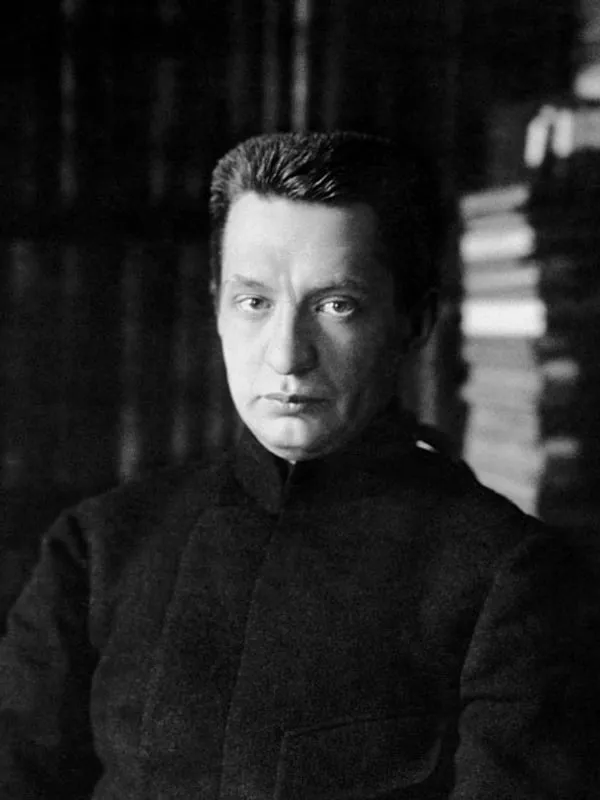
- Born:
- 4 May 1881, Simbirsk (Russian Empire)
- Died:
- 11 June 1970, New York (United States)
- Author:
- Łukasz Skowroń
- Photo:
- Karl Bulla, domena publiczna, Wikimedia Commons

Alexander Fyodorovich Kerensky was the most popular man in Russia in the spring of 1917 and the most hated by the autumn of the same year. A lawyer, a defence counsel in political trials and a socialist deputy in the Duma, during the February Revolution he was the only man to sit both in the Provisional Government and in the leadership of the Petrograd Soviet. He was in turn minister of justice, minister of war and prime minister, and finally supreme commander as well. He wanted revolutionary Russia to keep faith with its allies and to fight on until a general peace without annexations. He staked everything on an offensive that ended in defeat, and in his quarrel with General Lavr Kornilov he lost the trust of both the army and the left. In November 1917 he was overthrown by the Bolsheviks, who soon took Russia out of the war. He spent the rest of his long life in exile, explaining why he had lost.
Before the war
He was born on 4 May 1881 (22 April in the Julian calendar) in Simbirsk on the Volga. His father was headmaster of the local gymnasium, where Vladimir Ulyanov, the future Lenin, was a pupil. In 1889 the family moved to Tashkent, where his father became inspector of schools. Kerensky studied history and philology, and then law, at the university in St Petersburg. As a young man he thought of a career as an opera singer and loved acting, which later showed in his speeches.
After Bloody Sunday in 1905 he drew close to the Socialist Revolutionaries and wrote for a revolutionary bulletin. At the end of 1905 he was arrested on a charge of belonging to an armed squad and spent several months in the Kresty prison. He then made his name as a defence counsel in political trials, defending peasants, revolutionaries and members of the Armenian Dashnaktsutyun party. In 1912 he took part in a public inquiry into the massacre of striking workers at the Lena goldfields. The same year he was elected to the Fourth State Duma for the town of Volsk in Saratov Governorate. Because the Socialist Revolutionaries were boycotting the elections, he formally left the party and sat with the Trudoviks, moderate socialists linked to the peasantry. In 1912 he also joined a quasi-Masonic organisation that brought together opponents of the autocracy from different camps. He was regarded as one of the best speakers of the left.
War and opposition
When the war broke out, Kerensky did not join the socialists who condemned it. At the one-day session of the Duma on 8 August 1914 (26 July Old Style) the Trudoviks called on workers and peasants to defend the fatherland and then to free it from the autocracy. From then on Kerensky was a “defencist”: a supporter of a war in defence of the country, waged in the hope of a democratic peace. At the same time he attacked the government fiercely. In 1915 he became leader of the Trudoviks in the Duma. He demanded an amnesty, autonomy for the Kingdom of Poland, restoration of the Finnish constitution and the lifting of restrictions on Jews. His group did not join the liberal Progressive Bloc, but Kerensky kept in close touch with it.
In 1916 he had a kidney removed, and throughout 1917 he suffered from pain which, according to people who knew him, explained some of his fainting fits and outbursts. Later the same year he went to Turkestan at the head of a Duma commission to investigate the Central Asian revolt, which had broken out after the announcement that the local population would be conscripted for labour behind the front, and had been bloodily suppressed. He laid the blame on the government and the local administration. At the November session of the Duma, after which the Tsar dismissed Prime Minister Stürmer, he was one of the sharpest speakers. In December 1916 he in effect called in the Duma for the overthrow of the autocracy, and Empress Alexandra Feodorovna wrote that Kerensky ought to be hanged. When the Duma met again in February 1917, he spoke of the need for the “physical removal” of those who had turned the law into an instrument of violence. Asked by the President of the Duma, Mikhail Rodzianko, what he meant, he replied: what Brutus did.
The February Revolution
On 12 March 1917, when the Petrograd garrison went over to the strikers, Kerensky urged the deputies not to obey the ukase proroguing the Duma and greeted the mutinous soldiers outside the Tauride Palace. He joined the Provisional Committee of the Duma, and in the evening became vice-chairman of the Petrograd Soviet. He received arrested dignitaries of the old regime in the palace and more than once saved them from lynching. When the Soviet’s committee decided that socialists would not enter a “bourgeois” government, Kerensky accepted the post of minister of justice in the Provisional Government, and on 15 March forced the Soviet’s approval with a fiery speech in which he promised to be the guardian of democracy in the government. The next day, together with most of the Duma leaders, he urged Grand Duke Michael not to accept the crown.
As minister of justice he carried out a political amnesty, brought revolutionaries back from exile and signed the abolition of the death penalty. He set up an extraordinary commission of inquiry into the abuses of former ministers and dignitaries. He was responsible for the safety of the imperial family, held at Tsarskoye Selo, and questioned the Empress himself. The government he belonged to restored Finland’s autonomy and on 30 March issued a proclamation to the Poles, recognising Poland’s right to independence. Kerensky became the living symbol of the revolution. He wore a military tunic without insignia, although he had never served in the army, spoke incessantly and was greeted everywhere with ovations. The press called him “the first love of the revolution”, “the knight of the revolution” and “the leader of the people”.
Minister of war
In the April Crisis, set off by Pavel Milyukov’s note about war until victory, Kerensky threatened to leave the government unless a coalition with the socialists was formed. When, after the resignation of Alexander Guchkov, the first coalition government was formed on 18 May, he took over the Ministry of War and the Navy. Four days later he announced the Declaration of Soldiers’ Rights, which gave servicemen full civil rights, and on 4 June he brought about the replacement of the supreme commander, General Mikhail Alekseyev, by General Aleksei Brusilov, who knew how to get on with the soldiers’ committees.
Kerensky believed that Russia could not withdraw from the war without disaster, and that a separate peace would mean Germany beating the Western allies and then turning on Russia. The allies were pressing for an offensive, and their credits were saving the state from bankruptcy. Kerensky also hoped that victory would strengthen the revolution, restore the army’s spirit and give Russia a strong position in talks on a peace without annexations. In May and June he toured the front, spoke at countless meetings and carried crowds of soldiers with him, although their enthusiasm often vanished when he left. Officers nicknamed him the “persuader-in-chief”. At the end of May he also went to Sevastopol to settle the dispute between the commander of the Black Sea Fleet, Admiral Alexander Kolchak, and the sailors’ committees, and on 29 June he issued an order to the army ending with the words “I order you: forward!”
The offensive began on 1 July. Kerensky telegraphed the government about a “great triumph of the revolution”, but within a few days the attack stalled, and from 19 July the Germans and Austrians drove the shattered 11th Army across Eastern Galicia. At the same time Kerensky, together with the foreign minister Mikhail Tereshchenko and the Menshevik Irakli Tsereteli, reached an agreement in Kiev with the Ukrainian Central Rada, in protest against which the Kadets left the government. In Petrograd the July Days broke out. From the front Kerensky pressed for the publication of material showing that Lenin was a German agent, and on returning to the capital he demanded a firm crackdown on the Bolsheviks.
Prime minister
On 20 July Prince Georgy Lvov resigned, and the next day Kerensky became prime minister, keeping the Ministry of War and the Navy. He was the only politician acceptable at once to the moderate socialists, the liberals and the generals. The soviets granted his cabinet unlimited powers as the “government of the salvation of the revolution”. Kerensky disbanded the mutinous regiments of the garrison, closed the Bolshevik press and on 25 July restored the death penalty at the front, whose abolition he himself had recently signed. He moved into the Winter Palace, which his opponents mocked by calling him “Alexander IV”. On 31 July he appointed Kornilov supreme commander. Negotiations with the Kadets went so badly that on 3 August he resigned, so as to return with a free hand and form the second coalition government on 6 August. In August the government sent the imperial family to Tobolsk in Siberia.
At the Moscow State Conference at the end of August the right greeted Kornilov as a saviour, and Kerensky closed the proceedings with a chaotic speech full of pathos. On 3 September the Germans took Riga. The prime minister and the supreme commander negotiated through intermediaries about strengthening the government’s authority and about a cavalry corps that was to come to the capital. On 8 September Vladimir Lvov passed Kornilov’s “demands” to Kerensky, and the prime minister, convinced that he was facing a conspiracy, dismissed the general and declared him a rebel. The soviets, the railwaymen and armed workers were mobilised to defend the capital, and the Kornilov affair collapsed without a fight. On 12 September Kerensky took over the supreme command himself, and on 14 September he proclaimed the Russian Republic and handed power to a five-man Directorate under his chairmanship.
The victory was illusory. The officers never forgave Kerensky for imprisoning Kornilov, and the left suspected that he had himself been part of the plot. The Bolsheviks, who had organised the defence of the capital, kept their weapons and within a few weeks won majorities in the Petrograd and Moscow soviets. On 8 October Kerensky formed the third and last coalition government, and on 20 October he opened the Pre-Parliament, the Provisional Council of the Republic. The army was falling apart, the Germans occupied the islands of the Gulf of Riga, and in the countryside the peasants were seizing the landowners’ estates. Kerensky made light of the danger. According to Vladimir Nabokov, he said that he was actually praying for a Bolshevik rising, because he had enough forces to crush it. When on 6 November he tried to close the Bolshevik newspapers, the Soviet’s Military Revolutionary Committee went onto the offensive. On the morning of 7 November Kerensky left Petrograd to fetch troops from the front, and that night the Bolsheviks took the Winter Palace and overthrew the Provisional Government.
Only General Pyotr Krasnov, with a few hundred Cossacks, answered the prime minister’s appeal. After the defeat at Pulkovo the Cossacks were ready to hand Kerensky over to the Bolsheviks, and on 14 November he escaped from Gatchina disguised as a sailor. The legend that he had earlier fled the Winter Palace in a nurse’s dress angered him for the rest of his life.
After the war
For several months he hid near Petrograd and Novgorod. In January 1918 he secretly came to the capital to appear in the Constituent Assembly, to which he had been elected, but the Socialist Revolutionary leadership would not let him show himself. In June 1918, with the papers of a Serbian officer and the help of British agents, he left via Murmansk for London, where he met David Lloyd George, and then went on to Paris. He lobbied for Entente help for anti-Bolshevik Russia, but opposed Kolchak’s dictatorship in Siberia, which he considered no better than the Bolshevik one. For ten years he published the émigré paper Dni. In 1940, after the fall of France, he moved to the United States. He worked at the Hoover Institution at Stanford University and wrote successive versions of his memoirs, from The Prelude to Bolshevism to Russia and History’s Turning Point. During the Second World War he came out in favour of defending Russia against Hitler. He died in New York on 11 June 1970, one of the last surviving participants in the events of 1917. The Russian and Serbian Orthodox churches in New York refused him a funeral, so he was buried in London, where his sons lived.
Assessment
Kerensky’s reputation was a battlefield from the start. To the Bolsheviks he was a “bourgeois” politician who had deceived the people and waged an imperialist war; to monarchists and White officers, the man who destroyed the army and opened the way for Lenin. His name, as “Kerenshchina”, became a byword for empty talk and the helplessness of government. Kerensky himself argued to the end of his life that he had lost because he could not make peace and the allies would not help, and that Kornilov really had been preparing a coup.
Historians judge him in a more nuanced way. Siobhan Peeling, author of the entry on him in the international encyclopedia of the First World War “1914-1918-online”, points out that judgements of Kerensky are distorted both by the cult that surrounded him in the spring of 1917 and by the hatred that fell on him later: from an opponent of the death penalty he became a supporter of its restoration, from a democrat almost a dictator. Marc Ferro believes that the very decision to launch the offensive irreversibly cut the government off from the masses, who wanted peace, and Louise Heenan that its failure sealed Kerensky’s fate. Richard Pipes portrays him as a politician who, in the Kornilov affair, preferred to get rid of a rival on the right rather than stand up to the left, while his biographer Richard Abraham titled his book “The First Love of the Revolution”, recalling the great hopes that Russians and the allies placed in him in the spring of 1917. Most agree that in 1917 Russia wanted above all peace and land, and that Kerensky, loyal to the allies and to the Constituent Assembly, gave it neither.
Sources
Spotted a mistake?Report an error
Mentioned in battles
(02)Often appears with
People who appear in the same events.
On the timeline
(28)1915
1916
1917
March
- 15
- Key eventAbdication of Nicholas IILate on 15 March 1917 at Pskov Nicholas II gave up the throne for himself and his son in favour of his brother Michael. The next day Michael declined the crown.
- Formation of the Provisional GovernmentOn 15 March 1917 Milyukov announced the Provisional Government, led by Prince Lvov. It arose from an agreement of the Duma Committee and the Petrograd Soviet.
April
May
June
July
August
- 06
- Second coalition government in RussiaOn 6 August 1917, after three weeks of bargaining and Kerensky's resignation, a second coalition of socialists and Kadets was formed in Petrograd.
- Dowbor-Muśnicki takes command of the I Polish CorpsOn 6 August 1917 Gen. Józef Dowbor-Muśnicki took command of the I Polish Corps, formed in Russia on the Naczpol's initiative from Poles in the Russian army.
September
- 14
- Collapse of the Kornilov affairOn 13 September 1917 General Krymov shot himself in Petrograd; next day General Alekseyev arrested Kornilov in Mogilev. The revolt collapsed without a fight.
- Russia becomes a republicOn 14 September 1917 the Provisional Government, not waiting for the Constituent Assembly, proclaimed the Russian Republic under a five-man Directory.