Russia · The Entente
Irakli Tsereteli
Menshevik leader in the Petrograd Soviet, Minister of Posts and Telegraphs (May–July 1917) and of the Interior (July–August 1917) in the Provisional Government
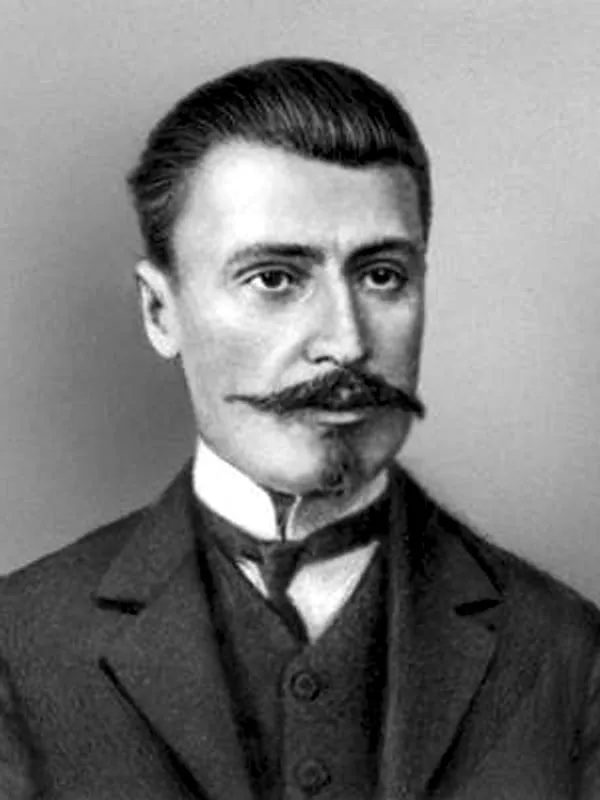
- Born:
- 2 December 1881, Gorisa near Kutaisi (Georgia, Russian Empire)
- Died:
- 20 May 1959, New York (United States)
- Author:
- Łukasz Skowroń
- Photo:
- autor nieznany, domena publiczna, Wikimedia Commons

Irakli Tsereteli was a Georgian social democrat who for several months of 1917 was among the most influential people in Russia. He returned to Petrograd from Siberian exile a few weeks after the February Revolution and quickly became the informal leader of the Petrograd Soviet. He was the architect of the policy of “revolutionary defencism”: Russia was to defend itself against Germany but strive for a general peace without annexations or indemnities. It was he who brought the socialists into the coalition government, and throughout the spring and summer of 1917 he tried to maintain the alliance of the soviets with the liberals. When the Bolsheviks seized power, he returned to Georgia and helped proclaim its independence. His defeat was the defeat of moderate socialism in Russia, which wanted both to continue the war and to end it with a democratic peace.
Before the war
He was born on 2 December 1881 (20 November in the Julian calendar) in Gorisa near Kutaisi, in Imereti, into an old noble family. His father, Giorgi Tsereteli, was a well-known writer and publicist of radical views. He studied law at Moscow University, where he became one of the leaders of the student movement. In 1902 he was arrested and exiled to Siberia, to the Irkutsk area. There he joined the social democrats, and after the party split he sided with the Mensheviks. He continued his studies in Berlin but did not finish them. He was in poor health from his youth, suffering among other things from tuberculosis, which affected his whole career.
In 1907, aged only twenty-five, he was elected to the Second State Duma from Kutais Governorate. There he chaired the social democratic group and became famous as one of the best speakers in parliament. When in June 1907 Prime Minister Pyotr Stolypin dissolved the Duma, the social democratic deputies were accused of conspiring against the state. Tsereteli was sentenced to penal servitude (katorga), which was commuted to imprisonment on account of his health. He spent several years in prisons in St Petersburg, Nikolayev and Irkutsk, and from 1913 he lived in enforced settlement in Usolye near Irkutsk.
The war in exile
The war found him in Siberia. Around him and a few other exiles, among them Fyodor Dan, a group formed that was later called the “Siberian Zimmerwaldists”. In articles in papers published in Irkutsk Tsereteli argued that the war was an imperialist struggle for spheres of influence and that all the great powers were to blame. He condemned the socialists who had supported their governments, but also rejected the slogan of the defeat of one’s own country proclaimed by Vladimir Lenin. He believed that a nation had the right to defend itself and that socialists should unite across the front lines and force a peace without victors or vanquished. The authorities soon closed the papers, but his writings were known among socialists throughout Russia.
Leader of the Soviet
The news of the fall of tsardom reached Irkutsk at the beginning of March 1917. For several days Tsereteli helped run the new city authorities, then travelled to Petrograd, arriving at the end of March (in the Julian calendar, that is, at the beginning of April in the Gregorian). As the first prominent exile to return to the capital, he was welcomed by crowds. In the Soviet he immediately took his place beside its chairman Nikolay Chkheidze, also a Georgian, and in practice took charge of its policy.
He proclaimed that the revolution and the country had to defend themselves against Germany, while at the same time the Soviet was to force the Provisional Government to renounce the expansionist plans of tsardom. In April he negotiated with the government, and the talks ended in the declaration of 9 April, which stated that the aim of free Russia was not domination over other nations. When the foreign minister Pavel Milyukov assured the Allies in a note of 1 May that Russia would fight to a victorious end, the April Crisis broke out. Tsereteli thought that if Milyukov had deliberately wanted to break with the Soviet, he could not have found a better means.
The solution to the crisis was the first coalition government, formed on 18 May. Tsereteli, at first opposed to socialists taking part in a “bourgeois” government, changed his mind because he feared that without the soviets’ support the cabinet would fall, opening the way to civil war. He chose the undemanding Ministry of Posts and Telegraphs so that he could go on leading the Soviet. Viktor Chernov called him the “minister of general affairs”: Tsereteli belonged to the narrow circle that actually decided the policy of Prince Georgy Lvov’s government. He supported the preparations for an offensive, because he believed that an army capable of fighting would strengthen Russia’s voice in the pursuit of peace. At the same time the Soviet called on the socialists of all countries to a conference in Stockholm, which was to work out the terms of a peace without annexations. The Entente governments, however, refused passports to their delegates and the conference never took place.
In June, at the First All-Russian Congress of Soviets, Tsereteli said that there was no party in Russia ready to take all power into its own hands. Lenin replied from the floor that there was such a party. The exchange went down in history as a symbol of the conflict between the moderate socialists and the Bolsheviks.
July and August 1917
At the beginning of July Tsereteli travelled with Alexander Kerensky and the foreign minister Mikhail Tereshchenko to Kiev, where they agreed with the Ukrainian Central Rada to recognise its executive body as the authority in Ukraine. The Kadet ministers regarded this as prejudging matters reserved for the Constituent Assembly and left the government, which coincided with the July Days. Tsereteli then defended the Soviet against demonstrators demanding that it take all power. When the disturbances were suppressed and Kerensky became prime minister, he took over the Ministry of the Interior and had to justify to the soviets the decision to arrest the Bolshevik leaders.
He was no longer in the second coalition government, formed on 6 August, because he did not want to lend his name to a cabinet that was not answerable to the soviets. At the Moscow State Conference he defended “revolutionary democracy” against the right and General Lavr Kornilov, and his public handshake with the industrialist Alexander Bublikov was meant as a gesture of reconciliation. A few weeks later the Kornilov affair destroyed what remained of confidence in the coalition. The Bolsheviks won majorities in the Petrograd and Moscow soviets, and the leaders of the moderate socialists lost their posts. Suffering from tuberculosis, Tsereteli left for Georgia at the end of September. He was convinced that the Bolsheviks, even if they seized power, would hold it for a few weeks at most.
The Constituent Assembly and Georgia
After the October Revolution he returned to Petrograd as a deputy to the Constituent Assembly. The authorities issued a warrant for his arrest, but he hid in the city and on 18 January 1918 spoke at the only session of the Constituent Assembly. He accused the Bolsheviks of bringing civil war and dictatorship instead of the promised peace and bread. After the dispersal of the assembly he returned to Georgia.
In Transcaucasia the Transcaucasian Sejm, which did not recognise Bolshevik rule, was already in session. Tsereteli, as one of its leaders, strongly opposed the Treaty of Brest-Litovsk, which gave the Ottoman Empire the districts of Kars, Ardahan and Batum. In April, when the Turks issued an ultimatum, he gave a fiery speech for the defence of Batum and the rejection of the treaty. The Sejm rejected the ultimatum, but the Transcaucasian forces could not hold the city and the Turks took Batum. On 22 April the Sejm proclaimed the independence of Transcaucasia, but the federation of Georgians, Armenians and Azerbaijanis fell apart after a month. On 26 May it was Tsereteli who announced in the Sejm that Transcaucasia could not continue to exist because it lacked unity, and that Georgia had to declare itself independent. The same day the Democratic Republic of Georgia was proclaimed, which sought German protection against the Turks. For a former internationalist this was a difficult turn, but he regarded an independent, democratic Georgia as the last bastion of socialism without dictatorship.
After the war
In the new state Tsereteli held no important office, because it was governed by the group of his old rival Noe Zhordania. In 1919, together with Chkheidze, he led the Georgian delegation to the peace conference in Paris, and then lobbied in London for the recognition of Georgia’s independence, which it obtained de facto in January 1920. He was in Europe when in February 1921 the Red Army occupied Georgia. He remained in exile in France, where he completed a law degree and worked as a lawyer. He edited the papers of the Menshevik Pavel Axelrod and argued with other Georgian émigrés who identified Bolshevism with Russian imperialism. In 1948 he moved to the United States and, commissioned by Columbia University, wrote memoirs of the February Revolution, one of the most important sources for the history of 1917. He died in New York in May 1959. In 1973 his ashes were moved to the cemetery of the Georgian emigration at Leuville-sur-Orge near Paris.
Assessment
Historians agree that Tsereteli was an honest man, a great orator and one of the few leaders of 1917 who tried to reconcile revolution with war. The Dutch historian W. H. Roobol, author of his biography, stresses that he genuinely believed in the possibility of a peace without annexations negotiated by socialists across the front lines. Critics argue that it was precisely this belief that ruined him. The Allies had no intention of giving up their war aims, and the soldiers and peasants did not want to wait any longer for peace and land. By bringing the socialists into a government that waged war and postponed reforms until the Constituent Assembly, Tsereteli made the moderate left responsible for all the failures of the Provisional Government, including the defeat of the Kerensky Offensive. The Bolsheviks profited from this disappointment. Some historians also note that his reluctance to let the soviets take power, when in July it was all but being forced on them, left the field to those who had no such scruples.
Sources
Spotted a mistake?Report an error
Often appears with
People who appear in the same events.