Greece · The Entente
Spyridon Lambros
Prime Minister of Greece (October 1916 – May 1917), professor of history at the University of Athens
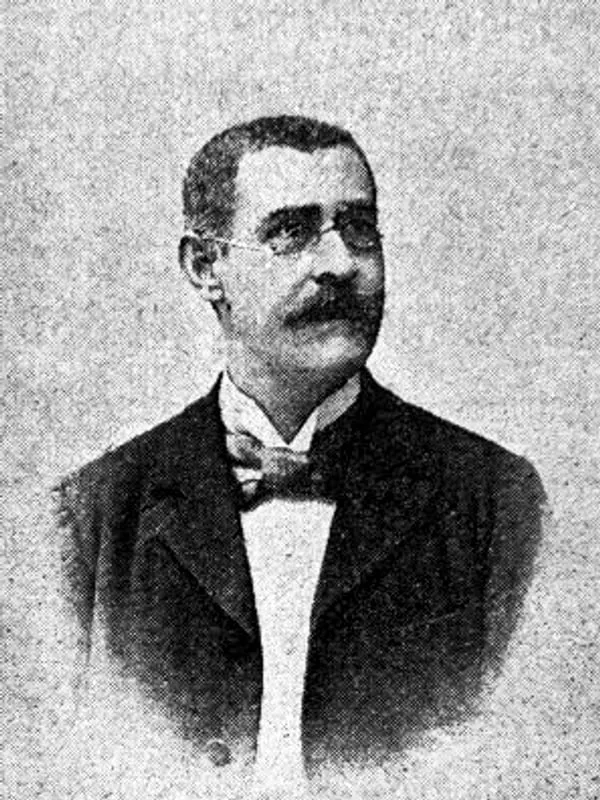
- Born:
- 20 April 1851, Corfu (Ionian Islands, now Greece)
- Died:
- 5 August 1919, Athens
- Author:
- Natalia
- Photo:
- autor nieznany, domena publiczna, Wikimedia Commons

Spyridon Lambros was one of the most distinguished Greek scholars of his age, and he went down in the history of the war as the prime minister who for seven months led the royalist part of a divided Greece. He was neither a politician nor a deputy. King Constantine I appointed him in October 1916, when a rival government of Eleftherios Venizelos was taking shape in Salonika and the Entente powers did not want to deal with any party cabinet. His government accepted a succession of ultimatums from a French admiral, lived through bloody fighting in Athens and the blockade of the country, and in the end apologised to the Allies. To the King’s supporters he was a respected professor who, in a hopeless position, defended what remained of the state’s independence. To the Venizelists and to most of the French he was merely an obedient tool of the court. After Constantine was removed from the throne he paid for it with exile and the confiscation of his property.
Before the war
He was born on 8 April 1851 by the Julian calendar (20 April by the Gregorian) on Corfu, the son of the numismatist Pavlos Lambros, whose family came from Epirus. In 1860 the family moved to Athens. Lambros studied philology at the University of Athens and then in Berlin and Leipzig, where in 1873 he defended a doctorate on the cult of the founders of Greek colonies. For the next few years he worked in the libraries and archives of Western Europe. From 1878 he lectured in Athens on Greek history and palaeography, and in 1890 he became a full professor. He was twice rector of the university and three times dean of the faculty of philosophy.
As a Byzantinist he made his name by studying and editing manuscripts. He compiled a catalogue of the Greek manuscripts in the monastery libraries of Mount Athos, translated and supplemented Ferdinand Gregorovius’s history of medieval Athens, wrote a multi-volume history of Greece, and from 1904 published the journal Neos Hellenomnemon (PL), devoted to the history of Greek letters in the Byzantine and Turkish periods. He was also one of the founders of modern sport in Greece: co-author of the official report on the 1896 Olympic Games in Athens, president of the union of athletic associations and for over a decade secretary of the Greek Olympic committee.
He took part in politics only from the sidelines. In 1882 he was inspector-general of elementary schools, and in 1913, after the Balkan Wars, the government sent him to Italy on the question of the border in Northern Epirus, which Greece was disputing with Albania and its Italian protectors. He was regarded as a man close to the court.
Prime minister of royalist Greece
In October 1916 Greece was a state torn apart. The quarrel between Venizelos and the King over entering the war, dragging on since 1915, had turned into an open split: at the end of August a Venizelist coup broke out in Salonika, and on 9 October Venizelos himself took the head of the government of National Defence there. In Athens the cabinet of Nikolaos Kalogeropoulos fell; the powers had not recognised it as the non-party government they had demanded in their June note. The King then turned to a professor from outside the world of the parties. Lambros became prime minister on 10 October 1916 (27 September by the Julian calendar, which Greece then used). He also took the ministry of religious affairs and education himself, and filled the government with other professors and officials. The correspondent of The Times wrote that he was considered a Germanophile, and the British writer George F. Abbott, who defended the King, replied that his only fault was that he was not a Venizelist.
The government did not have a moment’s peace. On the very day it was sworn in, the French Vice-Admiral Louis Dartige du Fournet handed it an ultimatum concerning the fleet. The ministers deliberated all night, and on the morning of 11 October gave way to force, protesting against an “act of violence”. The light vessels of the Greek navy passed into French hands. The British official history of naval operations admits that in the following weeks Lambros was as conciliatory as circumstances allowed.
The limit of concessions turned out to be arms. On 16 November the admiral demanded on behalf of France the surrender of several dozen batteries of guns, tens of thousands of rifles and ammunition, and a few days later the expulsion from Athens of the ministers of the Central Powers. Lambros’s government rejected the demand for arms, arguing that the Allies already held more Greek guns than the Germans and Bulgarians, and that handing over the weapons would be an open breach of neutrality. Behind the refusal also lay the fear that the arms would end up with Venizelos’s army. On 30 November the prime minister wrote to the admiral that he refused to believe France would resort to measures the nation would regard as acts of hostility.
December 1916
On 1 December French and British detachments, landed during the night at Piraeus, entered Athens and clashed with Greek troops. In those hours Lambros acted as an intermediary between the palace and the admiral, who accepted by telephone the King’s offer to hand over six batteries instead of ten. The fighting in Athens ended with the Allies withdrawing to their ships, and the next day the royalists turned on the supporters of Venizelos: there were deaths, hundreds of arrests, and liberal newspapers were shut down. In mid-December the authorities in Athens issued a warrant for Venizelos’s arrest for high treason. The dispute over how far the government then controlled the army, the reservists and the King’s entourage continues to this day. The Venizelists held Lambros responsible for the persecution, while his defenders presented him as a prime minister with no real power over the reservists’ leagues.
Similar disputes concern the anathema pronounced on Venizelos on Christmas Day 1916. According to the documents of the Greek Synod, the prime minister first gave the archbishop to understand that the government did not wish the clergy to take part in the ceremony, and later let it be known that he had no objection. Under pressure from the reservists the Synod took part.
The Entente’s answer was a blockade of the Greek coast, begun on 8 December. Lambros’s government protested to the neutral states, but the country, which lived on imported grain and coal, began to starve. On 15 December Athens accepted the ultimatum of the four powers and agreed to withdraw troops from Thessaly and Epirus. At the beginning of January 1917 the Allies set new conditions: the transfer of the army to the Peloponnese, the release of imprisoned Venizelists and an apology for 1 December. The government tried to bargain, but in January accepted everything, dismissed the commander of the Athens army corps and formally apologised to the Entente ministers, and on 29 January Greek troops saluted the Allied flags.
Dismissal and exile
In the spring of 1917 the King was increasingly isolated. The new French government was even less indulgent towards him than its predecessor, and General Maurice Sarrail was preparing to occupy Thessaly with its harvest. Constantine, wishing to placate the Allies, dismissed Lambros and at the beginning of May entrusted the government to Alexandros Zaimis, who was regarded as a friend of the Entente. Greek lists of governments give 21 April by the Julian calendar, that is 4 May 1917, as the end of Lambros’s term. The date of 5 February 1917 found in some studies has no basis in the sources.
In June he attended a council convened by the King, at which most of the former prime ministers advised against giving way to the Jonnart ultimatum. After Constantine’s departure the French high commissioner insisted on the removal of the most determined opponents of the Entente. Lambros was then placed under surveillance, and when Venizelos took over the government, he was indicted together with the members of his cabinet. According to Greek biographical entries his property was seized, and in January 1918 he was exiled to the island of Hydra, and a month later to Skopelos.
Last months
In exile his health declined. In the spring of 1919 he fell ill with pneumonia and then with a kidney disease. He was brought to Athens, where he stayed in his house under guard, and died there on 23 July 1919 by the Julian calendar (5 August by the Gregorian). Some studies, including encyclopaedic ones, give Skopelos as the place of death, but the archive of the University of Athens and Greek biographical entries point to Athens. After his death his wife and daughters published many of his unpublished works. One of his daughters, Lina, married Panagis Tsaldaris, later leader of the People’s Party, and in 1956 became the first woman in Greece to serve as a minister.
Assessment
The political episode of his life was judged above all through the lens of the National Schism. Authors sympathetic to Venizelos, such as the British writer J. Selden Willmore, saw him as a figurehead behind whom the King, the General Staff and the reservists’ leagues ruled. The British official history of the Macedonian campaign called his government a cabinet of no definite political colour that was evidently merely the King’s mouthpiece. Constantine’s defenders, such as Abbott, pointed out that it was the Allies who had demanded a cabinet of officials and then treated it as an enemy, and that Lambros accepted one humiliating demand after another to spare the country a war with the Entente. The British official history of naval operations credits him with conciliation and rather reproaches the French for entrusting diplomacy to a fleet commander who could neither wait nor negotiate.
Greek historians stress that his trial and exile were part of the revenge of the victorious camp, which deepened the split for decades to come. Everyone agrees, however, about his scholarly achievement. Hundreds of studies, source editions and manuscript catalogues secured him a lasting place among the founders of modern Greek historiography and Byzantine studies, and in 2019 the University of Athens marked the centenary of his death with a scholarly conference.
Sources
Spotted a mistake?Report an error
Often appears with
People who appear in the same events.
On the timeline
(15)1916
October
- 10
- Entente ultimatum on the Greek fleetOn 10 October 1916 Admiral Dartige du Fournet demanded Greece's light warships, the disarming of its large ones and control of Piraeus, police and railway.
- Lambros becomes prime minister of GreeceOn 10 October 1916 the historian Spyridon Lambros took office in Athens. His cabinet of officials and professors at once faced a French admiral's ultimatum.