Greece · The Entente
Alexandros Zaimis
Prime Minister of Greece (1915, 1916 and 1917), co-governor of the National Bank of Greece, later President of Greece (1929–1935)
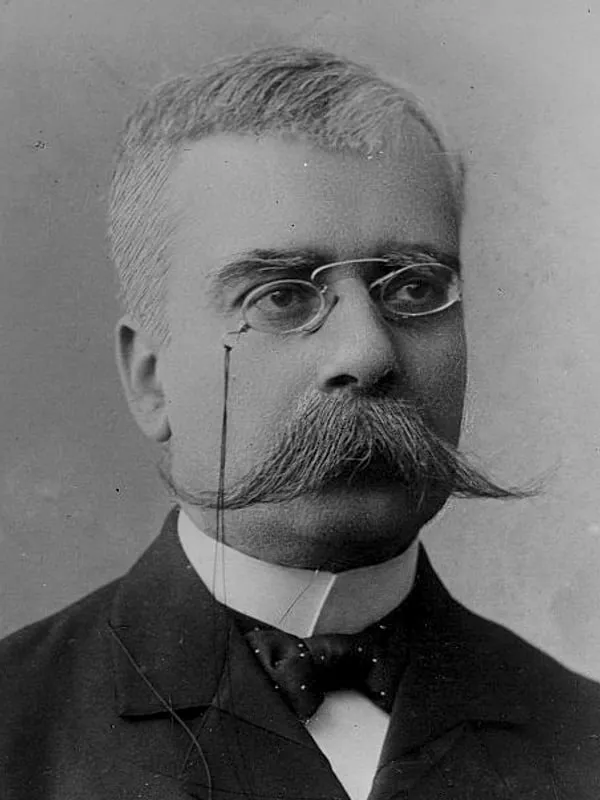
- Born:
- 9 November 1855, Athens
- Died:
- 15 September 1936, Vienna
- Author:
- Łukasz Skowroń
- Photo:
- George Grantham Bain Collection (Library of Congress), domena publiczna, Wikimedia Commons

During the war Alexandros Zaimis was the man King Constantine I turned to at moments of greatest crisis. Three times he headed the government: in October 1915, after the second resignation of Eleftherios Venizelos; in June 1916, when the Entente powers presented Greece with an ultimatum; and in May 1917, in the last weeks of Constantine’s reign. Loyal to the monarchy but well disposed towards the Allies and belonging to neither of the two feuding camps, he was the only politician with whom the king, the Entente envoys and Venizelos himself were all willing to talk. His first government refused to help Serbia, his second demobilised the army at the powers’ demand, and his third handed the king the demand for abdication and carried out the change on the throne. Zaimis never had a party or a programme of his own, and his governments were caretaker governments. Thanks to this he came through the National Schism as one of the few politicians respected on both sides.
Before the war
He was born on 28 October 1855 by the Julian calendar (9 November by the Gregorian) in Athens. He came from a family from Kalavryta in the Peloponnese, one of the most distinguished in the struggle for independence. His grandfather Andreas Zaimis was a leader of the rising of 1821 and head of government, and his father Thrasyvoulos was prime minister several times. Alexandros studied law in Athens, Leipzig, Berlin and Heidelberg, where he took his doctorate, and then political science in Paris. After his father’s death he took over his constituency and in 1885 entered parliament for Theodoros Deligiannis’s party.
His career advanced quickly. He was minister of justice and speaker of the chamber, and in September 1897, after the defeat in the war with Turkey, became prime minister for the first time. His government made peace with Turkey and accepted humiliating international control of the state’s finances, intended to secure the repayment of its debts. He headed the government a second time in 1901–1902. In 1906 the powers entrusted him with the office of High Commissioner of the autonomous Cretan State. He reconciled the island’s feuding factions, organised the Cretan Gendarmerie and governed until 1908, when the Cretans proclaimed union with Greece. In 1913 he travelled on diplomatic missions to the European capitals. It was he who informed Emperor Franz Joseph in Vienna of Constantine’s accession to the throne and gave assurances that the Greek–Serbian alliance did not oblige Greece to go to war with Austria-Hungary. From 1914 he was co-governor of the National Bank of Greece.
1915: the government that refused Serbia
When Venizelos resigned for the first time in March 1915, the king offered Zaimis the premiership, but he declined. He agreed only in October, when Venizelos resigned for the second time because the king did not back his declaration that Greece would honour its alliance with Serbia. Zaimis’s government took office on 7 October 1915. It included former prime ministers who opposed the war, among them Dimitrios Gounaris, Georgios Theotokis and Dimitrios Rallis. The prime minister also took foreign affairs for himself.
The new government quickly defined its policy. On 8 October Zaimis proclaimed armed neutrality: the army was to remain mobilised but not go to the aid of Serbia, which Germany and Austria-Hungary had just attacked. On 10 October he turned down the Serbian envoy, explaining that the alliance of 1913 concerned a Balkan war, not a war against several great powers at once. A few days later London offered Greece Cyprus in exchange for immediate help to Serbia, but on 20 October the government rejected this offer too. Zaimis insisted all the while that Greek neutrality was as benevolent as possible towards the Entente, and the Allies could still use the port of Salonika.
The cabinet was a minority government that Venizelos’s Liberals merely tolerated. It fell on the night of 3–4 November, when a dispute over the minister of war’s conduct in the chamber turned into a debate on foreign policy and parliament passed a vote of no confidence. The king dissolved the chamber and asked Zaimis to conduct the elections, but he refused. Stefanos Skouloudis became prime minister.
1916: demobilisation and schism
Zaimis returned to the bank, but in June 1916 he was needed again. After Fort Rupel was handed over to the Bulgarians and Germans, the protecting powers, France, Britain and Russia, blockaded the Greek ports, and on 21 June presented a note in Athens demanding the demobilisation of the army, a government without party colours and new elections. Skouloudis resigned, and Zaimis accepted all the demands and formed a cabinet of officials. A Franco-British squadron, ready for a show of force off Athens, sailed away. A few days later the government announced the demobilisation of the army. The reservists sent home, however, began to form leagues that became the armed wing of Venizelos’s opponents.
The summer brought disaster. In August Bulgarian troops advanced deep into Greek Eastern Macedonia, and the government, as in May, forbade the army to resist. On 30 August a Venizelist coup broke out in Salonika. After Romania entered the war Zaimis sounded out London and Paris on whether they would give Greece money and arms for a fresh mobilisation and a war with Bulgaria, but the talks stalled because France wanted a declaration of war first. At the same time the pressure grew: an Allied squadron seized the Central Powers’ ships at Piraeus, and the envoys demanded control of the Greek post and telegraphs. On 11 September Zaimis resigned, officially on grounds of health. Venizelos later claimed that the prime minister had realised the king was using him, but Zaimis himself assured the British envoy that Constantine was still inclined to cooperate with the Entente. That same day the Greek IV Corps gave itself up to the Germans at Kavala.
1917: the king’s abdication
For the following months, while Spyridon Lambros was in power, Zaimis again ran the bank. In early May 1917 the king, threatened by a French expedition into Thessaly and by ever louder demands for his deposition, entrusted him with the government for the third time. Zaimis agreed after long persuasion, and the new cabinet was sworn in on 4 May. The British official history of the Macedonian campaign called him the king’s “last card”, played too late. The prime minister talked with the Entente envoys and tried to reconcile the king with Venizelos, but it was already too late.
At a conference in London at the end of May the British and French decided to remove Constantine. The powers’ High Commissioner, the French senator Charles Jonnart, judged that bloodshed could be avoided only if the change on the throne were carried out by Zaimis’s government. On 11 June, aboard the cruiser Bruix, he handed him a note demanding abdication within twenty-four hours. According to the British official history the prime minister was deeply moved but promised to do everything to persuade the king. At the crown council reportedly only Zaimis and Nikolaos Stratos spoke in favour of stepping down. Constantine, however, conceded that they were right. It was Zaimis who signed the reply stating that the king “had decided to leave the country” and designated his younger son, Alexander, as his successor. On 12 June the king departed, and Zaimis’s government, under pressure from Jonnart, expelled from the country or placed under surveillance the most determined opponents of the Entente.
Zaimis remained in office for another two weeks. When Jonnart demanded the restoration of the parliament elected in June 1915, in which the Liberals had a majority, the prime minister refused to take part in that step and resigned on 24 June. Two days later Venizelos formed the government of a united Greece; immediately on taking power he broke off relations with the Central Powers and brought the country into the war on the side of the Entente.
After the war
Zaimis remained on the board of the National Bank of Greece until 1920. In the 1920s, after the defeat in Asia Minor and the establishment of the republic, he was needed again as a man above divisions. In December 1926 he became head of a broad coalition government of Venizelists and moderate royalists, which lasted until July 1928. In 1929 he became president of the senate, and in December of that year, on Venizelos’s proposal, he was elected president of the republic. He was re-elected in 1934, but in October 1935 General Georgios Kondylis seized power, proclaimed the restoration of the monarchy and removed him from office. Zaimis died on 15 September 1936 in Vienna and was buried in Athens.
Assessment
Venizelos’s supporters could not forgive him for 1915. Venizelos’s British biographer Vincent Seligman wrote that his cabinet was formed for a single purpose, not to carry out the treaty with Serbia, and quoted the prime minister’s words that he would not waste time on the details of a treaty he did not intend to fulfil. Authors sympathetic to the king, by contrast, saw him as an honest, non-partisan administrator who, in an impossible situation, protected the country from a war for which the army was not ready. British diplomats and official historians judged him kindly as a friend of the Allies, though they noted that he lacked the will to stand up to the king.
Historians generally see him as a statesman for special tasks typical of the National Schism: prudent, respected, but cautious to the point of passivity, who accepted power when no one else could take it and gave it up when the crisis passed. His greatest wartime service was that in June 1917 the change on the throne and Greece’s move to the side of the Entente took place without bloodshed. The same ability to soften disputes meant that after the war both sides accepted him as prime minister and president.
Sources
Spotted a mistake?Report an error
Often appears with
People who appear in the same events.
On the timeline
(24)1915
1916
May
June
- 21
- Entente ultimatum to GreeceOn 21 June 1916 the ministers of France, Britain and Russia demanded that Greece demobilise, form a non-party government and hold elections. Athens gave in.
- Resignation of the Skouloudis governmentOn 21 June 1916, the day the Entente demanded a change of government in Greece, Prime Minister Stefanos Skouloudis resigned after less than eight months.
- Zaimis prime minister of Greece againOn 21 June 1916 King Constantine entrusted the government to Alexandros Zaimis, who accepted all the Entente's demands and formed a cabinet of officials.