Greece · The Entente
Dimitrios Gounaris
Prime Minister of Greece (1915, 1921–1922), Minister of the Interior (1915–1916)
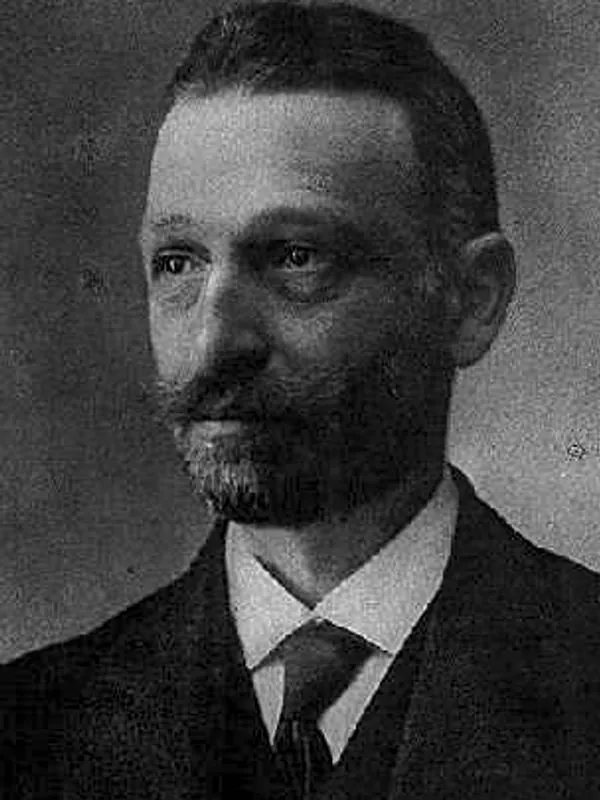
- Born:
- 17 January 1867, Patras (Greece)
- Died:
- 28 November 1922, Athens
- Author:
- Natalia
- Photo:
- autor nieznany, domena publiczna, Wikimedia Commons

Dimitrios Gounaris was the most gifted orator and the most important political opponent of Eleftherios Venizelos. When in March 1915 King Constantine I rejected the plan for Greek participation in the Dardanelles operation, it was Gounaris who took over the government from Venizelos and for five months pursued a policy of neutrality that the Entente did not trust. Later he was one of the pillars of the royal cabinets, and after Constantine’s fall in 1917 he was sent into exile in Corsica. After the war he returned, led the anti-Venizelists to victory and as prime minister led Greece during the war with Turkey. After it was lost, he paid for the defeat with his life.
Before the war
He was born in Patras on 5 January 1867 by the Julian calendar, that is 17 January by the Gregorian, into a wealthy family of currant merchants. He studied law in Athens, and then for three years at German universities and in Paris and London. When a crisis in the currant market ruined the family firm, he returned to Patras and made a career as a lawyer. In 1902 he became a deputy and quickly made his name as an orator. He belonged to a group of young reformers, called the “Japanese” by the press, who demanded the restoration of the state’s finances and a modern administration. In 1908 he accepted the post of finance minister in the government of Georgios Theotokis, but resigned after a few months, convinced that the reforms could not be carried through.
After the officers’ coup of 1909 and the arrival of Venizelos from Crete he found himself in opposition. His supporters from the Peloponnese became the nucleus of the faction from which the first organised party of the Greek right grew. As early as 1913–1914 Gounaris attacked the government for its policy towards Bulgaria and for ruling by decree, bypassing parliament. When the Great War broke out, he was the natural candidate for prime minister for anyone who wanted to stop Venizelos.
1915: the neutrality government
On 6 March 1915 Venizelos resigned, because the King, following the advice of the General Staff, refused to send Greek troops to the Dardanelles. Constantine offered the office first to Alexandros Zaimis and Stephanos Skouloudis, and when both declined, on 9 March he entrusted it to Gounaris. The new prime minister also took the war ministry. His government had no majority in parliament, so it dissolved the chamber and announced elections.
The Entente received the change coolly. The British Naval Staff monograph called Gounaris an Anglophobe, and immediately after taking power his government demanded explanations for the British occupation of the island of Lemnos, where the base for the Gallipoli expedition was being set up. Gounaris and his foreign minister Georgios Zografos nevertheless gave assurances that Greece would maintain a friendly attitude towards the Entente, and no one tried to remove the British from the island. London soon guaranteed Greece that Lemnos would be hers after the war.
Gounaris did not reject war on principle. When on 12 April the Entente envoys promised Greece Smyrna and its hinterland, his government replied with a proposal of its own: Greece would enter the war against Turkey with all its forces, but the powers must guarantee its frontiers, above all against Bulgaria, which they themselves had been tempting with Greek lands. The Allies, still hoping to win over Sofia, did not want to make such commitments, and the landing at Gallipoli took place without the Greeks. In domestic politics Gounaris struck at Venizelos by revealing, according to Greek accounts, his January memoranda in which the former prime minister had proposed ceding Kavala to Bulgaria. Venizelos had to admit that he had written them, and accused Gounaris of exploiting confidential documents.
In the elections of 13 June 1915, however, the Liberals won a decisive victory. Gounaris did not step down at once, citing the serious illness of the King, without whom the chamber could not be convened. In July London also promised Greece Mytilene, but when on 3 August the Entente envoys announced pressure on Greece to cede Kavala to the Bulgarians, the government replied with a note that the Allies considered sharp and full of grievances. On 16 August the new chamber elected a Speaker from the Liberal camp, Gounaris announced his resignation, and a few days later Venizelos returned to power.
In the royal cabinets
In the autumn Gounaris was one of the leaders of the opposition to entering the war on Serbia’s side. On 4 October, together with other former prime ministers, he protested in parliament against the Entente landing at Salonika. When the next day the King dismissed Venizelos, Gounaris took the interior ministry in the government of Zaimis, and then in the cabinet of Skouloudis. According to Greek accounts, after the death of Theotokis in January 1916 he also ran the finances. In the elections of December 1915, boycotted by the Liberals, his faction won the most seats. As interior minister he was responsible for the police and the administration at a time when the governments in Athens were fighting the Venizelists ever more harshly and the Allies were accusing the authorities of tolerating German propaganda. After the ultimatum of June 1916, which brought down the Skouloudis cabinet, he left the government.
His role in the following months is disputed. His opponents accused him of being behind the reservists’ leagues which, in December 1916, after the fighting in Athens, attacked supporters of Venizelos. He himself denied it, and historians point out that the leagues were directed rather by soldiers from the King’s entourage, above all Ioannis Metaxas. Gounaris, it is generally assumed, avoided both condemning the violence and a conflict with the court.
Exile
When in June 1917 the Allies removed the King, the French high commissioner Charles Jonnart demanded the expulsion from the country of the most influential opponents of the Entente. Gounaris was on the list together with Metaxas and the former chief of the General Staff, General Viktor Dousmanis. In July, together with about thirty other royalists, he was deported to Ajaccio in Corsica. Fearing a trial on his return, at the end of 1918 he escaped together with Metaxas to Sardinia. The Italians refused to hand them over and allowed them to live in Pisa and then in Siena. Gounaris watched Greece’s participation in the war and Venizelos’s successes in Paris from exile.
After the war
In October 1920 he returned home and renamed his faction the People’s Party. In the November elections the united opposition routed the Liberals, and Constantine returned to the throne. Gounaris was first minister of war, and in April 1921 he became prime minister. He did not decide to withdraw the army from Asia Minor: his government backed the offensive which in the summer of 1921 came almost to Ankara and broke down on the Sakarya river, and then sought help from David Lloyd George, which he did not get. In May 1922 he lost the premiership, although he remained in the government as minister of justice. In August the army of Mustafa Kemal routed the Greeks, and in September Venizelist officers under Nikolaos Plastiras seized power. Gounaris stood with other ministers and the army commander before a military tribunal, charged with high treason. On 28 November 1922 (15 November by the Julian calendar) he was sentenced and a few hours later shot at Goudi near Athens together with five other condemned men, among them the former prime ministers Petros Protopapadakis and Nikolaos Stratos.
Assessment
The dispute over Gounaris is part of the dispute over the National Schism. Venizelists and Allied authors saw in him a politician who exploited the King’s hesitation to keep the winner of the elections from power, conducted a neutrality distrustful of the Entente, and in 1915–1916 helped form the government that surrendered Rupel without a fight. For his supporters he was an honest defender of neutrality, convinced that a small state should fight only when its vital interests were threatened, and the first Greek politician to build a modern conservative party. It was also pointed out that his proposals of April 1915 were not a refusal of war but an attempt to secure Greece against Bulgaria, which the Entente was ready to pay with Greek lands.
There is more agreement about his death. Historians accept that Gounaris bore part of the responsibility for the catastrophe in Asia Minor, but the trial of 1922 is widely regarded as an act of political revenge and scapegoating rather than justice. In 2010 the Greek Supreme Court quashed the sentences passed on the condemned.
Sources
Spotted a mistake?Report an error
Often appears with
People who appear in the same events.