1914: The second invasion of Serbia
Battle of the Drina
- Dates:
- 7 September – 4 October 1914
- Front:
- Balkan Front
- Location:
- The Drina valley and the mountain ranges of western Serbia (Gučevo, Boranja, Jagodnja) between Loznica and LjubovijaOn the battle map →
- Sides:
- SerbiaRadomir Putnik, Petar Bojović, Stepa Stepanović, Pavle Jurišić ŠturmAustria-HungaryOskar Potiorek, Liborius von Frank
- Result:
- Inconclusive. The Serbs halted the attack, but the Austro-Hungarians held bridgeheads on the right bank of the Drina, and the front settled into positional warfare.
- Author:
- Łukasz Skowroń
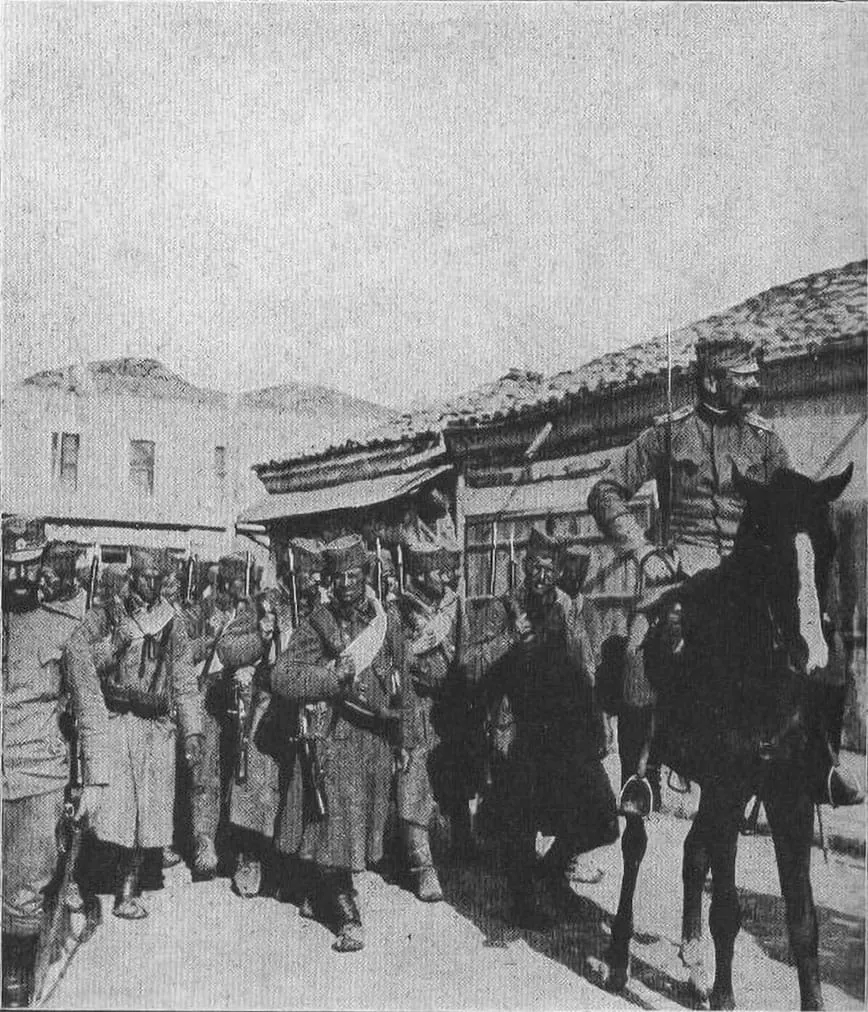
The Battle of the Drina was a series of engagements fought in September and early October 1914 on the western border of Serbia. Less than three weeks after their defeat on Mount Cer, the forces of Austria-Hungary again crossed the border river, the Drina. This time they were not driven back, but neither did they manage to break the Serbian defences. The fighting in the mountains above the Drina was among the first in this war in which both sides dug into trenches for a long period.
Dates of the battle
Sources date the start of the battle differently. The British chronology of the war records it under 8 September. The Austro-Hungarian Fifth Army made its first attempts to cross on 7 September, and the main crossings took place on the night of 7/8 September and during 8 September. The Polish, German and Serbian Wikipedias count the battle from 6 September, because they include the fighting on the Sava front, where the Serbian offensive in Syrmia began that day. The end is usually taken to be 4 October, when the last major attacks died down and the front stabilised for many weeks. On this page we use the dates 7 September – 4 October.
Background
After the Battle of Cer in August 1914 the Austro-Hungarian forces withdrew from Serbia. The commander of the Balkan forces, General Oskar Potiorek, governor of Bosnia and Herzegovina, wanted to wipe out this defeat as quickly as possible. His task had become harder, because the Second Army, which had attacked from the north in August, had been transferred to Galicia against the Russians. Potiorek now had only two armies: the Fifth Army of General Liborius von Frank on the lower Drina and the Sixth Army, which he commanded in person, on the middle reaches of the river.
The Serbs meanwhile, under pressure from Russia and France, had gone over to the offensive. On 6 September the First Army of General Petar Bojović crossed the Sava and entered Austro-Hungarian Syrmia. Potiorek decided to strike across the Drina at Serbia’s exposed western flank. He calculated that a threat to the heart of the country would force the enemy to abandon its offensive in the north.
The crossings
On the lower Drina, in the lowland Mačva, the Fifth Army attacked. Its crossings ran into the well-prepared defences of the Serbian Second Army under General Stepa Stepanović. The river was shallow at the time and some of the infantry waded across, but on the far bank the attackers were met by the fire of Serbian rifles and guns. According to various estimates the Fifth Army lost about 4,000 men in the first days, and some of its units had to withdraw to the Bosnian bank. It nevertheless held bridgeheads on the right bank of the Drina.
The Sixth Army fared better. On 8 September its XV and XVI Corps forced the river on the stretch between Zvornik and Ljubovija (PL), among other places on both sides of the mouth of the Drinjača. Mountain brigades surprised the weaker Serbian Third Army of General Pavle Jurišić Šturm. Within a few days the Austro-Hungarians had forced their way onto the mountain ridges running along the Drina, Gučevo above Loznica, Boranja and Jagodnja, from which the road opened into the interior of Serbia, towards Valjevo.
The Serbian counter-attack
The chief of staff of the Serbian army, Vojvoda Radomir Putnik, judged the threat from the west to be more serious than the gains of the expedition into Syrmia. On 11 September he ordered the First Army to retreat across the Sava and sent its divisions south by forced marches against the Sixth Army. Bojović took command on this sector of the front.
From mid-September the Serbs counter-attacked. They managed to recover a large part of the lost ridges, but the Austro-Hungarians held the key positions. The bloodiest fighting was for Mačkov Kamen, a peak in the Jagodnja range. The Serbs took it, lost it and retook it again in successive bayonet charges lasting several days, the heaviest of them, according to Serbian accounts, on 20–22 September. On the evening of 22 September the Serbian command ordered a withdrawal from the peak. The Serbian Danube Division alone lost 5,772 men, including 118 officers, according to the Serbian Ministry of Defence. The battlefield was strewn with the bodies of the dead of both sides.
The expedition into Bosnia
At the same time the Serbs and their allies from Montenegro struck further south, deep into eastern Bosnia. On 14 September the Serbian Užice Group and the Montenegrin Sanjak Army took Višegrad and advanced towards the Romanija plateau, on the approaches to Sarajevo. It was, however, an expedition with forces that were too weak. At the end of September the Austro-Hungarians repulsed this attack, and in October the Serbs and Montenegrins withdrew from Bosnia.
War in the trenches
After both sides’ attacks had failed, the front on the Drina froze. On the ridges of Gučevo, Boranja and Jagodnja the opponents dug in a few dozen metres, and in places a few metres, from each other. They fought with grenades, bayonets and mines laid under the enemy’s positions. Traces of the trenches and craters are still visible in these mountains today, and the Serbs call the fighting on Gučevo the first trench battle of the war.
For the Serbian army this kind of war was ruinous. The country had no arms industry, artillery ammunition was short, and the soldiers often fought in traditional leather opanci and their own civilian clothes. Some divisions lost as many as a hundred men a day from various causes.
Losses
The figures for losses vary widely. The Polish and German Wikipedias give about 17,000–17,500 killed and wounded on the Austro-Hungarian side and about 18,500 on the Serbian side. Other estimates, covering the whole period of fighting on the Drina, speak of about 40,000 Austro-Hungarian and 30,000 Serbian losses.
Significance
The second invasion did not bring Potiorek the victory he expected, but nor was it a defeat like the one in August. The Austro-Hungarians broke off the Serbian offensive in Syrmia and held bridgeheads on the right bank of the Drina. The Serbs defended their territory, but paid with enormous losses, and their army exhausted its stocks of ammunition.
At the beginning of November Potiorek launched a third offensive. The weakened Serbian army had to withdraw into the interior of the country, and on 2 December the Austro-Hungarians took Belgrade. Only in the Battle of Kolubara, after ammunition deliveries from the Allies, did the Serbs go over to the counter-offensive, and by mid-December 1914 they had driven the invaders out of the country.
Spotted a mistake?Report an error