Portugal · The Entente
Bernardino Machado
Prime Minister (1914) and President of Portugal (1915–1917 and 1925–1926)
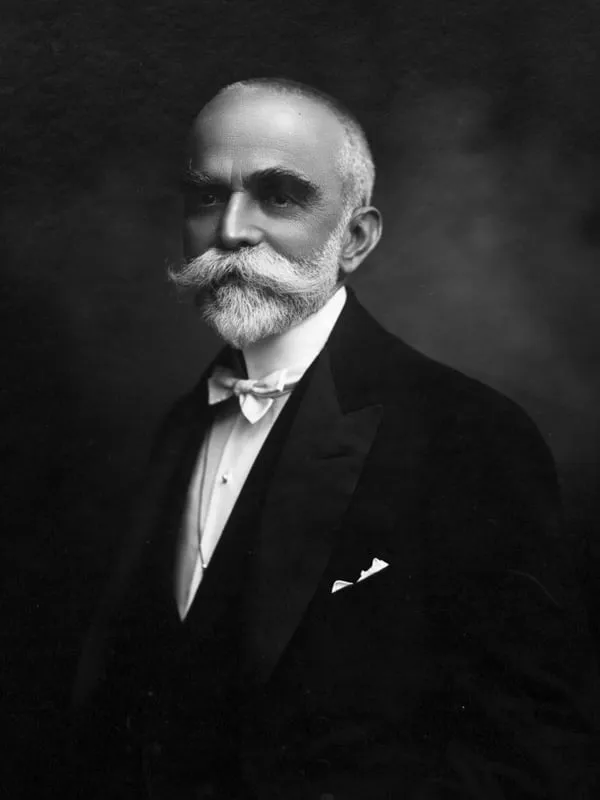
- Born:
- 28 March 1851, Rio de Janeiro (Empire of Brazil)
- Died:
- 29 April 1944, Porto
- Author:
- Łukasz Skowroń
- Photo:
- Octávio Bobone, domena publiczna, Wikimedia Commons

During the Great War Bernardino Machado twice stood at the summit of Portuguese power. In 1914, as prime minister, he had to decide how Portugal would respond to the war, and he assured Great Britain of loyalty to the old alliance. In 1915 parliament elected him president of the republic, and it was during his presidency that Germany declared war on Portugal and a Portuguese division went to the Western Front. In October 1917 he made the first official foreign journey by a head of state in the country’s history and visited his soldiers in Flanders. Two months later he was overthrown by the coup of Sidónio Pais, and Machado had to go into exile. A professor of anthropology, a Freemason and a man of compromise, called by his opponents a politician “made of rubber”, he outlived the republic itself: his second presidency was cut short in 1926 by another military coup, and he died in 1944, in the time of Salazar’s dictatorship.
Before the war
He was born on 28 March 1851 in Rio de Janeiro, the son of António Luís Machado Guimarães, a Portuguese from Joane near Vila Nova de Famalicão (PL) who had grown rich in Brazil and later became Baron of Joane, and of a Brazilian woman, Praxedes de Sousa Ribeiro. His full name was Bernardino Luís Machado Guimarães. The family returned to Portugal in 1860, and Bernardino went to school in Porto. On coming of age, in 1872, he chose Portuguese citizenship. He is the only President of Portugal born outside its territory.
He studied mathematics and philosophy at the University of Coimbra, took his doctorate in 1876, and in 1879 became a full professor. He taught in turn agriculture, physics and other subjects, and in 1885 on his initiative the university introduced anthropology, then a novelty in Portugal. He was interested in pedagogy and called for schooling open to all, women included. In 1874 he joined the Freemasons, and in 1895–1899 he was Grand Master of the Grand Orient Lusitano (PL).
He entered politics as a monarchist of the Regenerator Party. He was a deputy for Lamego and for Coimbra, and in 1890 and 1894 he sat in the Chamber of Peers as the university’s representative. In 1893, for ten months, he was minister of public works, commerce and industry in the government of Hintze Ribeiro. He dealt then with the protection of the labour of women and children and established the Ethnographic Museum, today’s National Museum of Archaeology. In time he went over to the republicans. In 1903 he joined the Portuguese Republican Party, and in 1906–1909 he chaired its leadership. In 1907, in protest against the repression of striking students, he resigned his chair at Coimbra. In August 1910 he was elected deputy for Lisbon, together with Afonso Costa and António José de Almeida.
After the revolution of 5 October 1910 he became foreign minister in the provisional government. On 24 August 1911 he lost the presidential election to Manuel de Arriaga, because the moderate republicans did not want a candidate backed by the radicals. In 1912 he went as envoy to Rio de Janeiro, and in November 1913, when the legation was raised to an embassy, he became Portugal’s first ambassador to Brazil.
Prime minister in 1914
In February 1914 he returned to Lisbon. President Arriaga wanted to calm political life, shaken by the struggle between Costa’s Democrats and the moderate republicans, and on 9 February entrusted Machado with forming a non-party government. The prime minister also took the ministry of the interior. His cabinet proclaimed an amnesty from which more than two thousand prisoners and émigrés benefited, mostly monarchists. This conciliatory spirit was mocked. The poet Guerra Junqueiro said that Machado was made not of iron but of rubber: you could run a steamroller over him and he would get up and raise his hat.
The outbreak of war set him a task that could not be solved by compromise. On 7 August 1914 Machado assured Congress that Portugal would keep faith with the alliance with England. At London’s request, however, the country declared neither neutrality nor entry into the war. In the autumn there were clashes with the Germans in Angola, and on 23 November Congress, on the government’s motion, authorised it to intervene militarily “when and as it deems necessary”. Machado made this dependent on a British request. The Democrats and the Evolutionists criticised him for it, because they wanted Portugal to force its own way into the war. At the same time a dispute over the elections, postponed because of the war, was growing. At the beginning of December the prime minister asked to resign, and on 12 December his government gave way to the Azevedo Coutinho cabinet.
In 1915 General Pimenta de Castro governed without parliament. When in March deputies and senators were barred from the Congress building, Machado was one of the parliamentarians who met in the Mitra palace at Santo Antão do Tojal, in what was called the “Tojal Parliament”.
President in wartime
The May rising and the June elections gave Congress to the Democrats. On 6 August 1915 Congress elected Machado president on the third ballot, by 134 votes to 18 against General António Xavier Correia Barreto. On 5 October, the fifth anniversary of the republic, he took the oath and in his speech called Great Britain “our inseparable ally”. The constitution of 1911 gave the president little power, but it was he who chose the prime minister. When the Evolutionists and the Unionists refused to enter a government with the Democrats, on 29 November he entrusted the office to Costa.
During Machado’s presidency Portugal requisitioned the German ships, and on 9 March 1916 Germany declared war on it. The president watched from his box the session of Congress at which the British and French ministers were given an ovation. On 15 March he appointed the “Sacred Union” government of António José de Almeida, and in April 1917 Costa’s third government. In 1916–1917 the country sent to France the Portuguese Expeditionary Corps, which landed at Brest in February 1917.
In October 1917 Machado set out from Lisbon’s Rossio station on an eighteen-day journey. It was the first official foreign visit by a President of Portugal. He met King Alfonso XIII of Spain, President Raymond Poincaré of France, King George V and King Albert I of the Belgians. Together with Prime Minister Costa, between 8 and 25 October, he visited the Portuguese soldiers in Flanders.
Pais’s coup and exile
On 5 December 1917 Major Sidónio Pais led a revolt by part of the Lisbon garrison. In the night of 7–8 December Costa’s government tendered its resignation to the president. Machado tried to save the constitutional order and looked for a new prime minister among the moderate republicans, but the victors had no intention of giving up power. On 9 December he was asked to step down. He refused and would not recognise the coup. On 11 December the Revolutionary Junta removed him from office by decree and ordered him to leave the country until the end of his term, that is until October 1919. On 15 December Machado left via Madrid for France. He lived in Paris, and also at Cambo-les-Bains and Hendaye at the foot of the Pyrenees. According to the Museum of the Presidency of the Portuguese Republic, it was a heavy blow to him that in May 1918 France and Great Britain officially recognised Pais’s regime.
After the war
After Pais’s murder in December 1918 Machado waited in vain for a summons home. Congress elected João do Canto e Castro president, and on 18 February 1919 Machado renounced the office. He returned to Portugal in August 1919 and in the autumn became senator for Lisbon. From 2 March to 23 May 1921 he headed the government for the second time. In 1923 he lost the presidential election, because the Democrats had not forgiven him his conduct at the time of Pais’s coup, but on 11 December 1925 Congress elected him president for the second time. A few months later he was overthrown by the military coup begun at Braga on 28 May 1926 by General Manuel Gomes da Costa, the former commander of the Portuguese division in France.
In February 1927 the dictatorship expelled him from the country. He spent thirteen years in exile in France and Spain, publishing more than thirty manifestos against the dictatorship and Salazar’s New State. He returned in 1940, after the German invasion of France. The authorities ordered him to live in the north of the country. He died on 29 April 1944 in Porto, aged 93. His wife Elzira Dantas Machado, whom he married in 1882, was active in the women’s movement and founded the Crusade of Portuguese Women, an organisation helping soldiers and their families. Sources differ on the number of their children: the Museum of the Presidency gives seventeen, other accounts 18 or 19.
Assessment
Machado was one of the fathers of the Portuguese republic and at the same time its most conciliatory leader. To his opponents he was a politician without a backbone who promised everything to everyone. To his supporters he was a peacemaker who wanted to reconcile the republicans and would not let his office be taken from him without protest. On the war, however, he did not hesitate from the first days: he favoured loyalty to the alliance with Great Britain, even if that meant sending soldiers to France, and as president he gave the governments of Costa and Almeida his full support. He therefore shared with them responsibility for a war that most Portuguese did not want.
Historians also stress his role in building the republic’s international standing. The 1917 journey, with its visits to monarchs and to the President of France, was the first such clear recognition of the young state by its allies. Twice elected and twice overthrown by the army, Machado became a symbol of the fate of the First Republic, and his long exile and his manifestos against the dictatorship made him one of the patrons of the Portuguese democratic opposition.
Sources
Spotted a mistake?Report an error
Often appears with
People who appear in the same events.