Belgium · The Entente
Albert I
King of the Belgians (1909–1934), commander-in-chief of the Belgian Army, commander of the Flanders Army Group (1918)
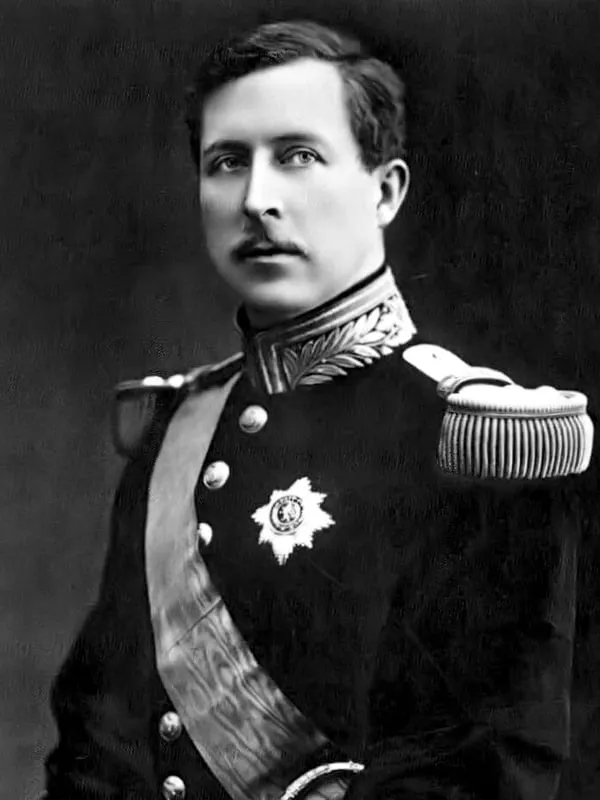
- Born:
- 8 April 1875, Brussels
- Died:
- 17 February 1934, Marche-les-Dames (Belgium)
- Author:
- Natalia
- Photo:
- Studio of Eugène Pirou, domena publiczna, Wikimedia Commons

Albert I was the king of a small, neutral state that in August 1914 stood in the path of the most powerful army in Europe. He rejected the German ultimatum, took personal command of the army, led it out of Antwerp and halted it on the Yser, where for four years he defended the last scrap of free Belgium. He did not leave for France with the government, and his presence among the soldiers made him the “Soldier King”, a symbol of resistance admired throughout the Allied world. At the same time he guarded the independence of his army, was unwilling to bleed it white in great offensives and quietly sounded out the possibility of a compromise peace. Only in September 1918 did he take command of the Allied Flanders Army Group and lead the offensive that liberated western Belgium.
Before the war
He was born on 8 April 1875 in Brussels, the son of Philippe, Count of Flanders, younger brother of King Leopold II, and of Princess Marie of the Catholic line of the Hohenzollerns. After the death of his elder brother in 1891 he unexpectedly became heir to the throne. Brought up as a soldier, he was shy, hard-working and well read, and took an interest in technology and the labour question. In 1900 he married the Bavarian princess Elisabeth, with whom he had three children, including the future King Leopold III. Before ascending the throne he toured the Congo, recently taken over by the Belgian state from Leopold II, and recommended reforms in the colony.
He became king on 23 December 1909, after the death of his uncle, and was the first to take the oath in Dutch as well. In the face of growing tension in Europe he supported the expansion of the army. In 1913 parliament, with his backing, passed universal military service. In November of that year, during a visit to Potsdam, he heard from Kaiser Wilhelm II and the Chief of the General Staff, Helmuth von Moltke, that war with France was inevitable and close. The warning was passed on to the French.
August 1914: the ultimatum
On 31 July 1914 Belgium ordered mobilisation. Under the constitution the king was commander-in-chief, and he declared that neutrality would be defended, not merely proclaimed. On the evening of 2 August the German minister delivered an ultimatum demanding passage for German troops through Belgium. At the night-time council the king called, no one argued for giving way, and on the morning of 3 August Belgium rejected the demands. Albert appealed to the British king, George V, for diplomatic support, but did not yet call on the guarantor powers for military help, so that there could be no doubt that Germany was the first to violate the border.
On 4 August, as German troops were crossing the border, the king rode on horseback through Brussels and addressed parliament. “A country which defends itself earns the respect of all. Such a country does not perish,” he said. Straight from parliament he went to headquarters and took command of the army.
From Liège to Antwerp
The Belgian Army numbered six infantry divisions and a cavalry division, little compared with the German onslaught. The forts of Liège held up the Germans for several days, and the king withdrew the field division from there in time to prevent its encirclement. After the fighting on the Gete, on the evening of 18 August he ordered a retreat to Antwerp, giving up Brussels without a fight but saving the army, the state’s only armed force. From the fortress the Belgians threatened the flank of the Germans marching on France. On 25 August, as the French and British were falling back after the Battle of the Frontiers, Albert carried out the first great sortie, which went down in history as the Battle of Mechelen, followed by others in September.
At the end of September the Germans began the siege of Antwerp and smashed the forts with heavy mortars. On 3 October Winston Churchill arrived in the city, persuaded the king and the government to halt the evacuation and promised British reinforcements. They did not change the outcome of the defence. On the night of 6/7 October Albert led the field army across the Scheldt, and on 7 October he himself left the city. The fortress capitulated on 10 October, but the army survived.
On the Yser
The army that reached the River Yser was at the end of its strength. By various estimates it numbered between 50,000 and 70,000 exhausted soldiers, and it was short of ammunition, guns and officers. The king would have preferred to let it rest beyond the French border, but he yielded to French pressure and agreed to defend the Yser. In an order of the day he called for anyone who spoke of retreat without orders to be regarded as a traitor. On 25 October, when the Germans had already crossed the river, he agreed to the plan to flood the plain between the Yser and the railway embankment. The opening of the sluices at Nieuport stopped the Germans, and the Battle of the Yser saved a narrow strip of land with Veurne, De Panne and Poperinge.
The Belgian government moved to near Le Havre, to Sainte-Adresse. The king did not go with it. He stayed with the army, lived with Queen Elisabeth in seaside De Panne and did not visit the seat of government throughout the war. The queen cared for the wounded in a field hospital, and the heir to the throne, the teenage Prince Leopold, served for a time as a private in an infantry regiment. This presence of the royal family on the last scrap of their own soil meant a great deal to Belgians at home and in exile.
The king and coalition warfare
Albert held that Belgium was not an ordinary member of the coalition but a neutral state attacked by Germany and defended by the guarantors of its neutrality. For that reason it did not accede to the Allies’ London declaration on not concluding a separate peace. Instead the government sought formal guarantees, which came with the Declaration of Sainte-Adresse of February 1916. The king remained loyal to the Allies but guarded the independence of his army. He would not agree to great offensives on the model of the Somme or Passchendaele and did not want to place his troops under foreign orders. When in April 1918 Foch became Allied commander-in-chief, his authority did not extend to the Belgians: under the constitution they were commanded by the king.
Against this background there were disputes with his own government. Albert held that as commander-in-chief by virtue of the constitution he directed the army personally and needed no minister’s countersignature. The prime minister, Charles de Broqueville, who throughout the war acted as intermediary between the king in De Panne and the government in Le Havre, took a different view. In 1917 he was relieved of the war ministry, and in May 1918 the king replaced him as prime minister with Gérard Cooreman.
The king was not certain of an Allied victory and feared that a long war would destroy Belgium whatever its outcome. In 1915–1916, through his brother-in-law, the Bavarian Count Hans Veit zu Toerring-Jettenbach, and Professor Émile Waxweiler, he sounded out German intentions in Switzerland. The German terms, however, were unacceptable, and Albert had no intention of making peace behind the Allies’ backs. In the autumn of 1918 the Germans tried the same route once more, but their offer came too late. Meanwhile the German occupation authorities tried to break Belgium apart through their policy towards the Flemish. In the army on the Yser itself, commanded by French-speaking officers, resentment grew among the Flemish soldiers. The king supported equal rights for the two languages but believed that reforms could not be carried out in wartime.
1918: liberation
In the spring of 1918 the Belgian Army withstood the German offensive in Flanders, taking over part of the front near Ypres. In the summer, as the balance tipped in the Allies’ favour, Albert agreed to take part in the great offensive. On 9 September it was settled that he would lead the newly formed Flanders Army Group, made up of the Belgian Army, General Herbert Plumer’s British Second Army and French divisions. Its chief of staff was the French general Jean Degoutte. On 28 September the Army Group attacked from Ypres and within a single day recaptured the Passchendaele ridge, for which the British had fought for more than three months in 1917. Then the advance bogged down in the mud, and the king, shaken by his army’s losses, preferred to wait for fresh French divisions, despite pressure from Foch.
On 14 October the second attack began. Within a week the Allies broke through the last German positions west of the Lys, the Belgians recovered the whole coast, and the Battle of Courtrai forced the Germans to abandon West Flanders and Lille. On 17 October Albert and Elisabeth sailed into liberated Ostend, and on 25 October they entered Bruges. The Army Group had reached Ghent when the armistice was signed.
At the castle of Loppem (PL) near Bruges, on 11 November the king received politicians from occupied Brussels, who warned him of revolutionary feeling. After consultations he entrusted the Catholic Léon Delacroix with forming a government of national unity, including Liberals and Socialists. On 13 November he entered Ghent, and on 22 November, at the head of his troops, he entered Brussels. In his speech from the throne he announced equal suffrage for all men and a Flemish university. Conservative Catholics later claimed that the king, under Socialist pressure, had exceeded his powers, and spoke of the “Loppem coup”.
After the war
In 1919 Albert went to the peace conference in Paris, where he pressed, with little success, for reparations and a revision of the treaties of 1839, and then made a triumphant tour of the United States. In the post-war years he supported the reconstruction of the country, science and nature conservation, and in 1925 founded in the Congo the first national park in Africa. He was a keen mountaineer. On 17 February 1934 he was killed while climbing alone on the rocks at Marche-les-Dames on the Meuse. He was succeeded by his son, Leopold III.
Assessment
Already during the war Albert became a legend. In the Allied press he was the “Soldier King” who had chosen honour over comfortable submission, and for Belgians he remained a national hero. Historians acknowledge that his decisions of August and October 1914 (rejecting the ultimatum, saving the army at Antwerp and defending the Yser) had significance reaching far beyond Belgium. They delayed the German march and closed the Germans’ way to the Channel ports.
Since the 1980s the picture has become more complex. The Belgian historian Marie-Rose Thielemans saw the king’s contacts with the Germans in 1915–1916 as secret peace negotiations, while Henri Haag and others regard them as soundings that did not bind Belgium. Laurence van Ypersele, in her book on the myths surrounding the king, showed how carefully his image was constructed. The Allies, especially the French, complained of the Belgian Army’s passivity, and the king himself was sometimes seen by them as a pessimist. His defenders reply that by sparing his soldiers he protected a nation most of which lived under occupation, and that the army he preserved was capable of attacking in 1918, when the right moment came.
Sources
Spotted a mistake?Report an error
Commanded in battles
(10)- 7–25 August 1914Battle of the FrontiersWestern Front
- 18–19 August 1914Battle of the GeteWestern Front
- 25–27 August 1914Battle of MechelenWestern Front
- 15 September – 19 October 1914Race to the SeaWestern Front
- 27 September – 10 October 1914Siege of AntwerpWestern Front
- 16 October – 10 November 1914Battle of the YserWestern Front
- 17–19 April 1918First Battle of Kemmel RidgeWestern Front
- 8 August – 11 November 1918Hundred Days OffensiveWestern Front
- 28 September – 2 October 1918Fifth Battle of YpresWestern Front
- 14–19 October 1918Battle of KortrijkWestern Front
Mentioned in battles
(01)Often appears with
People who appear in the same events.