Key event
Armistice of Compiègne
- Category:
- Diplomacy
- Date:
- 11 November 1918
- Author:
- Łukasz Skowroń
- Tags:
- Germany, Ferdinand Foch, France, Great Britain
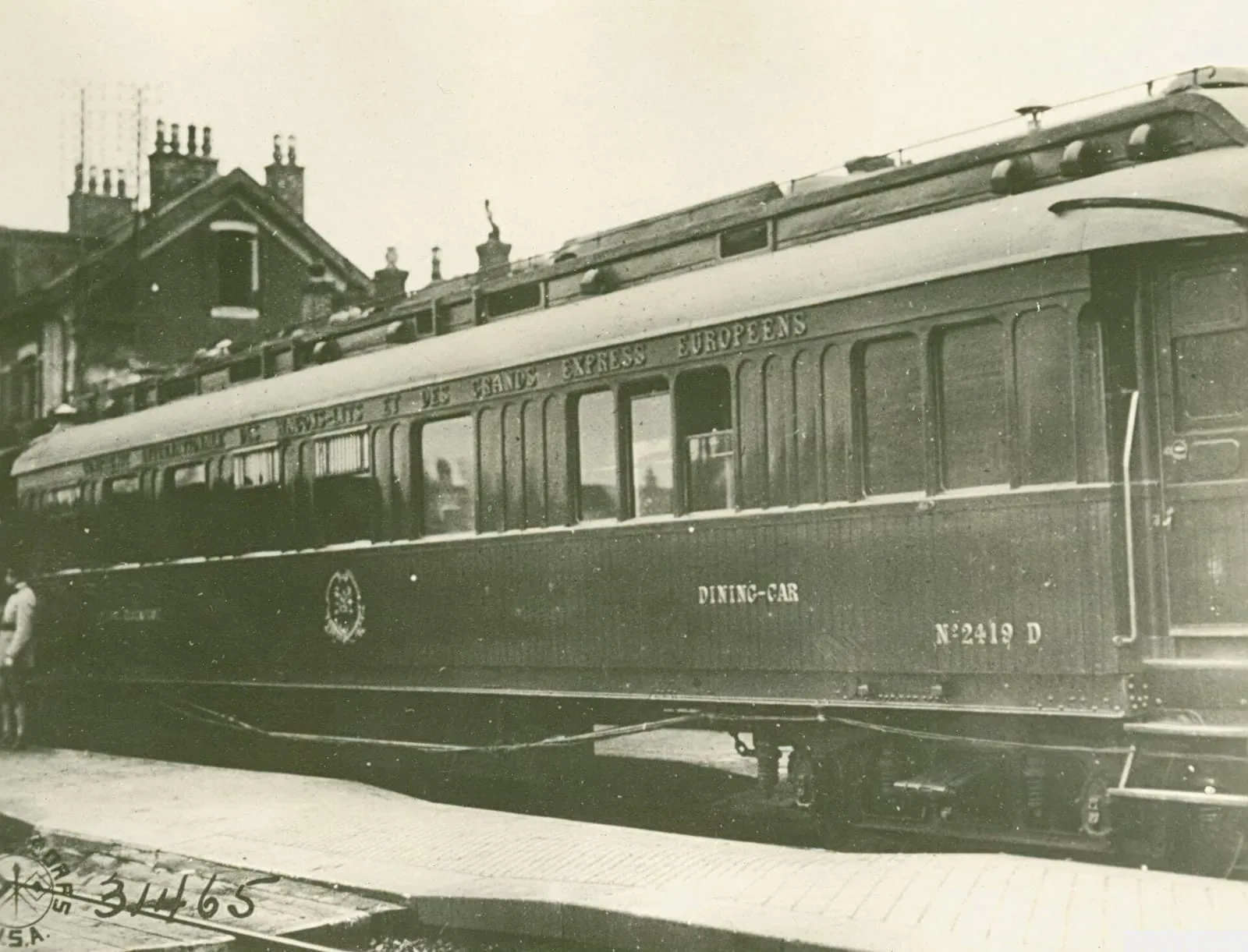
On 11 November 1918, a few minutes after five in the morning, in the office carriage of Marshal Ferdinand Foch’s train, standing on a siding in the Forest of Compiègne near Rethondes station, the representatives of Germany signed an agreement on the cessation of hostilities with the Entente powers and the United States. For the Allies, the signatories were Foch, Supreme Commander of the Allied armies, and the British First Sea Lord, Admiral Rosslyn Wemyss. For Germany, they were the state secretary Matthias Erzberger, the diplomat Count Alfred von Oberndorff, Major General Detlof von Winterfeldt and Captain Ernst Vanselow. According to Foch’s report, agreement on the final text was reached at 5.05 a.m. and the signatures were affixed at 5.10. Other accounts give times from 5.12 to 5.20, but the parties agreed that five o’clock would be taken as the time of signing. Six hours later, at 11 a.m. French time (noon in Germany), hostilities ceased along the fronts. After four years, three months and a few days, the Great War in the west was over.
Three days in the forest
The German delegation arrived in the Forest of Compiègne on the morning of 8 November. It was read the terms settled at Versailles on 4 November by the Supreme War Council, and Foch refused both a provisional suspension of fighting and any extension of the 72-hour deadline, which expired at 11 a.m. on 11 November. There were no negotiations in the strict sense. Foch appeared before the Germans only at the first and the last session. The details were discussed with his chief of staff, General Maxime Weygand, and with Admiral George Hope, and every request had to be submitted in writing. At 3.45 p.m. on 9 November the Germans handed Weygand their “Observations on the conditions of an armistice with Germany”. In them they argued that the too-short deadline for evacuation, the surrender of rolling stock and the continuation of the blockade would plunge the country into chaos and famine, and that the army needed its weapons to maintain order.
Meanwhile the state on whose behalf they had come was ceasing to exist in its existing form. On 9 November revolution broke out in Berlin: Chancellor Max von Baden announced the abdication of Emperor Wilhelm II and handed his office to the Social Democrat leader Friedrich Ebert, and a republic was proclaimed from a balcony of the Reichstag. The next day the Emperor crossed the Dutch border. According to some accounts, the French showed the delegates Paris newspapers carrying the news of the abdication. The Germans did not know whether anyone in Berlin could still give them instructions.
The answers came on the evening of 10 November. Between 7 and 8 p.m. the radio brought two telegrams. In the first, the German government declared that it accepted the armistice terms presented on 8 November. It was signed “Reich Chancellor” and bore the agreed number 3084, which confirmed its authenticity. The second authorised Erzberger to sign the armistice and instructed him to have a reservation entered in the record that some of the terms would condemn the population of unoccupied Germany to starvation. At about 9 p.m. a long coded telegram from Field Marshal Paul von Hindenburg began to come in. The Supreme Army Command had already made it clear to the government that the armistice had to be signed even if the terms could not be softened. Some historians point out that the order to sign in practice came from the Supreme Army Command, and Ebert’s new government merely confirmed it. At 9.30 p.m. Weygand handed the Germans a written reply to their observations.
The night of 10–11 November
At 2.05 a.m. the Germans declared themselves ready, and at 2.15 the final session began. Weygand read the text article by article, and the delegates tried to win further concessions. They obtained a few, because some of the original demands exceeded what Germany actually possessed. Instead of 30,000 machine guns they were to surrender 25,000, instead of 2,000 aircraft 1,700, instead of 10,000 lorries 5,000. Instead of 160 submarines, which the German navy did not have, they were to hand over all those in existence. The deadline for evacuating the occupied countries was extended from 14 to 15 days, and for the left bank of the Rhine from 25 to 31 days. The neutral zone on the right bank was narrowed from 40 to 10 kilometres. The demand for the unconditional surrender of the forces in East Africa was replaced by their evacuation. The armistice was to run for 36 days instead of 30. The clause on the troops in the east was also changed: Germany was to withdraw from the lands of the former Russian Empire not immediately, but only when the Allies considered it appropriate in view of the internal situation of those territories.
At 5.05 a.m. the final text was agreed. So as not to lose time, the last page was typed out at once and the signatures were placed on it. At the Allies’ request a separate document was added: if Germany failed to hand over the ships on time, the Allies would have the right to occupy the island of Heligoland. The German plenipotentiaries refused to sign it and promised only to support it with their government. Finally, Erzberger read out a declaration by all four delegates. In it they acknowledged that on some points a certain goodwill had been shown to them, but warned that the short evacuation deadline and the surrender of means of transport might make it impossible to fulfil the terms, and that the agreement as a whole threatened the German people with anarchy and famine. He ended with a sentence that was remembered: “A nation of seventy million suffers, but it does not die.” Foch closed the session.
The terms
The agreement had 34 articles. On the Western Front, hostilities on land and in the air were to cease six hours after signature. Within 15 days Germany had to evacuate Belgium, France, Luxembourg and Alsace-Lorraine, and soldiers who failed to leave in time were to become prisoners. Within a further 16 days, 31 days in all, they were to leave the left bank of the Rhine. This area was to be occupied by Allied troops, who would also establish bridgeheads with a radius of 30 kilometres on the right bank around Mainz, Koblenz and Cologne. Germany was to bear the cost of maintaining the occupation troops in the Rhineland. The German army had to surrender 5,000 guns, 25,000 machine guns, 3,000 trench mortars and 1,700 aircraft, and the railways 5,000 locomotives and 150,000 wagons. On top of this came 5,000 lorries. All Allied prisoners of war were to return home immediately, without reciprocity. German prisoners were to wait for the conclusion of peace.
In the east, Germany had to withdraw its troops from the territories that before the war had belonged to Austria-Hungary, Romania and Turkey, and from Russian lands at a moment to be indicated by the Allies. It renounced the Treaty of Brest-Litovsk and the Treaty of Bucharest, and the Allies obtained free access to the evacuated lands through Danzig or by the Vistula, in order to supply their populations and maintain order. The German forces in East Africa were to withdraw within a period set by the Allies. Germany also had to hand over to the Allies in trust the gold received from or taken from Russia and Romania, and return the cash taken from the National Bank of Belgium.
At sea, Germany was to surrender all its submarines within 14 days, and to disarm and intern in neutral or Allied ports 6 battlecruisers, 10 battleships, 8 light cruisers and 50 of the newest destroyers of the High Seas Fleet. It also had to open the way into the Baltic to the Allies and evacuate the Black Sea ports. The naval blockade of Germany remained in force, although the Allies announced that they would see to the country’s supplies to the extent necessary. The armistice was concluded for 36 days with the possibility of extension. The agreement did not settle borders or reparations, but it deprived Germany of the ability to resume the war. That was exactly what Foch wanted.
The eleventh hour of the eleventh day of the eleventh month
Immediately after the signing, Weygand sent Foch’s order by radio and telephone to all the commanders-in-chief: hostilities would cease along the whole front on 11 November at 11 a.m. French time, Allied troops would not cross the line reached at that moment until further orders, and all contact with the enemy was forbidden. The news reached the front during the morning, but the fighting went on to the last moment. Many commanders wanted to seize the most advantageous positions in case the armistice did not hold, and batteries fired off their stocks of ammunition. According to an estimate by the American author Joseph Persico, nearly 11,000 men on both sides were killed, wounded or went missing on the last day of the war, including about 2,700 dead. These figures are only approximate.
Many of those who died are remembered by name. At about 9.30 a.m. near Mons, Private George Ellison was killed; he is regarded as the last British soldier to fall in the war. At 10.45 Augustin Trébuchon, the last Frenchman killed, died on the Meuse. At Ville-sur-Haine, east of Mons, retaken that morning, a German marksman hit the Canadian Private George Lawrence Price at 10.58. A minute later, near Chaumont-devant-Damvillers, the American Sergeant Henry Gunther was killed attacking a German position; he is considered the last soldier to fall on the Western Front. In France, the graves of soldiers killed on 11 November were later marked with the date 10 November.
At 11 a.m. the front fell silent. There was no great elation at the front. The soldiers, exhausted after months of continuous advance, met the silence with relief and disbelief. Here and there Germans climbed out of their trenches, bowed to their opponents and walked away. The news of the armistice was announced in Paris at about nine. Foch and Admiral Wemyss drove to the Ministry of War to see Prime Minister Georges Clemenceau, and at 11 a.m. gun salutes and church bells announced the end of the war. Crowds celebrated in the streets of Paris, London and New York all day. In the afternoon Clemenceau read the armistice terms in the Chamber of Deputies and paid tribute to “our great dead, who won this victory”. In the evening he is said to have told General Henri Mordacq that they had won the war, and now they had to win the peace, which might be harder.
In Germany, absorbed by revolution, the armistice was received with relief but without an understanding of its significance. The German army still stood on foreign soil and, although strategically defeated, had not been destroyed in the field. Many Germans therefore did not see the defeat with their own eyes. This state of mind later became fertile ground for the stab-in-the-back myth, according to which the undefeated army had been betrayed by politicians and revolutionaries. Nationalists counted Erzberger, who had signed the armistice, among the chief culprits. They murdered him in 1921.
An armistice, not a peace
The Armistice of Compiègne did not formally end the war. It was a 36-day cessation of hostilities, which the Allies extended in December 1918 and in January and February 1919, each time at Trier, the last time indefinitely. In December the Allied troops occupied the bridgeheads on the Rhine and the occupation of the Rhineland began. The state of war between Germany and the Allies was ended only by the Treaty of Versailles, signed on 28 June 1919, which came into force in January 1920.
11 November became a day of remembrance for the fallen in Britain, France, Belgium and the countries of the British Empire. The date has special significance for Poles as well. The day before, Józef Piłsudski had returned to Warsaw from Magdeburg, and on 11 November, the day of the armistice in the west, the Regency Council handed him command of the army, while in the city the Germans were being disarmed. In 1940, after the fall of France, Adolf Hitler had the carriage taken out of its museum and placed on the same spot in the Forest of Compiègne, and there the French had to sign an armistice with Germany.
Remember the articles you have read? Only in this browser; nothing is sent anywhere.How it works
Read ·
Voices from the front
“Thus at eleven o'clock this morning came to an end the cruellest and most terrible War that has ever scourged mankind. I hope we may say that thus, this fateful morning, came to an end all wars. This is no time for words. Our hearts are too full of a gratitude to which no tongue can give adequate expression.”
“Out of the fog came Marin, the town crier, with his drum on his back and a cocarde in his cap. […] It did not take two minutes for all our little hamlet to gather about him, while in a loud, clear voice he read solemnly the ordre de jour which officially announced that the war had ended at eleven o'clock […]. There was not a cheer.”
Spotted a mistake?Report an error
Meanwhile
(04)Elsewhere in the same days.
- 10 November 1918 · War at seaSinking of HMS AscotOn 10 November 1918 UB-67 torpedoed the minesweeper Ascot off the Farne Islands. All 50-odd crew died. She was the last Royal Navy ship sunk by the enemy.
- 10 November 1918 · Balkan FrontRomania re-enters the warOn 10 November 1918 French battalions crossed the Danube at Ruse, and King Ferdinand called on the Romanians to take up arms against the Germans again.
- 10 November 1918 · Western FrontBelgians retake GhentOn 10 November 1918 the Germans left Ghent and the Belgians entered the city. The occupation of the capital of East Flanders, in place since 1914, was over.
- 10 November 1918 · Western FrontFrench retake MézièresOn the eve of the armistice the French recovered Mézières on the Meuse, long a key German command centre. Fighting on the river went on until 11 November.
Related events
(04)The same battle, people or subject.
- 3 October 1918 · PoliticsMax von Baden becomes chancellorOn 3 October 1918 Prince Max von Baden became Reich chancellor. For the first time in the Empire's history Social Democrats joined the government.
- 9 November 1918 · PoliticsRevolution in BerlinOn 9 November 1918 the revolution reached Berlin. The chancellor announced the Kaiser's abdication and handed power to Ebert; Scheidemann proclaimed a republic.
- 5 November 1918 · DiplomacyLansing noteOn 5 November 1918 Lansing passed to Germany the Allies' reservations on freedom of the seas and reparation and told it to apply to Foch for armistice terms.
- 8 November 1918 · Western FrontGerman envoys before FochOn 8 November 1918 Erzberger's delegation stood before Foch in the Forest of Compiègne. It heard the armistice terms and was given 72 hours to reply.