Poland · The Polish cause
Juliusz Leo
Mayor of Kraków (1904–1918), President of the Polish Club in the Imperial Council (1912–1915), first President of the Supreme National Committee (1914)
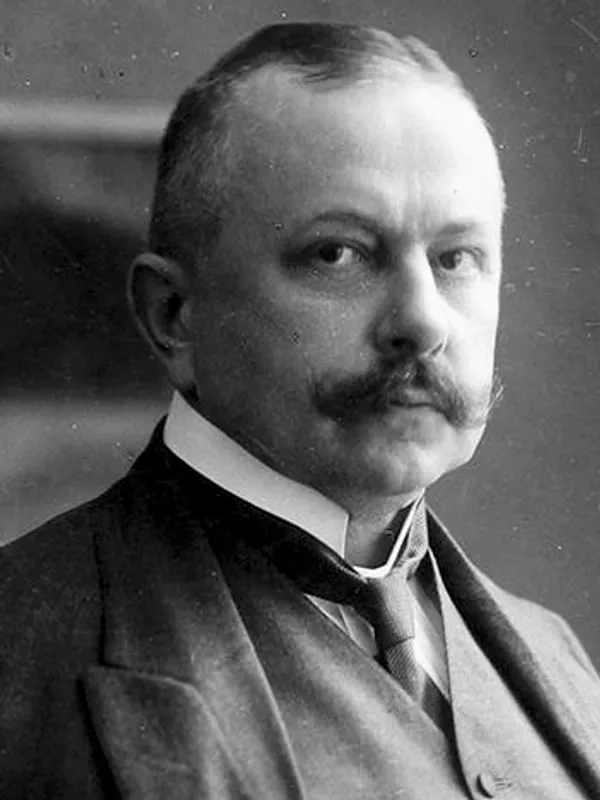
- Born:
- 15 September 1861, Stebnik near Drohobycz (Galicia, Austrian Empire)
- Died:
- 21 February 1918, Kraków
- Author:
- Łukasz Skowroń
- Photo:
- Józef Kuczyński, domena publiczna, Wikimedia Commons

Juliusz Leo is remembered above all as the mayor who turned a cramped, overcrowded Kraków into Greater Kraków, enlarging its area several times over. He was also, however, one of the most important politicians in Galicia when the war broke out. As president of the Polish Club (PL) in the Vienna Imperial Council, in August 1914 he took the lead of the Supreme National Committee, which assumed political patronage over the Polish Legions, and on his motion the city council gave the Legions a million crowns. In the autumn of 1914, when the Russians approached Kraków, he left for Vienna with the Committee, and soon gave up both the leadership of the NKN and the presidency of the Club. He returned to the town hall and governed the city until his death in February 1918, but in the high politics of the war he now played only a secondary role.
Before the war
He was born on 15 September 1861 in Stebnik near Drohobycz, into the family of a mining official who later worked in the management of the salt works at Wieliczka. In 1879–1883 he studied law at the Jagiellonian University, and then economics in Berlin. He took his habilitation in fiscal law and from 1891 lectured at the university as a professor. Politics, however, soon drew him away from scholarship. From 1893 he sat on the Kraków city council, in 1901–1904 he was deputy mayor, and on 7 July 1904, after Józef Friedlein (PL) stepped down, he was elected mayor.
Leo was a man of grand plans. Under his rule the city took over Wawel from the army and began to restore it. He expanded the sewers, the water supply, the tram network and the municipal power station, and regulated the Vistula and the Rudawa. Above all, however, he brought about the incorporation of the surrounding communes into Kraków. The first of them came within the city limits on 1 April 1910, Płaszów in 1912, and an agreement with reluctant Podgórze was signed in 1913. From 1901 he was a deputy to the Diet of Galicia, at first as a conservative and from 1907 in the ranks of the Polish Democratic Party (PL), though he always leaned towards the conservatives. In 1911 he entered the Imperial Council, and on 4 March 1912 he succeeded Leon Biliński as president of the Polish Club. As chairman of the Diet’s electoral reform commission he secured the adoption of a new electoral law in February 1914, for which the Emperor made him a privy councillor.
President of the NKN and the Legions
When the war broke out, Leo, as president of the Polish Club, was the natural leader of the Galician politicians. On 16 August 1914 the Supreme National Committee was founded in Kraków, an agreement of all the Polish parties of the Austrian partition, from the conservatives to the socialists. Leo became its first president. The Committee staked everything on the Austro-Polish solution, that is the union of Galicia with the Kingdom of Poland under the Habsburg sceptre, and took charge of the Legions then being formed, rescuing the riflemen of Józef Piłsudski, whose expedition into the Kingdom had failed to spark the expected uprising. A 2018 resolution of the Sejm names Leo alongside Piłsudski among the initiators of the Legions. On his motion the Kraków city council gave the Legions a million crowns as a national gift.
The Committee’s unity did not survive the autumn. After the Russians took Lviv the National Democrats withdrew from it, and the front was approaching Kraków. The city was a fortress, and in November the Battle of Kraków was fought on its approaches. From 8 November 1914 Leo was in Vienna with the evacuated NKN. His absence during the city’s most difficult period did him great harm: the authorities dissolved the city council and appointed a government commissioner. At the end of November Władysław Leopold Jaworski took over the leadership of the Committee, and at the end of January 1915 Leo’s presidency of the Polish Club came to an end, with Biliński taking it over again.
Last years
Leo did not give up on Kraków, however. On 4 July 1915, despite the war, Podgórze was ceremonially incorporated into the city, completing Greater Kraków: the city now had 22 districts, almost 47 square kilometres and about 186,000 inhabitants. When the city council was restored in mid-1916, it elected him for a third term by 86 votes out of 88. A resolution that considerably raised his salary and granted him an honorary pension, however, caused great indignation. In the NKN, reorganised in 1916, he sat as one of the representatives of the democrats, and at the end of that year he joined the Polish Club’s commission that, under the eye of the minister Michał Bobrzyński, was preparing the separation of Galicia.
At the beginning of May 1917, as the city’s host, he welcomed Emperor Karl I and Empress Zita to Kraków. The visit was meant to renew Galicia’s attachment to the dynasty, but it fell flat. Among other things, people complained that the monarch had answered Leo’s welcoming speech, delivered in Polish, in German. A few weeks later the Polish Club adopted its resolution calling for an independent and united Poland. In September 1917 Leo, who had long suffered from high blood pressure, had a heart attack. The deputy mayor, Jan Kanty Federowicz (PL), took over his duties. Leo died in Kraków on 21 February 1918 (some sources give 22 February), in the days when Galicia was protesting against the Peace of Brest-Litovsk with Ukraine. He was buried in the Rakowicki Cemetery in a tomb funded by the city council.
Assessment
Leo’s services to Kraków are not in dispute. Tadeusz Boy-Żeleński wrote that the mayor gave the city a framework for its future development for a hundred years, and his biographer Celina Bąk-Koczarska places him alongside the most outstanding mayors of the autonomy era, Józef Dietl and Mikołaj Zyblikiewicz. His contemporaries, however, judged him harshly. Ignacy Daszyński wrote that selfishness and excessive ambition made him unjust and unlikeable, and the peasant politician Jan Dąbski called him a despotic politician. Bąk-Koczarska stresses that he could change his allegiances for tactical reasons and did not shrink from pressure, which earned him the hostility of conservatives and democrats alike, and that his departure for Vienna in 1914 and the salary affair cast a shadow over his mayoralty.
As a wartime politician Leo remains a half-forgotten figure, like the Supreme National Committee as a whole, whose role in creating the Legions was later overshadowed by the Piłsudski legend. Yet it was under his presidency that the Committee was founded in August 1914 and gave the Legions their political base and their money. In 2018, the centenary of his death, the Sejm unanimously adopted a resolution commemorating him as the creator of Greater Kraków and a co-initiator of the Legions, and a monument to him was unveiled in Podgórze.
Sources
Spotted a mistake?Report an error