Poland · The Polish cause
Ignacy Daszyński
Leader of the Polish Social Democratic Party of Galicia and Cieszyn Silesia, member of the Imperial Council (1897–1918), Prime Minister of the Provisional People's Government in Lublin (November 1918)
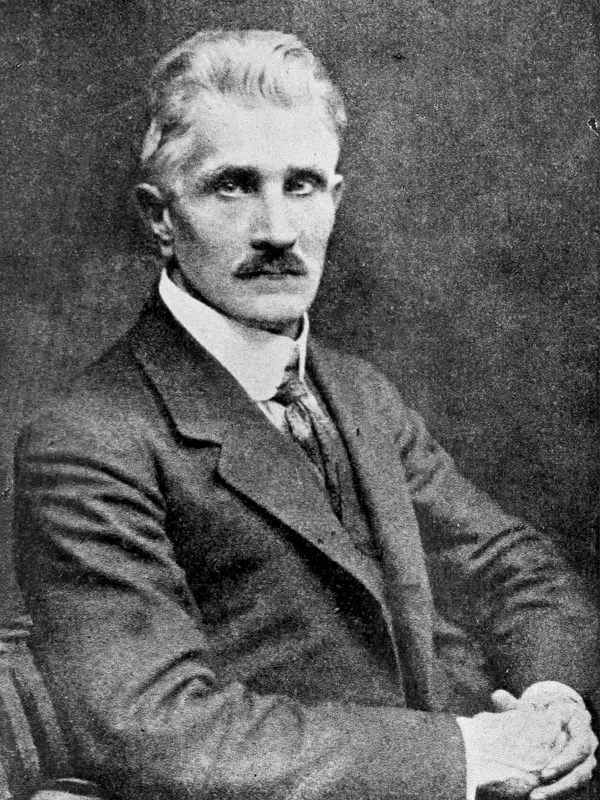
- Born:
- 26 October 1866, Zbaraż (Galicia, Austria-Hungary)
- Died:
- 31 October 1936, Bystra near Bielsko
- Author:
- Łukasz Skowroń
- Photo:
- autor nieznany, domena publiczna, Wikimedia Commons

For more than twenty years Ignacy Daszyński was the best-known Polish socialist in the Habsburg monarchy and one of the finest orators in the Vienna parliament. In 1914, together with his political friend Józef Piłsudski, he bet on Austria-Hungary against Russia, joined the leadership of the Supreme National Committee and defended the Legions in Vienna and Berlin. When the hopes of solving the Polish question at the side of the Central Powers came to nothing, he demanded an independent and united Poland ever more sharply from the parliamentary rostrum. In November 1918 he headed the Lublin government, the first Polish government to call its state a republic, and after a few days handed power to Piłsudski. Throughout his life he combined socialism with patriotism, which won him the respect of some and the dislike of others, both on the right and on the far left.
Before the war
He was born on 26 October 1866 in Zbaraż in Podolia, into an impoverished noble family. His father, an official of the district office, died when Ignacy was nine. He was expelled from the gymnasium in Stanisławów for a patriotic demonstration and passed his school-leaving examination as an external candidate in Kraków. For several years he came to know the prisons of all three partitioning powers: Austrian, Russian and Prussian. He studied in Kraków and Zurich, where he met a whole generation of Polish socialists, from Rosa Luxemburg to Gabriel Narutowicz. On returning to Galicia he became the chief founder and leader of the Polish Social Democratic Party (PPSD), edited the Kraków paper “Naprzód (PL)” and spoke at the congresses of the Second International.
In 1897, after a partial democratisation of the electoral law, he was elected to the Imperial Council in Vienna and, with one break, sat in it until the end of the monarchy. His speeches, sharp and witty, against the Galician conservatives, the abuses of the administration and the restrictions on freedom, were printed by the press throughout the country, partly because parliamentary immunity protected from the censor what could not be written in a newspaper. He fought for universal suffrage, which was introduced in the Austrian half of the monarchy in 1907.
Unlike many European socialists, he did not regard the national question as obsolete. From the beginning of the twentieth century he worked with Piłsudski, whose writings “Naprzód” printed. In 1912 the PPSD joined the Provisional Commission of Confederated Independence Parties, which prepared the Poles to take part in the expected war against Russia. Daszyński helped legalise the riflemen’s associations and co-wrote the resolution stating that in a conflict between Austria-Hungary and Russia “all the forces of the Polish nation should turn against Russian tsardom”, the oppressor of most of the nation. He hoped that the war would spark a rising in the Kingdom of Poland.
1914: with the Legions
At the beginning of August 1914 the deputy, then almost fifty, briefly put on a rifleman’s uniform. When Piłsudski’s units entered the Kingdom, he served for a few days as deputy military commissioner in Miechów. Attempts to rouse the local population against Russia proved futile: the Kingdom received the riflemen coolly, and in many places with distrust. Daszyński returned to politics. On 16 August 1914 in Kraków he helped found the Supreme National Committee, set up by the Polish deputies from Galicia as the political backing of the Polish Legions, and joined its western section, and after the Committee moved to Vienna in November, its leadership. According to an account quoted by Wincenty Witos, he mocked the conservatives who demanded guarantees from the government before the fighting began: “You want sanction from Vienna to start fighting, we only want Mannlichers.”
In the first days of the war he also did something that sounded paradoxical years later. When the Austrian gendarmerie in Poronin arrested Vladimir Lenin, who was living in Galicia, on suspicion of spying for Russia, Daszyński, alongside the Austrian socialist Victor Adler, interceded for him with the authorities. Lenin was released from prison in Nowy Targ and left for Switzerland.
In January 1915 he went to Berlin as an envoy of the Supreme National Committee to win goodwill for the Legions. There he spoke, among others, with General Helmuth von Moltke, who had lost his post as chief of the general staff after the defeat on the Marne but kept his influence. In Vienna he defended the legionaries against the distrust of the Austrian command, which wanted to see them merely as volunteers of the imperial army and not as the nucleus of a Polish army.
Between Vienna and independence
In March 1916 Daszyński brought the Polish socialist deputies into the Polish Circle (PL), the club of all Polish deputies in the Vienna parliament, for the first time, and became its vice-president. At that time he believed that the best path was the union of the Kingdom with Galicia under the Habsburg sceptre as a stage towards full independence. He received the Act of 5th November 1916 with mixed feelings. He was glad that a Polish state had been proclaimed, but bitterly accepted that Galicia remained outside it and that the future kingdom was to depend on Germany. Nevertheless he took part in the work on its future constitution.
The year 1917 was the turning point. In May, when the Galician peasant party abandoned the plan for Galician autonomy, Daszyński submitted his own draft resolution, in which he wrote that the Poles would accept no relief from the sufferings of war and no changes in the government of Galicia as payment “for the loss of the immortal right of the Polish nation to freedom and independence”. On 28 May 1917 in Kraków he voted for the resolution of the Polish Circle, which declared an independent, united Poland with access to the sea to be the nation’s only aim. Speaking in its favour, he explained that if everyone had once supported a separate status for Galicia, it was only as “a bridge to union with the rest of the Polish lands”. When in July the Germans and Austrians provoked the oath crisis and Piłsudski was imprisoned, Daszyński broke with the Supreme National Committee. On 31 July 1917 he left the Committee and from then on demanded the Commandant’s release.
The final break with the pro-Austrian policy came with the Treaty of Brest-Litovsk with Ukraine of February 1918, which gave the Ukrainians the Chełm Land and announced the separation of Eastern Galicia. The Poles regarded it as a new partition. The Polish Circle went into opposition, and the socialists, as Daszyński’s biographers write, withdrew from it in protest. Already on 22 January 1918 Daszyński had declared in parliament that Galicia wished to join a united and independent Poland. In mid-February part of the former legionaries of the Second Brigade broke through the front at Rarańcza to the Russian side, and the Austrians interned the rest. In the following months Daszyński’s speeches in parliament grew ever sharper.
In the autumn of 1918, as the monarchy tottered, Polish deputies of various parties, on his initiative and after reaching agreement with the National Democrats, tabled a motion on 2 October for the restoration of an independent Polish state from all three partitions, with its own coastline and Silesia. Poland’s future was to be decided by an international peace congress. On 3 October Daszyński gave his last speech in Vienna. He declared that all Poles wanted the three partitions to be united and proclaimed an independent state, and that this union had to be brought about “at an international world peace congress”. On 15 October the Polish deputies declared that from then on they regarded themselves as citizens of the Polish state.
The Lublin government
On 28 October 1918 in Kraków Daszyński joined the presidium of the assembly of Polish deputies, which set up the Polish Liquidation Commission for Galicia and Cieszyn Silesia with Wincenty Witos at its head. Three days later Kraków liberated itself. The pro-independence left, however, did not want to recognise the Warsaw Regency Council, which it regarded as a creation of the occupiers, and decided to form a government for the whole of Poland. Lublin was chosen as its seat, already free of Austrian rule and guarded by units of the Polish Military Organisation.
On the night of 6–7 November 1918 the formation of the Provisional People’s Government of the Republic of Poland was announced. Daszyński became its prime minister and foreign minister. The cabinet consisted of socialists and radical peasant politicians, and Colonel Edward Rydz-Śmigły became minister of war. The manifesto announced a “Polish People’s Republic” made up of all the lands inhabited by Poles, the dissolution of the Regency Council, elections to a Legislative Sejm with votes for women, an eight-hour working day and, in future, with the consent of the Sejm, land reform and the nationalisation of the mines. It was a left-wing but not a revolutionary programme: change was to come through legislation, not upheaval. The right saw in it the herald of a social revolution, while the communists called it a bourgeois government. Witos’s name appeared on the first posters, but the peasant leader left the night-time session that constituted the government and announced that he would not sit in it.
The Lublin government did not manage to extend its authority even over the whole of the former Austrian occupation zone. When on 10 November Piłsudski returned to Warsaw, Daszyński and his ministers recognised him as their superior and placed themselves at his disposal. On 14 November, the day the Regency Council was dissolved, Piłsudski nominated Daszyński as prime minister. He instructed him, however, to strengthen the cabinet with outstanding people “regardless of political convictions” and not to prejudge reforms, which belonged to the Sejm. The National Democrats did not want a socialist at the head of the government, and Wojciech Korfanty opposed him most sharply. On 17 November Daszyński resigned and proposed Jędrzej Moraczewski in his place. Piłsudski publicly thanked him for his “truly civic work” and for not hesitating to sacrifice himself “if only to bring the divergent elements to an understanding”.
After the war
In January 1919 Daszyński was elected to the Legislative Sejm and became chairman of the socialist club, and in April he helped create the united Polish Socialist Party. In the hardest days of the Polish–Soviet War, from July 1920 to January 1921, he was deputy prime minister in Witos’s government of national defence. He contributed to the democratic shape of the March Constitution. In the 1920s he was deputy speaker, and in 1928–1930 Speaker (Marshal) of the Sejm. At first he supported Piłsudski’s May Coup, but soon went into opposition. In October 1929 he refused to open the session of the Sejm while armed officers who had come with the Marshal remained in the building, and he became one of the leaders of the Centrolew. In poor health, he withdrew from politics in the early 1930s. He died on the night of 30–31 October 1936 in Bystra near Bielsko and was buried in Kraków’s Rakowicki Cemetery. He left extensive “Memoirs” (“Pamiętniki”), one of the important sources for the history of Polish politics in Galicia and during the war.
Assessment
Daszyński belongs to the group of politicians whom Polish tradition calls the fathers of independence, alongside Piłsudski, Roman Dmowski, Ignacy Jan Paderewski, Witos and Korfanty. His biographers stress that he was one of the few European socialists who consistently combined a social programme with the struggle for an independent state, and that it was largely thanks to him that the Polish labour movement in Galicia sided in 1914 with the armed effort of the Legions rather than with internationalist indifference. His conduct in November 1918 is also highly regarded: a government that could have become the seed of dual power handed power to Piłsudski of its own accord, and Moraczewski’s government took over much of its programme.
Critics see it differently. The National Democrats and conservatives reproached him for tying the Polish cause to Austria and Germany until 1917, and in their eyes the Lublin government was a self-appointed attempt to impose left-wing rule on the country. Witos wrote in his memoirs that the creation of this government was “unheard-of recklessness and a political mistake” and that its proclamations resembled “students’ manifestos”. Some historians note that Daszyński, an outstanding tribune and parliamentarian, was less effective as an organiser and that at decisive moments he yielded to Piłsudski’s stronger personality, only to become, after 1926, one of his main opponents. Despite these disputes, Daszyński is remembered as a symbol of the democratic, parliamentary left, which had its share in the rebuilding of the state.
Sources
Spotted a mistake?Report an error
Often appears with
People who appear in the same events.