Poland · The Polish cause
Ignacy Jan Paderewski
Representative of the Polish National Committee in the United States (1917–1918), Prime Minister and Minister of Foreign Affairs of Poland (1919)
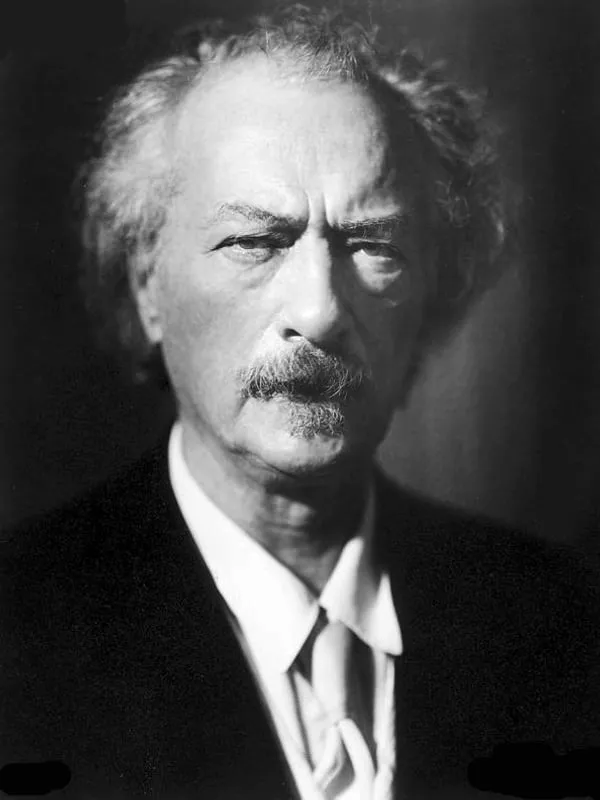
- Born:
- 18 November 1860, Kuryłówka in Podolia (Russian Empire)
- Died:
- 29 June 1941, New York
- Author:
- Natalia
- Photo:
- autor nieznany, domena publiczna, Wikimedia Commons

In 1914 Ignacy Jan Paderewski was the most famous Pole in the world, but he was no politician. He was known as a pianist who filled the largest concert halls of Europe and America. The war made a diplomat of him. First he raised money for the victims of the war in the Polish lands; then he used his fame and his access to the most important people in Washington to persuade President Woodrow Wilson and his adviser Edward House that the United States should support an independent Poland. As the representative in America of the Polish National Committee he won the Polish diaspora over to it and helped recruit volunteers for the Polish army in France. In December 1918 he came home as a man trusted by the Allies and brought about a compromise between Józef Piłsudski and Roman Dmowski. In 1919, as prime minister, he signed the Treaty of Versailles.
Before the war
He was born on 18 November (6 November in the Julian calendar) 1860 in Kuryłówka (PL) in Podolia. Some sources give the year as 1859. His mother died soon after his birth, and his father, an estate administrator, spent a year in prison for taking part in the January Uprising. From 1872 to 1878 Paderewski studied at the Music Institute in Warsaw, then in Berlin, and in the mid-1880s in Vienna under Theodor Leschetizky, the most celebrated piano teacher of the day. His Vienna debut in 1887 and his Paris debut in 1888 opened the way to a great career. A tour of the United States in 1891–1892 brought him a popularity in America that few artists have ever enjoyed. Among other works he composed the opera Manru and the Piano Concerto in A minor, and in 1896 he bought the villa of Riond-Bosson on Lake Geneva near Morges, which became his main home.
Even before the war Paderewski showed that art could serve politics. He paid for the Grunwald Monument in Kraków, unveiled in July 1910, on the five hundredth anniversary of the battle, before vast crowds from all three partitions. He spoke then of a nation that had survived captivity. He belonged to no party, and because of his wealth, his fame and his acquaintances all over Europe he was an outsider in Polish politics, accepted by different camps.
1914–1916: relief for Poland
The outbreak of war found him in Switzerland. The first task he set himself was relief for the population of the Polish lands, devastated by the passing fronts. In January 1915, together with Henryk Sienkiewicz, he founded in Vevey the General Committee for the Relief of War Victims in Poland (PL), of which he became vice-president. In London a fund was set up for the relief of war victims in Poland, and its concert in July 1915 was graced by the premiere of Polonia by Edward Elgar, who dedicated the work to Paderewski.
On 15 April 1915 Paderewski arrived by sea in New York. For the next two years he toured the United States, speaking about Poland before every concert. He raised money, organised committees and won over the Polish Americans, hitherto divided into feuding organisations. On his initiative an American committee of the fund for the relief of war victims in Poland was set up. Food relief, however, proved hard to deliver: the British did not want to weaken the blockade, and the Germans would not accept the Allies’ conditions and in the summer of 1916 rejected the supply plan.
His political contacts proved more important. On 12 November 1915 Paderewski met Colonel House, Wilson’s closest adviser, for the first time. In time he won his trust and friendship, and according to his biographers in 1916, on the occasion of a concert at the White House, he met the President himself. For Wilson, who was seeking re-election, the votes of several million Polish Americans also mattered, and Paderewski could speak in their name.
1917: Wilson and the Polish army
In January 1917, at House’s request, Paderewski prepared a memorandum on the Polish question for the President. In it he argued the necessity of restoring an independent Poland and demanded access to the sea for it. On 22 January, in his address to the Senate on “peace without victory”, Wilson announced “a united, independent and autonomous Poland”. Some historians believe that Paderewski’s memorandum influenced this. In the Polish lands the President’s words were received with enthusiasm.
When the United States entered the war in April 1917, Paderewski began to campaign for a Polish force made up of volunteers from the Polish diaspora. Washington would not agree to a separate Polish army in America, but in June France created an autonomous Polish army, and at the beginning of October the War Department backed recruitment into it of Poles not liable to the American draft. The volunteers were trained at a camp at Niagara-on-the-Lake in Canada, through which, according to Polish and Canadian studies, more than 20,000 men passed. They became the core of the Polish Army in France. Paderewski composed the song “Hej, orle biały” (“Hey, White Eagle”) for them.
In the summer of 1917 Paderewski joined the Polish National Committee founded by Dmowski and became its representative in the United States. Sources differ as to whether he was a member of the Committee from its first day or was co-opted a few weeks later. In September the Polish American National Department in Chicago, with which Paderewski worked closely, accepted the Committee’s authority, and on 4 October he wrote to Wilson on its behalf. In November the United States recognised the Committee as an official Polish organisation. Paderewski had his own style in this partnership. He was more conciliatory than Dmowski and, according to some historians, urged him to admit a representative of the Polish Jews to the Committee. In April 1918 he tried to reach an understanding with the leaders of Jewish organisations in New York on support for Poland in exchange for guarantees of equal rights, but the talks came to nothing.
1918: the thirteenth point
On 8 January 1918 Wilson announced his Fourteen Points. The thirteenth promised an independent Polish state, including the territories inhabited by indisputably Polish populations, with free and secure access to the sea. According to House’s papers, the President drew on memoranda of the Polish National Committee when drafting it, but many contemporaries attributed this point to Paderewski’s personal influence. Dmowski himself wrote as much years later. Throughout 1918 Paderewski spoke at Polish American rallies, raised funds and supported recruitment. In the autumn he worked in Washington together with Dmowski, who had come to America to seek recognition for the Polish army and support for the Polish programme of frontiers.
Return to Poland
After the Armistice Paderewski sailed for Europe. On 23 November he arrived in Liverpool, and then for several days held talks in London with the Foreign Secretary, Arthur Balfour. The British wanted a strong government in Poland with which the Entente could work, and the socialist government of Jędrzej Moraczewski and Piłsudski, a former ally of the Central Powers, aroused their distrust. Paderewski was to reconcile Warsaw with the Paris Committee. He arrived in Danzig aboard the British cruiser HMS Concord on 25 December, and on the evening of 26 December reached Poznań, where crowds with torches greeted him. The next day shots were fired outside his hotel, which began the Greater Poland Uprising. Paderewski, aware that he was in a German state, did not appear in public.
He reached Warsaw on 1 January 1919. His talks with Piłsudski went badly, and on the night of 4/5 January a group of conspirators from the National Democratic camp tried to overthrow Moraczewski’s government. The coup failed, but it showed how dangerous the split was. Piłsudski concluded that a government headed by Paderewski would bring Poland the recognition of the Allies. On 16 January Paderewski became head of the government (PL) and also took the foreign ministry. The Polish National Committee recognised the new cabinet, and on 22 January the United States recognised the Polish government. Together with Dmowski, Paderewski represented Poland at the Paris Peace Conference, where his personal acquaintance with Wilson, House and Lloyd George was invaluable. On 28 June 1919 the two of them signed the Treaty of Versailles.
After the war
As prime minister Paderewski had little backing in the Sejm. Criticised from right and left, he resigned in December 1919. In 1920 he still represented Poland at the Spa Conference and in the League of Nations, but soon withdrew from politics and returned to the concert stage, where he continued to enjoy great success. In the 1930s the Front Morges, opposed to the Sanation regime, was formed at his villa near Morges, with the participation of, among others, Generals Władysław Sikorski and Józef Haller. After the defeat of September 1939 he became head of the National Council, a substitute parliament in exile, and in the autumn of 1940, despite illness, went to the United States to seek help for Poland. He died in New York on 29 June 1941. He was buried temporarily at Arlington Cemetery, and in 1992 his remains were moved to St John’s Archcathedral in Warsaw.
Assessment
Historians agree that Paderewski was an extraordinary figure in diplomacy. He had behind him no party, no army and no office, and yet in the United States he did more for the Polish cause than anyone else. His biographers, among them Marian Marek Drozdowski, stress that his fame opened doors closed to other politicians, and that his personal charm and sincerity won over men such as House. He also made timely use of the weight of the Polish electorate in America. It is hard to measure exactly his influence on Wilson’s thirteenth point, but no one denies that it was the greatest of any Pole.
Assessments of his activity at home are less unanimous. As a mediator at the turn of 1918 and 1919 he played an important role, because thanks to him Poland appeared at the peace conference with a single government recognised by the Allies. As prime minister, however, he was in the opinion of many historians and contemporaries an ineffective politician, a stranger to Polish party quarrels who coped badly with their brutality. Critics accused him of subservience to the Great Powers, among other things in accepting the Minority Treaty. In Polish memory he has remained above all a patriot who gave his fame and fortune to the national cause, and one of the fathers of independence alongside Piłsudski, Dmowski, Ignacy Daszyński, Wojciech Korfanty and Wincenty Witos.
Sources
Spotted a mistake?Report an error
Mentioned in battles
(01)Often appears with
People who appear in the same events.