Poland · The Polish cause
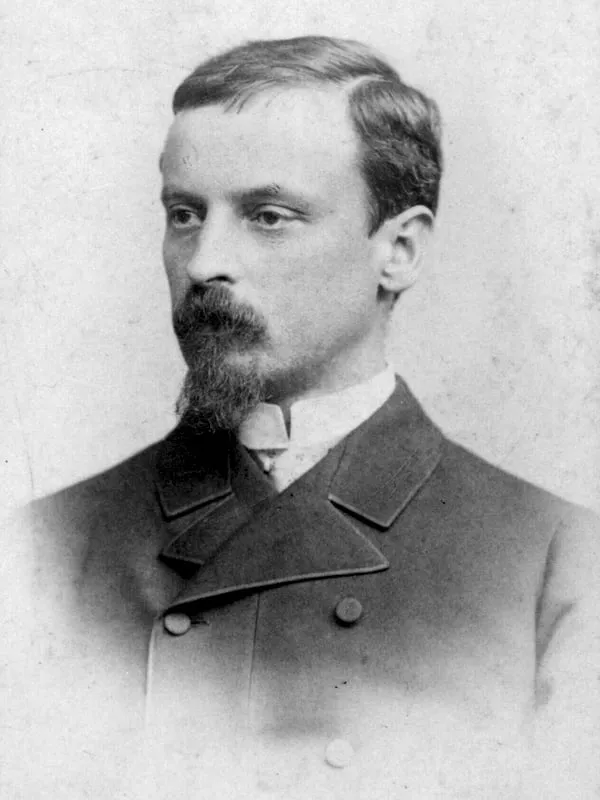
Henryk Sienkiewicz
President of the General Committee for the Relief of War Victims in Poland in Vevey (1915–1916)
- Born:
- 5 May 1846, Wola Okrzejska (Kingdom of Poland)
- Died:
- 15 November 1916, Vevey (Switzerland)
- Author:
- Łukasz Skowroń
- Photo:
- autor nieznany, domena publiczna, Wikimedia Commons

Henryk Sienkiewicz, author of the “Trilogy” and “Quo Vadis” and winner of the 1905 Nobel Prize, was the most famous Pole in the world when the war broke out. He devoted the last two years of his life not to literature but to helping the population of the Polish lands, devastated by the passing fronts. From January 1915 he headed the General Committee for the Relief of War Victims in Poland (PL) in Vevey, Switzerland, which with the help of Ignacy Jan Paderewski raised millions of francs around the world. The committee was meant to be strictly neutral and to help Poles in all three partitions. Sienkiewicz defended this neutrality to the end, including against the politicians of the national camp with which he was associated. He died in Vevey on 15 November 1916, ten days after the Act of 5 November, without living to see an independent Poland.
Before the war
He was born on 5 May 1846 in Wola Okrzejska into an impoverished noble family. He won fame with his short stories and then with his historical novels: “With Fire and Sword”, “The Deluge” and “Fire in the Steppe”, written in 1883–1888 “to lift up hearts”, then “Quo Vadis” and “The Knights of the Cross”. In 1900, on the 25th anniversary of his literary work, the public presented him with an estate at Oblęgorek near Kielce. In 1905 he received the Nobel Prize. He was also involved in the public life of the Kingdom: he co-founded the Polish School Society (PL), and in 1906, although he declined to stand for the Russian Duma, he chaired an electoral committee that brought together National Democracy, the Realists and the Progressives.
1914: from Oblęgorek to Switzerland
The outbreak of war found Sienkiewicz at Oblęgorek. In mid-August uhlans of the First Cadre Company, which had entered the Kingdom from Galicia, paid him homage there. At the end of the month the writer went to Kraków, where he received the news that the Supreme National Committee had been formed. He tried to keep his distance from it, and yet, as his biographers write, his name appeared without his knowledge under one of the appeals calling for a fight on the side of the Central Powers. On 3 October 1914 he left Vienna with his family for Switzerland. The permission was signed by the Austrian prime minister, and the official reason was the writer’s health, as he suffered from arthritis. He settled in Vevey on Lake Geneva, first at the Grand Hôtel and from November 1915 at the Hôtel du Lac.
The committee in Vevey
On 9 January 1915 in Lausanne, on the initiative of Erazm Piltz (PL), Antoni Osuchowski, Paderewski and Sienkiewicz, the General Committee for the Relief of War Victims in Poland was founded. At the end of January it moved to Vevey. Sienkiewicz became president, Paderewski vice-president and Osuchowski chairman of the executive council. Its members included Gabriel Narutowicz, Marie Skłodowska-Curie, Prince Zdzisław Lubomirski, Jan Kanty Steczkowski, Maurycy Zamoyski and the Poznań deputy Wojciech Trąmpczyński, that is, people from all the partitions and of different orientations.
On 1 February 1915 Sienkiewicz’s appeal “To the Civilised Nations” appeared in the Swiss, French and Italian press. In it the writer presented Poland, alongside Belgium, as the country most devastated by the war and asked for help for its people. The committee worked through a network of more than 170 local committees around the world, 117 of them set up in the United States thanks to Paderewski. About 700,000 francs were raised in the first weeks, about 5 million by the end of 1915, and nearly 20 million Swiss francs in 1915–1919. The money went to relief organisations on the spot: in Galicia mainly to the committee of Bishop Adam Stefan Sapieha, in the Kingdom to the Central Welfare Council (PL) and the Main Relief Committee, and also to Poles in Russia. Sienkiewicz appealed to the British prime minister H. H. Asquith and obtained a one-off exception to the ban on sending money into enemy territory, thanks to which funds reached Kraków. The Pope supported the effort: Sienkiewicz backed from Switzerland the collection for Poland ordered by Benedict XV in all Catholic churches of the world.
Money could not replace food, however, and food would have had to pass through the British blockade. When in 1915 the Germans took Warsaw and the whole Kingdom came under occupation, the situation of its inhabitants became dramatic. The American plan for food deliveries to occupied Poland collapsed in the summer of 1916, when Germany rejected the British conditions, and the population had to rely mainly on committees such as the one in Vevey.
Neutrality
Sienkiewicz believed that the committee could help only if it had access to all the Polish lands, and that it therefore had to remain neutral. In a letter to the American Polish community he stressed that the committee did not engage in politics, and warned against committees backed by Austria and Germany. He wrote that saving Polish lives threatened by hunger and destitution mattered more than “political romanticisms and realisms”. Privately he did not favour tying Poland to any of the partitioning powers. Of the Legionnaires he wrote that they were full of zeal and noble, but it was a pity that “they fight on the same side as the Germans”. His daughter Jadwiga nevertheless went to Kraków in October 1915 to work as a nurse in a Legions hospital.
In the autumn of 1916 Sienkiewicz expected the war to end soon and thought of moving to Lausanne so as to return home more quickly. He was writing his memoirs, his last work. On 5 November 1916 the Central Powers proclaimed the restoration of the Kingdom of Poland. In a letter to his daughter the writer called the act “a great historical fact”, adding: “It only needs to begin to take shape.” The national camp received the manifesto with hostility, as an attempt to win Polish recruits for Germany, and its politicians in Switzerland, among them Marian Seyda, signed a protest against it on 11 November. On 14 November they also tried to persuade Sienkiewicz to sign it, according to Zamoyski’s biographer through Maurycy Zamoyski and Erazm Piltz. The writer refused, citing the neutrality he owed as president of the committee. The conversation ended in a quarrel.
Death
During the night of 14–15 November Sienkiewicz’s health deteriorated. He died on the evening of 15 November 1916 in his apartment at the Hôtel du Lac. According to his wife, his last words were: “I shall not see a free Poland.” The funeral service was held on 22 November in the Catholic church in Vevey, and the writer was buried in the local cemetery. The committee in Vevey carried on and was still sending aid to Poland in 1919. Sienkiewicz’s remains were brought to independent Poland in 1924. On 27 October a ceremony was held at the Adam Mickiewicz monument in Warsaw, after which they were laid in the crypt of St John’s Archcathedral.
Assessment
For historians, the Sienkiewicz of 1914–1916 is above all the organiser of one of the largest relief efforts for the Polish lands during the war. His name opened doors and wallets, and his authority kept united a committee whose members held different orientations. His attitude to the Act of 5 November caused more controversy. The politicians of the national camp held his refusal to sign the protest against him, and his words about “a great historical fact” show that he saw an opportunity in the emperors’ manifesto. His biographers stress that Sienkiewicz was cautious about the act: he saw it as a step towards Poland, but did not treat the emperors’ promise as a certainty, and in refusing to sign he was above all defending the neutrality of the relief work to which he devoted the last years of his life.
Sources
Spotted a mistake?Report an error