Poland · The Polish cause
Wojciech Trąmpczyński
Deputy to the Prussian Landtag (1910–1918) and the Reichstag (1912–1918), in 1918–1919 member of the leadership of the Supreme People's Council in Poznań, from February 1919 Marshal of the Legislative Sejm
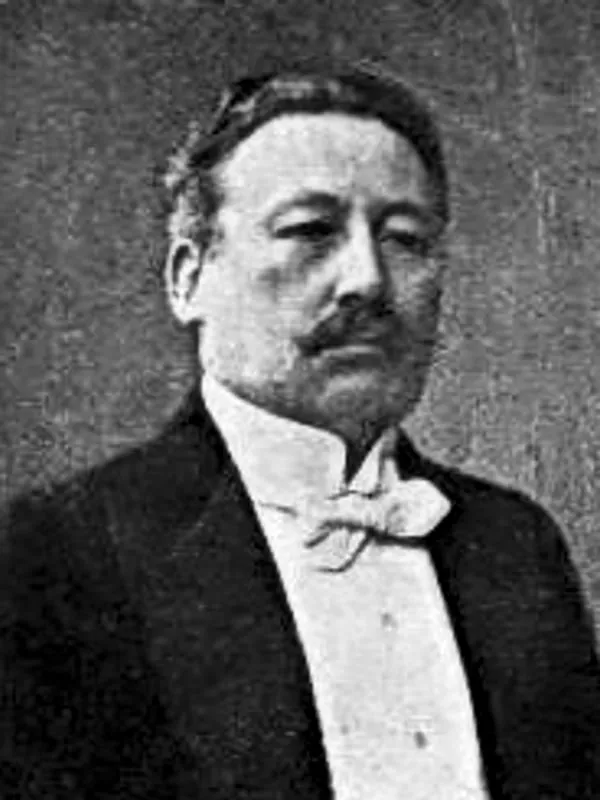
- Born:
- 8 February 1860, Dębłowo near Gniezno (Province of Posen, Prussia)
- Died:
- 2 September 1953, Poznań
- Author:
- Łukasz Skowroń
- Photo:
- autor nieznany, domena publiczna, Wikimedia Commons

Wojciech Trąmpczyński was one of the most respected Poles in the German Empire. A Poznań advocate and notary, a deputy to the Prussian Landtag from 1910 and also to the Reichstag from 1912, throughout the war he defended in Berlin the Polish population of the Prussian partition and of the occupied Kingdom, while discouraging his compatriots from giving active help to the Central Powers. In November 1918 he took the lead of the Polish People’s Council in Poznań, joined the leadership of the Supreme People’s Council and travelled to Warsaw for talks with Józef Piłsudski. In February 1919 he became the first Marshal of the Sejm of reborn Poland. His memoirs of the war years are among the more interesting accounts of how the Poles under Prussian rule lived through the Great War.
Before the war
He was born on 8 February 1860 at Dębłowo near Gniezno into a landowning family and was orphaned early. He went to school in Trzemeszno and at the St Mary Magdalene gymnasium in Poznań, where he belonged to the secret Tomasz Zan Society (PL). He studied law in Berlin and Breslau, where he took his doctorate in 1881. From 1886 he ran a law office in Poznań, and from 1892 a notary’s office as well. He specialised in land cases and often defended Poles against the Prussian Settlement Commission, as well as defendants in political trials. He was legal adviser to the Land Bank and director of the Bazar Poznański company, owner of the famous hotel that was a centre of Polish life in the city.
In 1901 he entered the Poznań city council, where he was one of the chief spokesmen of the city’s Polish inhabitants. When in 1907 the Prussian government prepared the expropriation law, he published the pamphlet “Recht muss Recht bleiben!” (“Law must remain law”), in which he argued that the law violated not only natural law but also the constitution of the Reich. In 1910 he won a by-election to the Prussian Landtag, and in January 1912 a Reichstag seat for the Inowrocław–Mogilno–Strzelno constituency, as the joint candidate of the National Democrats and the conservatives. In the Polish Circle of the Landtag he was second vice-president from 1913. In September 1912 he took part in a conference of national politicians from all three partitions at Pieniaki, which considered the attitude the Poles should take in the event of a European war. According to his memoirs, they agreed on the watchword: “let us not allow ourselves to be exploited!”
In Berlin during the war
The outbreak of war found Trąmpczyński taking the cure at Karlsbad. He recalled that, meeting the Russian Duma deputy Ignacy Szebeko in the street, the two men congratulated each other on a free Poland as the “certain result” of the war. He spent the first weeks in Berlin, watching the enthusiasm with which the Germans greeted the war. He wrote that the sympathies of the Poles in the Prussian partition were almost without exception on the side of the Entente, and that in their view a German victory could give Poland at most a scrap of the Kingdom. He regarded Piłsudski’s proclamation of August 1914, calling for a fight at Austria’s side, as fatal for Polish tactics, and Grand Duke Nicholas’s proclamation as a counterweight that saved the Kingdom from a rising against Russia. In 1914 he joined the secret Inter-Party Circle in Poznań, transformed in 1916 into the Central Citizens’ Committee. This organisation, led mainly by National Democrats, kept in touch with Polish groups in the Kingdom and in Galicia, and later with the Polish National Committee in Paris.
At the Landtag session of September 1914 Trąmpczyński pushed through the Polish Circle a demand for the immediate repeal of the anti-Polish laws. When he presented a ready-made draft law to the Vice-Chancellor, Clemens von Delbrück, he was told that the government would not allow “a pistol to be held to its chest”. The pro-government Bytom paper “Katolik” attacked him for making difficulties for the authorities, but in the Circle he was defended by Zygmunt Seyda (PL). The Prussian government announced only a “new orientation” towards the Poles after the war. In Trąmpczyński’s view the meaning was clear to the Poles: Prussia had no intention of abandoning Germanisation, and if Germany won, Poland would gain nothing.
From then on the Polish deputies in Berlin concentrated on saving the population from the effects of the war. From the rostrum of the Reichstag and the Landtag Trąmpczyński denounced the requisitions and the removal of machinery from the occupied Kingdom, the felling of forests and the fate of several hundred thousand Polish seasonal workers whom the war had caught in Germany and who were forbidden to return home. When in November 1916 he learned from a delegation of activists of the planned proclamation of a Kingdom of Poland, unlike some of his colleagues he did not regard it as a misfortune. He said that a nation which had lost its freedom should accept it back “even from the hands of Satan, as long as it does not sign its soul over to Satan in return”. A misfortune, on the other hand, would be a volunteer army fighting for the German cause. On 4 November 1916, on the eve of the Act of 5 November, he made a sharp speech in the Reichstag on the conduct of the occupiers in the Kingdom. According to his memoirs, on the day the act was proclaimed passers-by in the streets of Warsaw eagerly bought printed copies of the speech.
In mid-1917 he wrote a memorandum on the abuses of the occupation authorities in the Kingdom and in Lithuania, which was distributed to members of the government and parliament. The Warsaw Government-General replied with a charge of ingratitude. Trąmpczyński retorted in August that Germany had conquered the Kingdom in its own interest, and that the Polish nation too would do only what was in its interest. In September 1917, without a passport, he joined a parliamentary commission sent to Warsaw. There he took part in a meeting of the Inter-Party Political Circle (PL), which was deliberating on its attitude to the Regency Council. He argued for accepting the regency: in his view Polish courts and schools, even under occupation, would save the future state from chaos.
As a member of the Reichstag budget committee, on 26 September 1918 he heard at its secret session that the Bulgarian front had collapsed and that Bulgaria was asking for an armistice. He recalled that everyone present then felt that this was the end of the war. In the autumn the Polish deputies in the Reichstag declared that they considered themselves citizens of the Polish state and demanded that the Prussian partition be joined to it. According to Mateusz Ratyński, Trąmpczyński’s name was also considered at that time for the post of minister of justice in Warsaw, in the cabinet of Józef Świeżyński.
November and December 1918
After the outbreak of revolution in Germany the Poznań Central Citizens’ Committee emerged from underground as the People’s Council, and on 11 November Trąmpczyński became chairman of its organisation in Poznań. In November he also belonged to the delegation of politicians from the Prussian partition who held talks in Warsaw on their participation in the Moraczewski government. At the end of the month the Supreme People’s Council sent him to Piłsudski. In Poznań a group of young activists from the circle of the Union of Young Poland refused to recognise the Council, declaring that they would obey only the orders of the Chief of State. After a conversation with General Stanisław Szeptycki, Trąmpczyński obtained from Piłsudski an order that they recognise the Council’s authority. To his question whether Warsaw would help if the Poznań region could not hold out until the end of the peace conference and declared independence, however, he is said to have heard: “We will not be able to give you a single soldier or a single rifle.” He returned dismayed and advised the Council to put off an armed clash with the Germans for as long as possible.
At the Provincial Diet, which met in Poznań from 3 to 5 December, a new 80-member Supreme People’s Council was elected, and it chose a six-member Commissariat. Trąmpczyński belonged to the Council’s leadership, and some of his biographers write that he stood at its head. In the first weeks of December he travelled twice to Berlin and obtained from the socialist ministers tacit consent to the Polonisation of schools in the province. In mid-December the Council entrusted him with the office of president of the province and the regency of Posen, that is, with preparing the takeover of the administration from German hands. On 26 December Ignacy Jan Paderewski arrived in Poznań and stayed at the Hotel Bazar, and the next day the Greater Poland Uprising broke out. Trąmpczyński recalled that, thanks to the earlier preparations, the administration within the province passed into Polish hands “almost without friction”.
After the war
Since elections could not be held in the Prussian partition, the Legislative Sejm co-opted the Polish deputies to the Reichstag. On 14 February 1919 Trąmpczyński was elected Marshal of the Sejm, in the second ballot, by a narrow margin over Wincenty Witos. After his election he gave up party membership. He built the Sejm Chancellery from scratch and presided over the chamber that in March 1921 adopted the March Constitution. In 1920 he chaired the Citizens’ Committee for the Defence of the State. In 1922–1927 he was the first Marshal of the Senate, and in 1928–1935 a deputy of the national camp and a sharp critic of the Sanation regime. In 1938, over a fragment of his memoirs of the Greater Poland Uprising in which he quoted Piłsudski’s words of 1918, he was charged with insulting the Marshal’s name. He spent the occupation in Warsaw, expelled from Poznań, and in 1945 returned to Greater Poland. He died in Poznań in 1953, on 2 September according to Ratyński’s archival findings (older works give other days). Since 1987 he has rested in the Cemetery of Distinguished Greater Poland Citizens.
Assessment
Trąmpczyński belonged to the moderate wing of the national camp. During the war he was one of the most effective spokesmen of the Poles in Berlin: he did not count on Germany, but he used the German parliament and German law to defend the Polish population and to remind everyone that the Polish question would not end with the war. In November and December 1918 his experience as a lawyer and administrator helped the Supreme People’s Council take over the administration of the province. Even his opponents showed him respect. The socialist Herman Lieberman wrote that he was respected by all parties “as a man of honour”, and Stanisław Cat-Mackiewicz wrote that he deserved the title of “midwife of the legal order in Poland”. Critics reproached him for stubbornness, and some for “Prussian drill”. The national activist Juliusz Zdanowski wrote that he was an individualist “always violent in words but soft in deeds”. His account of the conversation with Piłsudski in November 1918 remains an important testimony, though written from the perspective of the national camp, to the tensions between Warsaw and Poznań on the eve of the uprising.
Sources
- bazhum.muzhp.pl · niepodleglosc i pamiec 2024 t31 n4 ratynski
- bazhum.muzhp.pl · niepodleglosc i pamiec 2024 t31 n3 ratynski
- Wojciech Trąmpczyński · Wikipedia (pl)
- dzieje.pl
- porta-polonica.de · trampczynski wojciech
- senat.edu.pl · notes on the senate 20 marshals of the senate of the second polish republic
- bazhum.muzhp.pl · palestra r1992 t36 n3 4411 412 s119 121
Spotted a mistake?Report an error
Often appears with
People who appear in the same events.