Poland · The Polish cause
Józef Świeżyński
President of the Inter-Party Political Circle (1915–1918), President of Ministers of the Kingdom of Poland (23 October – 4 November 1918)
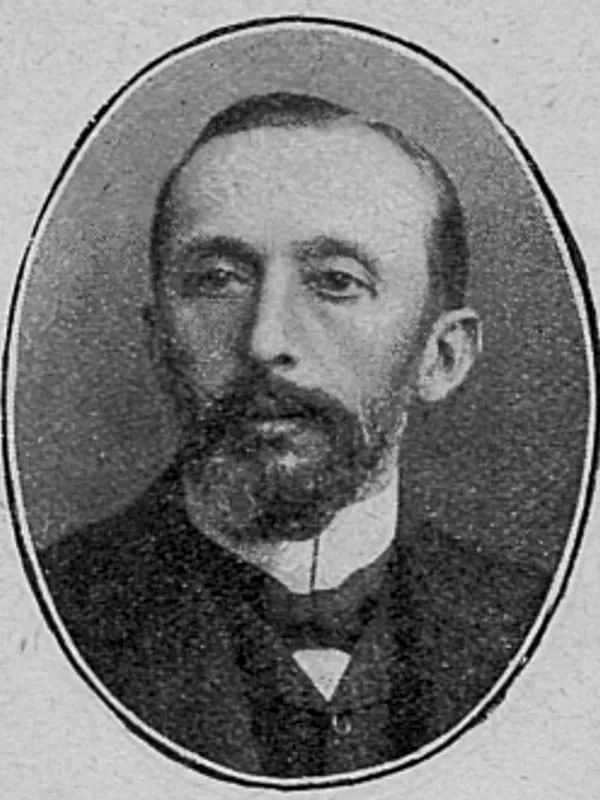
- Born:
- 19 April 1868, Wlonice (Kingdom of Poland)
- Died:
- 12 February 1948, Sandomierz
- Author:
- Łukasz Skowroń
- Photo:
- autor nieznany, domena publiczna, Wikimedia Commons

Józef Świeżyński was the last president of ministers appointed by the Regency Council. A physician by training, a landowner from the Sandomierz region and a member of the secret National League, before the war he sat three times in the Russian Duma. During the occupation he led the Inter-Party Political Circle (PL), the camp of the passivists (PL), who distrusted the Central Powers and were counting on the Entente. In October 1918, as Germany was losing the war, he became head of the first government whose approval the regents did not seek from the occupiers. The cabinet lasted less than two weeks. On 3 November it renounced its obedience to the regents and announced the formation of a “national government”, and the next day the Regency Council dismissed it. Historians regard the episode as a humiliation for the National Democrats in the decisive days of the recovery of independence.
Before the war
He was born on 19 April 1868 in Wlonice, the son of the landowner Władysław Gerard Świeżyński and Helena née Jaxa-Konarska. He attended the gymnasium in Radom and studied medicine at the Imperial University of Warsaw. Already as a student he was active in the clandestine Union of Polish Youth “Zet”, and in 1893 he joined the National League. After his studies he worked in clinics in Berlin and Giessen, married Wanda Kiniorska and returned to Warsaw. In 1896, because of his wife’s illness, he moved to her family’s estate at Jeleniów, and in 1908 he bought the estate of Sadłowice. In both places he engaged in social work.
Between 1906 and 1915 he was elected three times from Radom governorate to the State Duma: to the First, Third and Fourth. He divided his time between Sadłowice and St Petersburg. He belonged to the National Democratic camp of Roman Dmowski, which in the Duma pursued an understanding with Russia against Germany.
At the head of the passivists
In 1915 the Russians withdrew from the Kingdom, and the Germans and Austrians took over. The groups that did not want to cooperate with the occupiers formed the Inter-Party Political Circle in Warsaw. Świeżyński was its president from 1915 to 1918. The Circle brought together National Democrats, conservative realists and their allies. It did not believe the promises of the Act of 5 November, boycotted the Provisional Council of State and counted on an Entente victory. After the patent of 12 September 1917 the passivists declared that they had taken no part in choosing the regents and stipulated that the Regency Council could not decide on the borders and political system of the state without the will of the nation. In April 1918 Świeżyński was elected to the Council of State (PL), in which the passivists won a majority of the elected seats and formed the opposition to the government of Jan Kanty Steczkowski.
Prime minister
In the autumn of 1918 the situation was reversed. Germany and Austria-Hungary asked President Wilson for an armistice, and on 7 October the Regency Council issued a manifesto announcing an independent Poland and a government of representatives of all the parties. Jan Kucharzewski was unable to build such a government. On 23 October the regents appointed Świeżyński president of ministers, and the new cabinet was sworn in the same day. It was the first government of the Kingdom whose approval the regents did not seek from the occupiers.
The cabinet was dominated by National Democrats who, according to some historians, agreed to cooperate with the regents without the consent of Dmowski, who was then in the West. Zygmunt Chrzanowski (PL) became minister of internal affairs, Władysław Grabski minister of agriculture, and a few days later Stanisław Głąbiński minister of foreign affairs. Antoni Ponikowski also sat in the government. The portfolio of military affairs was reserved for Józef Piłsudski, imprisoned in Magdeburg. On 24 October Monitor Polski published Świeżyński’s letter to the Reich Chancellor, in which the prime minister stated that Brigadier Piłsudski had been appointed to that post. Efforts to secure the Commandant’s release, however, came to nothing. The government dealt with the organisation of the army, which after 12 October had passed under the regents’ authority, and with dividing the country into military districts.
3 and 4 November
From the start the cabinet had little support, even among members of the National League, some of whom opposed Świeżyński’s taking the premiership. The Regency Council, regarded by the left as a creation of the occupiers, was a burden to the National Democrats, and the Habsburg monarchy was falling apart before everyone’s eyes. In Kraków the Poles were taking over power, and in Lublin the left was preparing a government of its own. At the cabinet meeting of 3 November Minister Chrzanowski tabled an urgent motion: the government was to renounce its obedience to the Regency Council, announce this to the nation in a proclamation and form a “national government” in agreement “with the political parties representing the Polish people”. According to the historian Włodzimierz Suleja, the proclamation was sent to the press, and Świeżyński personally informed the regents of the cabinet’s decision.
The regents did not give way. On 4 November they dismissed the entire government, and Świeżyński, as Suleja notes, himself countersigned the act of his own dismissal. Other groups did not want to tie themselves either to the National Democrats or to the regents. The historian Janusz Pajewski called the whole affair grotesque, and Suleja writes that the National Democrats lost the contest for power “in an exceptionally compromising manner”. The attempt went down in history as the coup d’état of 1918 (PL). Current business was taken over by the civil-service caretaker government of Władysław Wróblewski (PL). On the night of 6–7 November the people’s government of Ignacy Daszyński, which did not recognise the regents, was formed in Lublin, and on 11 November the Regency Council handed military authority to Piłsudski.
After the war
Świeżyński no longer played an important role in politics. According to his biography, he took part in work on the draft of the March Constitution and then withdrew completely from public life. From 1919 to 1933 he was president of the Polish School Society (PL), and in 1925 he received the Commander’s Cross with Star of the Order of Polonia Restituta. During the Second World War, despite poor health, he engaged in limited underground activity. In 1944 he left Sadłowice and settled in Sandomierz, where he died on 12 February 1948. He was buried in the cemetery at Malice Kościelne.
Assessment
Świeżyński is remembered mainly for his twelve days as prime minister. His government was the first that the regents appointed without regard to the occupiers, and the first to reserve a place for Piłsudski. At the same time it had no backing either in society or in the camp from which it came. The attempt to “dethrone” the regents on 3 November was meant to win the government the left and Piłsudski’s supporters, but it ended with the cabinet’s dismissal. According to historians, the failed coup weakened the National Democrats in the country at the very moment when it was being decided who would take power in the reviving state. It also paved the way for the Lublin government and meant that in the first days of independence Warsaw had only a civil-service caretaker government instead of a full one. Piłsudski, who after returning from Magdeburg took over all power from the regents, profited from this weakness.
Sources
Spotted a mistake?Report an error