Poland · The Polish cause
Jan Kanty Steczkowski
Minister of the Treasury (1917–1918) and President of Ministers of the Kingdom of Poland (April–September 1918)
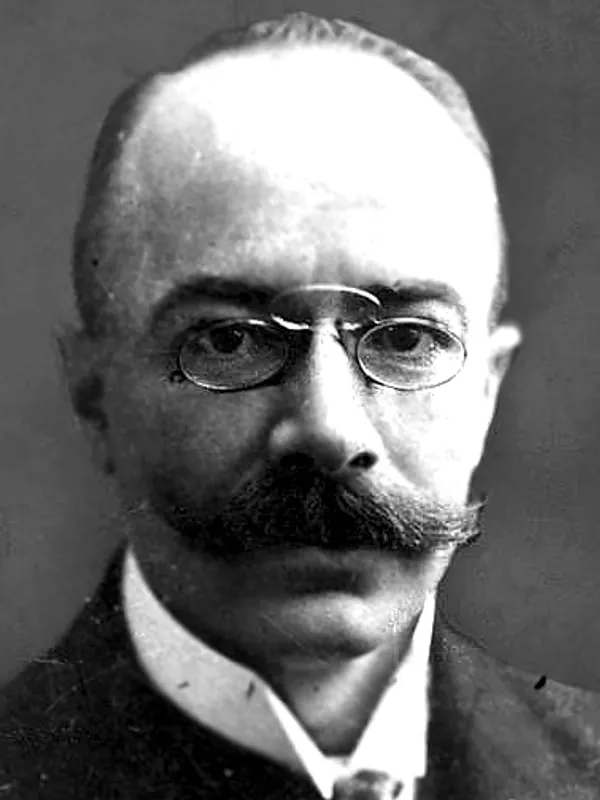
- Born:
- 16 October 1862, Dąbrowa Tarnowska (Galicia, Austria-Hungary)
- Died:
- 3 September 1929, Kraków
- Author:
- Łukasz Skowroń
- Photo:
- autor nieznany, domena publiczna, Wikimedia Commons

Jan Kanty Steczkowski was a Lviv lawyer and banker who during the war brought his financial experience to Warsaw. In the first government of the Kingdom of Poland he built the treasury ministry from scratch, and in April 1918 the Regency Council entrusted him with leading the whole government. He was a conservative, an Austrian subject and a member of the Viennese House of Lords. He reckoned that the Central Powers would win the war and that Poland had to come to terms with them on the best possible conditions. In a secret note of 29 April 1918 he offered them a military alliance and agreed to territorial concessions. When its content came to light in August, there was an outcry in the Kingdom, and Steczkowski had to step down. In reborn Poland he returned to finance: he was minister of the treasury in Wincenty Witos’s government and president of Bank Gospodarstwa Krajowego.
Before the war
He was born on 16 October 1862 in Dąbrowa Tarnowska, the son of Konstanty Steczkowski, an inspector of elementary schools, and Marianna née Olszewska. He passed his school-leaving examination in Rzeszów in 1880. He studied law at the Jagiellonian University and in Vienna, and in 1886 obtained his doctorate in Kraków. After court and legal training in Rzeszów, in 1892 he became an advocate in Lviv. He was also a landowner, with estates in Pokuttya.
In Lviv he quickly became involved with Galicia’s economic institutions. He was active in the Society of Agricultural Circles, of which he was secretary and vice-president, and in the Galician Agricultural Society. From 1899 to 1906 he directed the Galician Savings Bank, then the Lviv branch of an Austrian credit bank, and in 1913 he became director of the Bank Krajowy, the main financial institution of Galicia’s autonomous government. He sat on the supervisory boards of banks and oil companies, and from 1915 he was president of the Provincial Central Fund for Agricultural Cooperatives. In 1913 he received the Austrian Commander’s Cross of the Order of Franz Joseph.
From Lviv to Warsaw
After the Central Powers occupied the Kingdom in 1915, Steczkowski, as director of the Bank Krajowy, took part in founding the Landowners’ Bank and the Bank of Issue in Warsaw. After the Provisional Council of State was created in December 1916 he advised it informally on organising the public finances. On 19 May 1917 Emperor Charles appointed him a hereditary member of the Austrian House of Lords.
In December 1917 he joined Jan Kucharzewski’s government, the Kingdom’s first cabinet, as minister of the treasury. He organised the ministry from scratch and divided it into five sections, including the State Central Treasury and an office dealing with the settlement of war losses. In this form the ministry functioned until October 1920. In February 1918 the whole cabinet resigned in protest at the Brest-Litovsk treaty with Ukraine, which gave the Chełm region to the new state.
Prime minister
The regents entrusted Steczkowski with forming a new cabinet immediately after the February resignation. At the beginning of 1918 a victory of the Central Powers still seemed possible, and the Regency Council was seeking an understanding with Berlin. In March Steczkowski travelled to Berlin and Vienna for talks. Among other things he pressed for a personal union of the Kingdom with the Habsburg monarchy, which the Germans firmly opposed. According to the historian Jarosław Durka, he obtained in Berlin a promise of wider administrative powers than his predecessor had had. He also demanded the return of the Chełm region and Podlachia, the abolition of the German rear-area administration in the Kingdom and the building of a Polish army. These last two demands met with the strongest reservations on the German side.
On 4 April 1918 the Regency Council appointed him president of ministers. He kept the treasury portfolio for himself. The cabinet included Jan Stecki as minister of internal affairs and Antoni Ponikowski as minister of religious denominations and public education, while the Department of Political Affairs, the nucleus of a foreign ministry, was headed by Prince Janusz Radziwiłł. The government laid the foundations of the fiscal apparatus and prepared draft financial laws. It tried to expand the Polish Armed Force, a small army under German command, and to develop schools and local self-government. It promised social legislation, the parcelling-out of state estates and credits for rebuilding war damage.
The cabinet did not win the support of the passivists (PL), the groups that did not trust the occupiers and were counting on the Entente. In the April elections to the Council of State (PL) they won a majority of the elected seats. In June, when the Entente powers issued the Versailles declaration, the government, at the demand of Governor-General Hans von Beseler, declared that it would not change its cooperation with the Central Powers.
The secret note
On 29 April 1918 Steczkowski sent a secret note to the governments of Germany and Austria-Hungary demanding a swift and final settlement of the Polish question. He proposed building a state within the borders of the Kingdom of Poland. He accepted a border with the Ukrainian People’s Republic “corresponding to strategic necessities” and the loss of the four northern districts of Suwałki governorate in exchange for compensation east of the Narew and Biebrza. In addition he declared readiness for a military alliance and a trade treaty with the Central Powers, which would secure free navigation on the Vistula and thereby Poland’s access to the sea. Berlin did not take up the proposal.
On 25 August 1918 the content of the note was published by the Berliner Tageblatt. There was an outcry in the Kingdom: a prime minister who had taken office as a defender of Polish interests after the Brest-Litovsk treaty had himself proposed territorial concessions and a military alliance with the occupier. Durka writes that the ailing Steczkowski was rarely in Warsaw at the time and spoke of a fundamental difference of views between himself and most of his ministers. Not feeling strong enough to fight, on 2 September he and his cabinet resigned, and the regents accepted the resignation on 5 September. His ministers carried on provisionally, and Steczkowski himself ran the treasury until the government of Józef Świeżyński was appointed on 23 October. Two weeks earlier the Regency Council had announced in a manifesto an independent Poland made up of all the Polish lands, a programme entirely different from that of his note.
After the war
Steczkowski remained in the service of the state as a financier. At the turn of 1920 and 1921 he took part in the peace negotiations with Soviet Russia in Riga, which ended with the Treaty of Riga. On 26 November 1920 he became minister of the treasury in the first government of Wincenty Witos and held the post until 13 September 1921. He was director of the Polish State Loan Bank, which issued the Polish currency until the Bank of Poland was founded, and in 1922–1927 president of Bank Gospodarstwa Krajowego. He belonged to the conservative Party of the National Right (PL). He died in Kraków on 3 September 1929. His ashes were placed in the family tomb in Nagoszyn.
Assessment
As a financier Steczkowski left a good record. The treasury ministry he built in the winter of 1917–1918 survived unchanged until 1920, and the authorities of reborn Poland made use of his experience. In 1927 he received the Grand Cordon of the Order of Polonia Restituta, and years later Bank Gospodarstwa Krajowego made him the patron of its foundation.
His political activity raises more reservations. Steczkowski’s government rested on the assumption that the Central Powers would win the war and that it was necessary to come to terms with them. The revelation of the note of 29 April discredited this policy at a moment when Germany’s defeat was becoming apparent, and weakened the Regency Council. It must be remembered, however, that the note was written in the spring of 1918, when Germany had just made peace with Russia and launched its great offensive in the west, and that Steczkowski was trying to force Berlin into any settlement of the Polish question at all. His readiness for territorial concessions and a military alliance with the occupier gave the passivists and the left an argument that the activists were prepared to pay for a semblance of statehood with land and sovereignty. His resignation in September 1918 closed the period in which the Polish authorities in Warsaw tied the country’s future to a German victory.
Sources
Spotted a mistake?Report an error
Often appears with
People who appear in the same events.