Poland · The Polish cause
Jan Stecki
Deputy to the First and Second State Duma (1906–1907), minister of internal affairs of the Kingdom of Poland (December 1917 – February 1918 and April – October 1918)
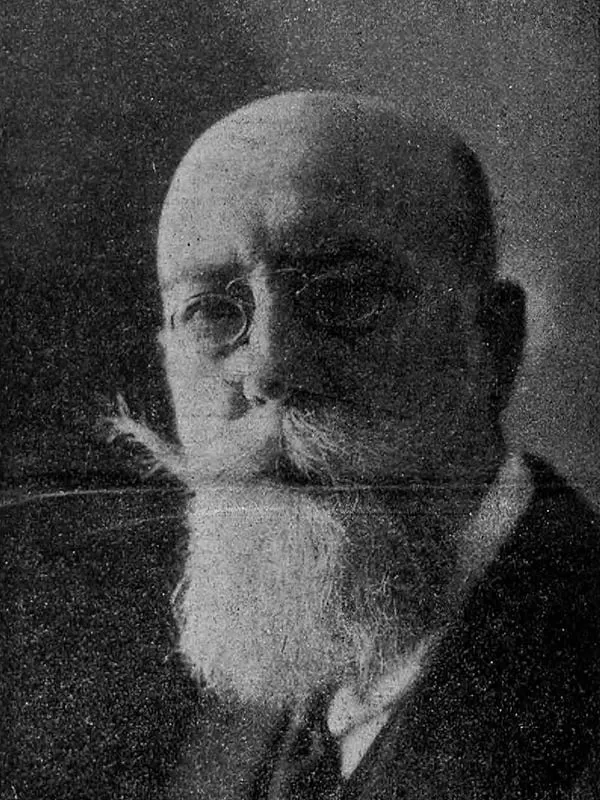
- Born:
- 22 March 1871, Siedliska near Lubartów (Kingdom of Poland, Russian Empire)
- Died:
- 30 June 1954, Bełżyce
- Author:
- Natalia
- Photo:
- autor nieznany, domena publiczna, Wikimedia Commons

Jan Stecki was a landowner from the Lublin region, an economist and one of the founders of the National Democratic camp in the Kingdom of Poland. In 1906 he sat in the first Russian State Duma, where he made his name as an expert on agricultural affairs. During the war he took a path that for many National Democrats was unthinkable: from an opponent of Germany he became an activist (PL), a supporter of building a Polish state alongside the Central Powers. In December 1917 he became minister of internal affairs in the first government of the Regency Council, and he held the office, with a break, almost until the end of the Kingdom of Poland. His life was described by the Lublin historian Włodzimierz Mich in the monograph “Jan Stecki (1871–1954). Portret polityka ziemiańskiego” (“Portrait of a landowner politician”, 1990).
Before the war
He was born on 22 March 1871 in Siedliska near Lubartów. An economist by training, he wrote a textbook of political economy and articles in “Ekonomista” and “Gazeta Rolnicza”. In his youth he belonged to the Union of Polish Youth “Zet”, and from 1893 to the secret National League. He wrote for “Głos” and “Przegląd Wszechpolski”, and after the National Democratic Party was founded he was one of its leaders in the Lublin region.
In 1906 he won a seat in the State Duma, and in 1907 he was re-elected to the Second Duma. In the Polish Circle he dealt with agricultural affairs. His speech in the First Duma attracted attention: on behalf of the Circle he supported the motion of the Kadets for the compulsory expropriation of part of the large landed estates in favour of the peasants. The conservatives of the Party of Real Politics (PL) took this speech particularly badly, and it sharpened their dispute with the National Democrats. In the following years Stecki was active in agricultural and landowners’ organisations in the Lublin region.
During the war
At the start of the war Stecki, like the whole national camp, stood on Russia’s side. He belonged to the Polish National Committee that Dmowski and his associates set up in Warsaw in November 1914. In the summer of 1915, however, the Russian army left the Polish lands, and Lublin became the seat of the Austro-Hungarian Government-General. Stecki stayed and over the next two years gradually changed his views. The Lublin historian Bogusław Kasperek, who described this evolution, places it between August 1915 and December 1917, from the departure of the Russians to his taking up the ministerial portfolio.
The turning point was the Act of 5 November 1916. In Lublin the proclamation of the Central Powers was announced at the seat of the Government-General by General Karl Kuk. Stecki, one of the leaders of the Lublin National Democrats, gave a speech during the ceremony that departed entirely from the anti-German line of his camp. He spoke of a Polish state “bound by gratitude and friendship to Those whose wisdom and justice it owes its existence”, and raised cheers for Franz Joseph and Wilhelm II. The historian Mieczysław Ryba sees in this speech a sign of how strong the emotions aroused by the Act were even in part of the national camp. In 1917 Stecki parted ways with the National Democrats. He headed the Main Relief Committee (PL) in Lublin, which brought aid to the population of the Austrian occupation zone, and cooperated with the Provisional Council of State.
Minister of internal affairs
In December 1917 Jan Kucharzewski gave him internal affairs in the first government of the Kingdom of Poland. At first this was a largely nominal office, since the administration of the country remained in German and Austro-Hungarian hands. Only on the basis of a Regency Council decree of 3 January 1918 was the Ministry of Internal Affairs (PL) created at the beginning of February, responsible for the general administration of the country, local government, police, health service, reconstruction, the post, statistics and supervision of the press. Stecki was thus the first minister of internal affairs of the Kingdom of Poland, and the department built at that time later passed into the administration of independent Poland.
After the Treaty of Brest-Litovsk with Ukraine Stecki left together with the whole Kucharzewski cabinet. Under the provisional government (PL) of Antoni Ponikowski the ministry was run by Stefan Dziewulski. On 4 April 1918 Stecki returned to his post in the government of Jan Kanty Steczkowski. That government assumed that the Central Powers would win the war and that an understanding with them had to be reached. As minister, Stecki was responsible for public order in a country exhausted by war and occupation. According to his biography, in May 1918 he ordered the creation of a Labour Union intended to break a strike by Warsaw workers in a dispute with the city council.
When in August a scandal broke out over Steczkowski’s secret note to the Central Powers, the prime minister had to resign. The regents accepted the cabinet’s resignation on 5 September but instructed the ministers to continue conducting business. Stecki therefore remained in office until 23 October 1918, when the Regency Council, after its proclamation of 7 October, appointed the government of Józef Świeżyński. His place in the ministry was taken by the National Democrat Zygmunt Chrzanowski.
After the war
In independent Poland Stecki returned to landowners’ politics. From 1919 he was president of the Landowners’ Union in Warsaw, and in 1922–1927 and 1930–1934 he sat in the Senate. From 1923 he was one of the leaders of the Christian National Party (PL), and after the May Coup he was among the conservatives who supported Piłsudski’s camp. In 1928 he published the book “W obronie prawdy” (“In defence of the truth”). In January 1934 he gave up his Senate seat. He died on 30 June 1954 in Bełżyce. His papers are held by the Library of the Catholic University of Lublin.
Assessment
Stecki was one of those politicians whom the war forced to abandon the convictions of a lifetime. The National Democrats regarded Germany as Poland’s main enemy, yet in 1916 he raised cheers for the emperors. His turn was part of a wider phenomenon: after Russia’s defeat in 1915 some of the landowners and intelligentsia of the Kingdom concluded that the state had to be built in the conditions the occupation had created, and went over to the activist camp. As minister he laid the foundations of the Polish internal administration, but his government stood on the losing side, and the policy of understanding with Berlin to which he put his name lost its raison d’être in October 1918.
Sources
- Jan Stecki · Wikipedia (pl)
- journals.umcs.pl
- bazhum.muzhp.pl · annales universitatis mariae curie sklodowska sectio f historia r2003 t58 s123 147
- bazhum.muzhp.pl · niepodleglosc i pamiec r2011 t18 n1 33 s209 224
- Ministerstwo Spraw Wewnętrznych (1918–1945) · Wikipedia (pl)
- Rząd Jana Kantego Steczkowskiego · Wikipedia (pl)
- Prowizorium rządowe Antoniego Ponikowskiego · Wikipedia (pl)
Spotted a mistake?Report an error
Often appears with
People who appear in the same events.