Poland · The Polish cause
Jan Kucharzewski
President of Ministers of the Kingdom of Poland (November 1917 – February 1918, October 1918)
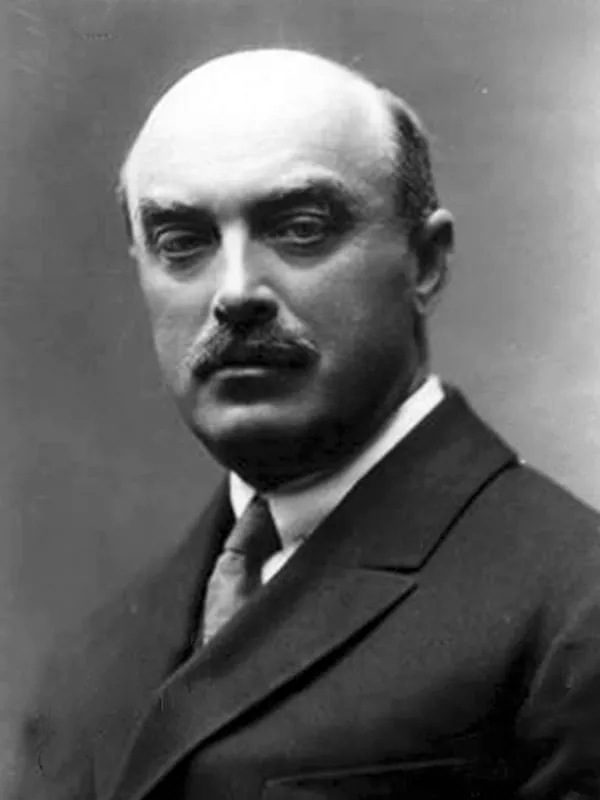
- Born:
- 27 May 1876, Wysokie Mazowieckie (Kingdom of Poland)
- Died:
- 4 July 1952, New York
- Author:
- Łukasz Skowroń
- Photo:
- autor nieznany, domena publiczna, Wikimedia Commons

Jan Kucharzewski was a historian of Russia and a lawyer who in November 1917 became head of the first government of the Kingdom of Poland. He returned to politics during the war as a declared opponent of Russia, convinced that the Poles could rebuild their state alongside Germany and Austria-Hungary. He became prime minister only after Berlin had blocked the candidate chosen by the regents. His cabinet, which held only a scrap of power, organised the first Polish ministries. In February 1918 Kucharzewski resigned in protest at the Brest-Litovsk treaty with Ukraine, and in October, as prime minister for the second time, he countersigned the manifesto of the Regency Council announcing an independent Poland. After the war he returned to scholarship and wrote a seven-volume history of Russia from tsarism to Bolshevism.
Before the war
He was born on 27 May 1876 in Wysokie Mazowieckie, the son of the engineer Stefan Kucharzewski and Anna née Raczkowska. He finished the gymnasium in Łomża and, in 1898, law at the Imperial University of Warsaw. He then went to Berlin, where he did research and attended lectures in sociology and political economy. From 1901 he worked in the Treasury Solicitor’s Office of the Kingdom of Poland, and from 1906 he was a sworn advocate in Warsaw. At the same time he taught political economy in clandestine classes and courses, and in 1907–1908 he lectured on the foundations of politics at the Society of Scientific Courses (PL).
As a student he belonged to the Union of Polish Youth “Zet”, and in 1905–1911 to the secret National League. He wrote for the National Democratic Goniec Poranny i Wieczorny and promoted the National Democrats’ policy at public meetings. In 1908 he broke with Roman Dmowski. He objected to Dmowski’s conciliatory policy towards Russia and to the National Democrats’ participation in the Pan-Slavic congress in Prague. He then began writing for the Germanophile press of Władysław Studnicki. He stood unsuccessfully in Warsaw for the Fourth Duma, in which the seat went to the socialist Eugeniusz Jagiełło.
As a historian he worked on the history of Russia and Poland in the 19th century. His books included a biography of Maurycy Mochnacki (1910) and Epoka paskiewiczowska (“The Paskevich Era”, 1914), a study of the fate of Polish education after the November Uprising.
In Switzerland
Kucharzewski spent the first years of the war in Switzerland. In 1915–1917 he wrote about the Polish question in the French-language Gazette de Lausanne, and in 1916 he published in Lausanne the pamphlet Réflexions sur le problème polonais. According to the historian Jacek Goclon, he did not attach himself to any political orientation, although he conducted a wide propaganda campaign for independence. He rejected an offer from Erazm Piltz (PL), who urged him to join the pro-Russian camp. He regarded the Act of 5 November 1916 as a turning point and as a basis for cooperation with the Central Powers.
In June 1917 he returned to Warsaw, a few weeks before the oath crisis, and drew close to the activist League of Polish Statehood (PL). He worked on the council of the Department of Political Affairs of the Provisional Council of State and headed the higher-education section of the Polish education administration. After the regents took power in October 1917 he became legal referendary of the Regency Council and, according to Goclon, headed its civil cabinet.
The Kingdom’s first prime minister
At first the regents did not have Kucharzewski in mind. On 29 October 1917 they appointed Count Adam Tarnowski, an Austro-Hungarian diplomat, as president of ministers, but Berlin objected. The Germans, as Goclon writes following the historian of the Regency Council Zdzisław Julian Winnicki, did not want too strong a personality at the head of the first Polish government and were looking for someone more compliant. Kucharzewski, an opponent of Russia with no ties to Vienna, was acceptable to them. According to some historians, his candidacy was recommended by the Governor-General Hans Hartwig von Beseler himself. On 14 November the regents notified the occupiers of their choice, on 21 November Berlin and Vienna gave their consent, and on 26 November Kucharzewski received his appointment.
He presented his list of ministers to the regents in December. At the first meeting of the government, on 11 December, he said that those present were “united by a common aim, which is building the Polish State”. The cabinet included Józef Mikułowski-Pomorski, who deputised for the prime minister, Jan Stecki, Antoni Ponikowski and Jan Kanty Steczkowski. There were no ministers of foreign or military affairs, because the occupiers had not handed over those fields. The government named three tasks as the most urgent: taking over further branches of the administration, building an army and saving the population from hunger. At that time only the courts and the schools were in Polish hands. A decree of the Regency Council of 3 January 1918 gave the Kingdom’s authorities a provisional organisation, and at the beginning of February the government took over the powers of the Transitional Commission (PL) and of the former Provisional Council of State. The departments became ministries.
Kucharzewski did not achieve his aim in any of the most important matters. He proposed to the Germans regular conscription into a Polish army that was eventually to number 150,000 men. He justified it by the need to defend the country against Bolshevism. According to Goclon, the plan met with reluctance from so many Polish parties that its implementation never even began. The occupiers also kept the Polish government out of the talks at Brest-Litovsk, although the fate of the Polish lands was discussed there. Visits by the prime minister and the regents to Berlin and Vienna changed nothing. The Council of Ministers then declared that “the Polish nation will not feel bound by any agreements concluded without its participation”.
Resignation in protest
On 9 February 1918 the Central Powers signed peace with the Ukrainian People’s Republic and promised it the Chełm region with part of Podlachia. In the Kingdom and in Galicia this was seen as a new partition. On 11 February Kucharzewski submitted the resignation of the whole cabinet to the regents. Goclon, who gives the date as 12 February, quotes the prime minister’s justification: the government’s resignation was “a protest against the violation of the rights of the Polish nation by the Treaty of Brest-Litovsk”, and in particular “against the humiliation inflicted on the Polish government, which was deprived of the possibility of defending Poland’s interests”. The regents accepted the resignation on 27 February and entrusted current business to Ponikowski’s caretaker government. The Kingdom’s first government had lasted less than three months.
October 1918
Kucharzewski returned to the stage in the autumn. After Steczkowski’s fall in September 1918 the regents were looking for a new prime minister. According to the historian Jarosław Durka, on 9 September Kucharzewski declined their offer, explaining that German policy on the Polish question was too unyielding. As Germany’s position rapidly worsened, on 22 September he accepted the mission of forming a government, and on 2 October he received his appointment. Five days later he countersigned the Regency Council’s manifesto “To the Polish Nation”, which announced an independent state comprising all the Polish lands, with access to the sea. He was unable, however, to build a government of representatives of all the parties, and on 9 October he stepped down. Current business was run by his deputy Bohdan Broniewski (PL) with the ministers of the previous cabinet until, on 23 October, Józef Świeżyński became prime minister.
After the war
In 1920, during the war with the Bolsheviks, Kucharzewski was again in Switzerland, seeking support for the policy of Józef Piłsudski’s camp. He was an adviser to the Council of Ministers and the Ministry of Foreign Affairs, and after returning to Warsaw in the spring of 1921 he devoted himself to scholarship and journalism. His main work, Od białego caratu do czerwonego (“From the White Tsardom to the Red”, seven volumes, 1923–1935), sought the roots of the Bolshevik revolution in the history of tsarist Russia. He was a member of the Warsaw Scientific Society and of the Polish Academy of Learning, and in 1923 he received the Commander’s Cross with Star of the Order of Polonia Restituta.
In April 1940 he left occupied Poland for Rome, and from there, via Paris and Portugal, reached the United States in July. From 1942 to 1952 he was president of the Polish Institute of Arts and Sciences of America in New York and a co-founder of the Polish Society of Arts and Sciences Abroad. In 1948 he published the book The Origin of Modern Russia in English. He died in New York on 4 July 1952. In 2018 his family gave the former prime minister’s papers, including records of the Provisional Council of State, to the Central Archives of Modern Records in Warsaw.
Assessment
For a long time Kucharzewski remained in the shadow of the men who took power in November 1918. Goclon observed in 2013 that neither the first prime minister nor his cabinet had been the subject of a monograph. For the opponents of activism he was a prime minister by the occupier’s grace: his appointment meant that in the first matter in which the regents wanted to show their independence, Berlin had the last word. Historians who have studied the work of his government judge it more leniently. According to Goclon, the cabinet worked under extreme dependence on the occupiers and was hampered by disputes among its ministers. At the same time it organised the first Polish ministries, achieved most in the courts and education, began training administrative staff and left its successors experience and draft laws.
The February resignation was the first such clear signal that the activists, who had staked everything on cooperation with the Central Powers, were losing faith in their promises. Kucharzewski drew his own conclusions: in September 1918 he refused to return to office, considering German policy too unyielding, and in October he signed an act that did not ask the occupiers’ consent. In the memory of posterity, however, he is above all a historian of Russia, and when his archive was handed over the deputy minister of culture Magdalena Gawin called him an “extraordinary” figure and an outstanding stylist.
Sources
Spotted a mistake?Report an error
Often appears with
People who appear in the same events.