Poland · The Polish cause
Józef Mikułowski-Pomorski
Deputy Marshal of the Provisional Council of State (1917), Chairman of the Transitional Commission (1917), Minister of Agriculture and Crown Estates of the Kingdom of Poland (1917–1918)
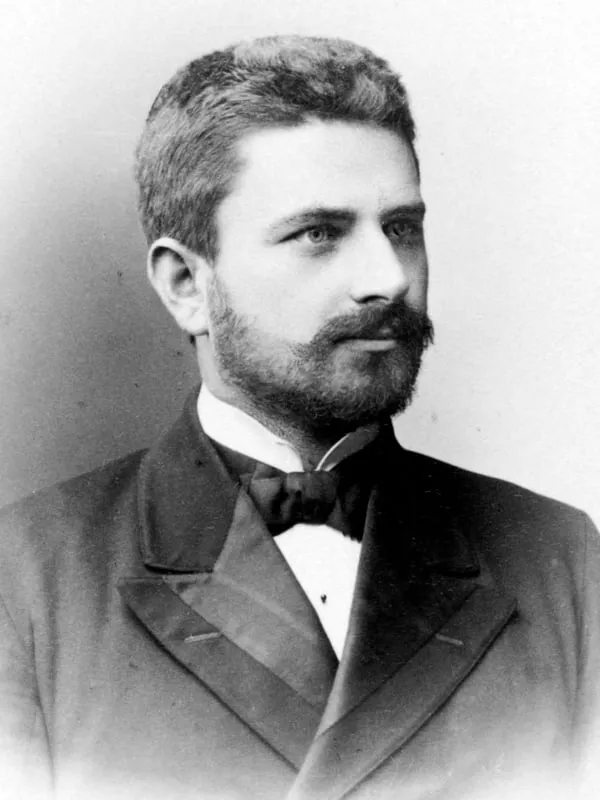
- Born:
- 1 July 1868, Malice Kościelne (Kingdom of Poland)
- Died:
- 4 May 1935, Warsaw
- Author:
- Łukasz Skowroń
- Photo:
- Dawid Mazur, domena publiczna, Wikimedia Commons

Józef Mikułowski-Pomorski was a scholar who during the war found himself for more than a year at the centre of Polish politics in the Kingdom. A professor of agricultural chemistry, for years associated with the agricultural academy at Dublany near Lviv, in 1917 he became deputy marshal of the Provisional Council of State, the first Polish institution created after the Act of 5 November. When the Council fell apart after the oath crisis, he took the lead of the Transitional Commission (PL), which for several months was the only Polish executive authority in the Kingdom. It was the Commission that took over the courts and the schools from the occupiers and named the candidates for regent. He was then minister of agriculture and deputy prime minister in the first government of the Kingdom of Poland. To posterity, however, he remained above all the creator and first rector of the Warsaw University of Life Sciences (SGGW).
Before the war
He was born on 1 July 1868 in Malice Kościelne in the Sandomierz region, the son of Władysław Mikułowski-Pomorski and Julia née Horoch. He finished the modern school (Realschule) in Warsaw and then the Faculty of Agronomy of the Riga Polytechnic. He graduated with distinction in 1889, though some biographies give the previous year. In Riga he belonged to the Polish student fraternity Arkonia.
In 1893 he became an assistant at the Dublany Agricultural Academy (PL) and began lecturing in agricultural chemistry. He set up a research and experimental station for agricultural chemistry there and worked on artificial fertilisers and soil fertility. In 1900 he became a professor, and in 1906–1911 he headed the school. He was also active in the Galician Agricultural Society. In 1911 he moved to Warsaw, where he began organising industrial and agricultural courses, the nucleus of a future agricultural university. He rented premises for them on Miodowa Street and set up an experimental field in Wilanów. His books included Nauka o żyzności gleby i nawozach (“The Science of Soil Fertility and Fertilisers”, 1912).
The Provisional Council of State and the Transitional Commission
After the Germans took Warsaw, Mikułowski-Pomorski became involved in Polish public life. In 1916 he sat on the board of the Polish School Society (PL). When the Provisional Council of State met in January 1917, made up solely of activists (PL), that is, supporters of building a state alongside the Central Powers, he became its deputy marshal, the deputy of Marshal Wacław Niemojowski (PL).
In the summer of 1917 the Council sank into crisis. The dispute over the military oath, in which the legionaries were to swear “brotherhood in arms” with the armies of Germany and Austria-Hungary, ended in the oath crisis, and on the night of 21–22 July the Germans arrested Józef Piłsudski. Niemojowski had stopped attending meetings at the beginning of July, and the duties of marshal passed to his deputy. On 25 August the members of the Council resigned their seats, but before doing so they appointed the Transitional Commission, with Mikułowski-Pomorski as its chairman. Alongside him sat the directors of the departments of justice and the treasury, Stanisław Bukowiecki (PL) and Kazimierz Natanson. Mikułowski himself headed the department of religious denominations and public education.
The Commission was only supposed to handle current business, but it was in its time that the Poles took over their first real powers. On 1 September 1917 it took over the administration of the courts from the occupiers, and on 1 October the schools in the German zone of occupation. It was to the Commission that the governors-general addressed the letter attached to the patent of 12 September, which created the Regency Council. On 18 September the Commission unanimously named three candidates for regent to the occupiers. On 15 October, when Emperor Wilhelm II’s telegram approving the regents arrived, Mikułowski-Pomorski read it out publicly in the auditorium of the Grand Theatre before the performance. A committee appointed by the Commission prepared the ceremony at which the regents took power on 27 October, and the Commission itself then ran current business until a government was formed.
Minister of agriculture
In December 1917 Mikułowski-Pomorski joined Jan Kucharzewski’s government as minister of agriculture and crown estates. According to the historian Jacek Goclon, from 27 December he was deputy to the president of ministers. Formally the Regency Council never appointed a deputy prime minister, but Mikułowski performed that function in practice and stood in for Jan Kucharzewski seven times at the cabinet’s 23 meetings. On 13 December the Transitional Commission decided to hand its departments over to the ministries and suspend its activity, and on 9 January 1918 Mikułowski, as vice-president of ministers, forwarded this resolution to the regents for approval. At the very first meeting of the government he pointed out that the relationship between the Council of Ministers and the Commission needed to be clarified, and he criticised the filling of official posts through patronage.
In February 1918 the whole cabinet resigned in protest at the Brest-Litovsk treaty with Ukraine. Mikułowski did not join the subsequent governments. The regents appointed him to the Council of State (PL), the Kingdom’s substitute parliament, which elected him deputy marshal. In 1918 the courses he had been organising since 1911 were turned into a state university, and he became its first rector.
After the war
Mikułowski-Pomorski headed the SGGW in 1918–1920 and again in 1928–1929. He also returned to politics: in 1922 he founded the National State Union, and in 1922–1923 and in 1926 he was minister of religious denominations and public education. In 1929 the University of Poznań awarded him an honorary doctorate. He was a Freemason. Among other works he wrote a study of the agrarian reform in Russia in 1917 and textbooks on tillage and meadow cultivation. He died in Warsaw on 4 May 1935 and was buried in Powązki Cemetery. In 1936 his bust was unveiled in the SGGW building.
Assessment
In the history of Polish politics Mikułowski-Pomorski remained a secondary figure. He belonged, however, to the small group of activists who ensured the continuity of Polish institutions at the most difficult moment, between the collapse of the Provisional Council of State and the formation of the first government. The Transitional Commission he led took over the courts and the schools from the occupiers, the two fields in which the Polish authorities of the Kingdom held the most real power until the end of the war. Goclon stresses that the Kingdom’s first government continued many matters begun by the Commission, which filled the gap between the appointment of the regents and the formation of the cabinet.
For the passivists and the left this was at the same time participation in institutions created by the occupiers, and the Commission itself was merely a body chosen by the outgoing Council. Mikułowski’s more lasting achievement, however, proved to be the agricultural university of which he became first rector in the year Poland regained independence. The SGGW commemorates him as its first rector, and an obelisk dedicated to him stands in his native Malice.
Sources
Spotted a mistake?Report an error
Often appears with
People who appear in the same events.