Austria-Hungary · The Central Powers
Adam Tarnowski
Austro-Hungarian Minister to Bulgaria (1911–1916), appointed Ambassador to the United States (1916–1917), in October 1917 designated Prime Minister of the Kingdom of Poland
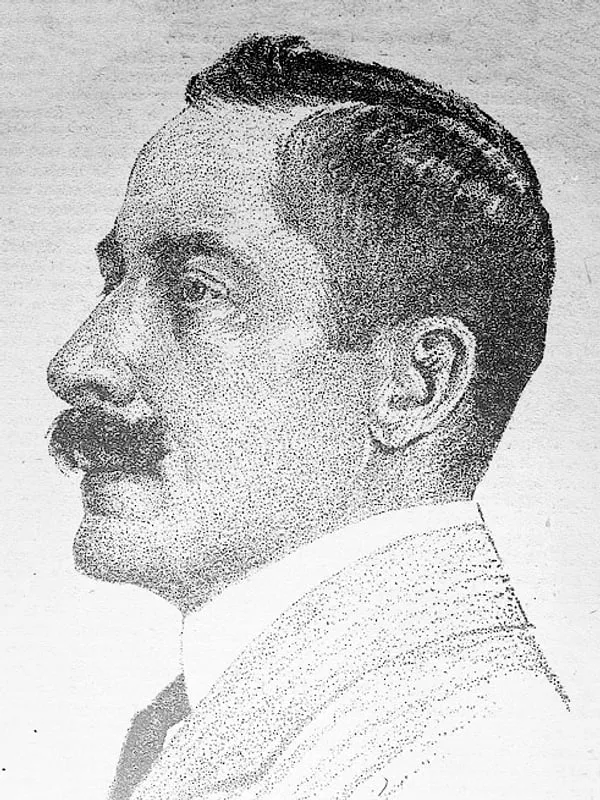
- Born:
- 4 March 1866, Kraków (Galicia, Austrian Empire)
- Died:
- 10 October 1946, Lausanne
- Author:
- Łukasz Skowroń
- Photo:
- R. G. Russom, domena publiczna, Wikimedia Commons

Count Adam Tarnowski was one of the ablest diplomats of the Habsburg monarchy and one of the Galician aristocrats who made careers in Vienna. In 1911–1916 he was Austro-Hungarian minister in Sofia and is credited with a large share in bringing Bulgaria over to the side of the Central Powers. In the autumn of 1916 the monarchy sent him as ambassador to Washington to save relations with the United States. He arrived on the day the Americans learned of unrestricted submarine warfare, the President never received him, and after three months he had to return to Europe. The last Austro-Hungarian ambassador to the USA then turned to Polish affairs. In October 1917 the Regency Council in Warsaw appointed him prime minister of the Kingdom of Poland, but Germany would not let him take office.
Before the war
He was born on 4 March 1866 in Kraków, the son of Jan Dzierżysław Tarnowski (PL), one of the leaders of the Kraków conservatives, and Zofia née Zamoyska. His elder brother Zdzisław Tarnowski (PL) was one of the leaders of the Galician conservatives during the war. Adam studied in Vienna and in 1897 entered the Austro-Hungarian diplomatic service. In 1899–1901 he was secretary of the legation in Washington, then worked in Paris, Dresden, Brussels and Madrid, and in 1909–1911 he was counsellor of the embassy in London. In 1901 he married Princess Maria Światopełk-Czetwertyńska.
On 30 April 1911 he became minister in Sofia. His time there coincided with the Balkan Wars, in which Bulgaria first defeated the Turks and then lost a war against its former allies, giving up most of its gains in 1913. Tarnowski worked during this period to soften its losses, and his wife organised aid for the victims of the war. As a result he gained influence over Tsar Ferdinand I and the government of Vasil Radoslavov.
In Sofia
After the outbreak of the Great War Bulgaria declared its neutrality, and both coalitions bid for its entry. Tarnowski argued to the Bulgarians that leaning on the Central Powers would allow them to regain Macedonia and overturn the unfavourable peace of 1913. He is credited with a large share in Sofia’s decision. On 6 September 1915 Bulgaria concluded a secret alliance with Germany, and in October it attacked Serbia. Bulgaria’s entry into the war opened an overland route to Constantinople for the Central Powers and sealed Serbia’s defeat. Czernin later wrote that Tarnowski was one of the best and ablest Austro-Hungarian diplomats.
The ambassador who was not received
Ever since Konstantin Dumba had to leave the United States in 1915, the monarchy had had no ambassador in Washington. In mid-October 1916 the Foreign Minister István Burián requested agrément for Tarnowski, President Woodrow Wilson agreed on 30 October, and on 9 November the appointment was announced. Tarnowski is said to have commented on it with the words: “They are sending me to a lost position.” His departure was delayed because the British long refused him a safe conduct through the blockade. They gave way only under American pressure, and Tarnowski received word of this on 5 January 1917.
He reached the United States at the turn of January and February 1917 (the Czech historian Václav Horčička gives 1 February), that is, at the moment when Washington learned that Germany had announced unrestricted submarine warfare. Vienna, which had known of the decision, had not warned him of it. The Secretary of State, Robert Lansing, received him kindly and gained the impression that the ambassador had very mixed feelings about Germany’s conduct. The United States broke off relations with Germany but not with Austria-Hungary, because Wilson and Lansing still hoped to detach the monarchy from Berlin and bring it to make peace. The Foreign Minister Ottokar Czernin instructed Tarnowski to prevent a rupture at all costs and sent him 100,000 dollars to influence the press. The ambassador declined the money, judging such influence to be practically impossible.
Vienna, however, backed the submarine war, and Wilson refused to accept the ambassador’s credentials until the monarchy changed its position. Austria-Hungary’s reply of 2 March upheld the principles of unrestricted submarine warfare, and Czernin was not willing to risk a rift with Germany. In mid-March Tarnowski warned him that it would be better for the monarchy’s cause in America not to show boundless trust in Germany. On 29 March Lansing told him that the United States would declare war on Germany. “But the President is so eager for peace,” the startled Tarnowski replied. The same day he was told that the President would not receive him. After Wilson’s address to Congress the ambassador still warned Czernin against breaking with America, which wanted to throw its wealth into the scales to prevent a German victory. On 8 April, however, Austria-Hungary broke off relations with the USA.
Czernin wanted Tarnowski to stay in America unofficially, but Lansing replied that he had to leave. At their last meeting on 1 May the Secretary of State declared that the United States would fight until victory, and said that he did not rule out an independent Poland with access to the sea and Danzig as its port. “But it belongs to Germany,” Tarnowski objected. “Do not forget that it is not Germany that will decide the terms of peace,” came the reply. In the first half of May 1917 he sailed for Europe, never having presented his credentials. In December the United States declared war on Austria-Hungary.
The would-be prime minister of the Kingdom of Poland
After his return Tarnowski turned to Polish affairs. There was talk of sending him to Stockholm, but he never took up the post. Vienna and the Polish supporters of the Austro-Polish solution saw him as a candidate for the highest offices in the Kingdom. In September 1917 he declined to join the Regency Council, and according to Polish historians his very candidacy, as an Austro-Hungarian diplomat, had delayed the issuing of the patent. On 29 October, two days after the regents took power, the Council appointed him President of Ministers. The very next day Governor-General Hans von Beseler announced that the German government did not agree: Berlin did not want an experienced Austrian diplomat and supporter of the union of the Kingdom with Galicia at the head of the Polish government. After two weeks of dispute the regents gave way, and Jan Kucharzewski became prime minister.
In January 1918 a German communiqué named Tarnowski as the Polish delegate to the peace talks in Brest-Litovsk, but the Poles were not admitted to the negotiating table. According to his biographies he also acted as an informal link between the regents, the Polish Club and the foreign ministry and the Emperor in Vienna, and in the spring of 1918, after Czernin’s resignation, he was mentioned among the candidates to succeed him. In October 1918, as the monarchy was falling apart, Emperor Karl I wanted to send him to Switzerland for informal talks with the Americans. According to a dispatch from the American minister in Berne, he was chosen because he was a Pole and had consistently opposed Prussian policy. The mission never took place.
After the war
In reborn Poland Tarnowski returned neither to politics nor to diplomacy, although he was offered posts. He bought an estate at Świerże on the Bug, spent his winters in Warsaw and sometimes acted as an intermediary between the conservatives and Józef Piłsudski. He lived through the German occupation in Warsaw, and in 1946 he left for Switzerland. He died in Lausanne on 10 October 1946 (some sources give 16 October). He was not the father of his namesake Adam Tarnowski, foreign minister of the government-in-exile, with whom he is sometimes confused.
Assessment
Václav Horčička calls the Washington mission the zenith of Tarnowski’s career and at the same time an example of the contradiction in which the monarchy was caught. The ambassador understood that what harmed it most in America was the conviction that it was Berlin’s vassal, and he advised Czernin to show independence. Vienna, however, wanted both peace and loyalty to the alliance with Germany, and so was trying to square the circle. According to Horčička, the perception of Austria-Hungary as an appendage of Germany contributed to the monarchy’s collapse in 1918. For the Poles Tarnowski was a symbol of the Austro-Polish orientation in its final phase: his candidacy for prime minister in 1917 was one of Vienna’s last attempts to keep its influence over the Kingdom, and Germany torpedoed it within a day.
Sources
Spotted a mistake?Report an error
Often appears with
People who appear in the same events.