Poland · The Polish cause
Władysław Studnicki
Founder of the Club of Polish Statists (1916), member of the Provisional Council of State (1917) and of the Council of State of the Kingdom of Poland (1918)
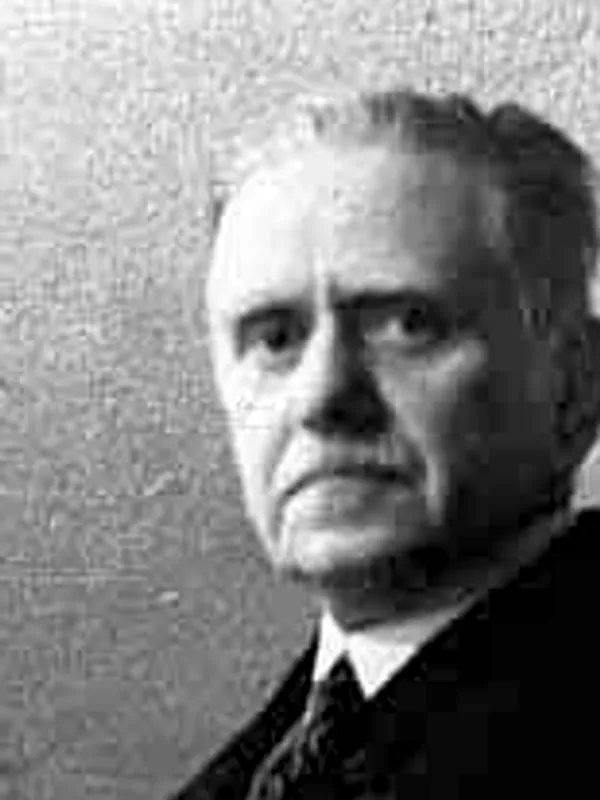
- Born:
- 15 November 1867, Dinaburg (Russian Empire)
- Died:
- 10 January 1953, London
- Author:
- Natalia
- Photo:
- autor nieznany, domena publiczna, Wikimedia Commons

Władysław Studnicki was the most consistent Polish Germanophile of the first half of the twentieth century. A former socialist and Siberian exile, then a nationalist, from 1910 he argued that Poland could be reborn only in a struggle against Russia, at the side of Austria-Hungary and Germany. During the war he became the loudest advocate of basing the Polish cause on the German Reich. He tried to convince Governor-General Hans von Beseler of this, founded the Club of Polish Statists, and the German politician Matthias Erzberger called him the spiritual father of the Act of 5 November. Among the Poles, most of whom distrusted Germany, he nevertheless remained isolated. He kept the same faith in a Polish-German alliance in the 1930s and even during the Second World War, which meant that for decades he was regarded as a pariah.
Before the war
He was born on 15 November 1867 in Dinaburg into a Polish noble family from the eastern borderlands. His parents had taken part in the January Uprising, and his younger brother was the later Wilno archivist and historian Wacław Studnicki. In 1888, as a student of Leopold Kronenberg’s commercial school in Warsaw, he co-founded the socialist Second Proletariat (PL). He was arrested in the autumn of that year and, after several months of investigation, exiled to Siberia, from which he returned in 1896. For several years he was active in socialist organisations in emigration, but he gradually drifted towards nationalism. In 1901 he settled in Galicia, in 1902 he joined the National Democratic Party, and in 1904 he explained this transformation in the book “Od socjalizmu do nacjonalizmu” (“From socialism to nationalism”).
He soon parted with the National Democrats, however, over their attitude to Russia. In 1905–1910 he lived mainly in Warsaw and as a journalist attacked the pro-Russian policy of Roman Dmowski. In 1906–1908 he published in succession several periodicals, “Naród a Państwo”, “Sprawa Polska”, “Myśl Polityczna” and “Votum Separatum”, which the authorities kept closing down. Among those who began writing for his Germanophile press at that time was Jan Kucharzewski, the future prime minister of the Kingdom of Poland. In his 1910 book “Sprawa polska” (“The Polish question”) Studnicki called for the rebuilding of Poland with the help of the Central Powers and for the transformation of the dual Habsburg monarchy into a three-part state, with Poland as the third part. He pointed out that Russia had seized about 80 per cent of the lands of the old Commonwealth and regarded it as the main enemy of Polishness. Before the war he was active in the Polish Military Treasury (PL) and the Provisional Commission of Confederated Independence Parties, which supported the Polish rifle organisations. In 1912 he tried to win Colonel Tadeusz Rozwadowski over to them.
During the war
Until mid-1915, as his scholar Jacek Gzella writes, Studnicki favoured solving the Polish question on the basis of Austria-Hungary. The defeats of the Austro-Hungarian army, Vienna’s subordination to Berlin and the German victories on the Eastern Front, crowned by the capture of Warsaw in August 1915, changed his views. From then on he argued in pamphlets and articles that through cooperation with the Reich Poland would regain a state with borders pushed far to the east.
On 10 May 1916 he presented Beseler with a plan for an independent Poland whose eastern border would run along the Daugava and the Berezina, while the western one would remain the 1815 border between Congress Poland and Prussia. The Province of Posen and Upper Silesia would thus stay in Germany. On 21 July 1916 he founded in Warsaw the Club of Polish Statists (PL), which gathered the supporters of this concept. Gzella judges that Studnicki had some influence on the issuing of the Act of 5 November, which announced a Kingdom of Poland made up of the lands of the Russian partition. His supporters hailed the proclamation as a breakthrough. When, however, Studnicki backed the occupiers’ recruitment appeal issued a few days later, which most Poles received with indignation, his popularity began to decline.
In December 1916, on German recommendation, he joined the Provisional Council of State. According to the historian Włodzimierz Suleja, he was, apart from Józef Piłsudski, the only politician in it with a settled view on the question of the army. He demanded an immediate appeal calling for volunteers for the Polish army, the creation of a civilian inspectorate to raise it, and, once a Polish administration had been organised, compulsory conscription of men aged 20, 21 and 22. His proposals coincided with the plans of Władysław Sikorski rather than Piłsudski, who demanded first a Polish government and only then an army. In June 1917 Studnicki published documents from the Council’s proceedings, and according to his biographies he was expelled from it in the summer of 1917. In August, after the oath crisis and Piłsudski’s arrest, the Council ceased to function anyway.
Studnicki spent the last year of the war in growing isolation. The press remained his only platform. From 6 January 1918 he published in Warsaw the weekly “Naród a Państwo”, whose title recalled his periodical of a decade earlier. It was printed in a run of about 300 copies. He refused subsidies offered by the German authorities and also by Prime Minister Kucharzewski, whose government’s policy he systematically criticised. The paper argued that the Act of 5 November had made it possible to rebuild the state despite the occupation, and devoted most of its space to building the army, including compulsory conscription. In 1918 Studnicki was appointed a member of the Council of State (PL) of the Kingdom of Poland. According to his biographies he also took part in talks about placing a prince of the Saxon Wettin dynasty on the Polish throne. The last issue of his paper appeared on 9 November 1918, the day before Piłsudski’s return to Warsaw.
After the war
In independent Poland Studnicki headed the statistical department of the Civil Administration of the Eastern Lands, then was an adviser in the ministries of industry and trade and of foreign affairs, and lectured in Wilno. Above all he wrote. In the 1930s he called for a Central European bloc based on Poland and Germany and directed against the Soviet Union. He was also the author of a book on the Jewish question, full of antisemitic language and calling for the mass emigration of Polish Jews. In 1936 he met Hitler. In June 1939 he published the book “Wobec nadchodzącej drugiej wojny światowej” (“Facing the coming Second World War”), in which he warned against war with Germany and predicted that Britain and France would not help Poland. The government confiscated the print run. In the autumn of 1939 he proposed to the Germans that the Polish army be re-created for a joint war against the Soviet Union, and in January 1940 he protested in a memorandum against German terror in occupied Poland. The Gestapo arrested him twice, and in 1941–1942 he was held in Pawiak prison. From 1946 he lived in London, isolated by the émigré community. He died there on 10 January 1953.
Assessment
Studnicki still provokes extreme judgements. For some he was a visionary who correctly foresaw Poland’s defeat in an isolated war with Germany and the Soviet threat; for others a politician detached from reality, who all his life disregarded both the mood of his own nation and the real aims of German policy. During the First World War his ideas had some influence on German policy but did not win the support of the Poles. Gzella notes that after backing the recruitment and entering the Council of State on German recommendation, Studnicki gradually slid into political isolation. Erzberger credited him with fathering the Act of 5 November, and for this reason some writers count him among the co-founders of independence, alongside Piłsudski and Dmowski. In People’s Poland his books were banned and withdrawn from libraries. His antisemitism and his conduct during the Second World War, however, mean that he remains a controversial figure.
Sources
Spotted a mistake?Report an error
Often appears with
People who appear in the same events.