Poland · The Polish cause
Wincenty Witos
Leader of the Polish People's Party "Piast", member of the Imperial Council (1911–1918), chairman of the Polish Liquidation Commission in Kraków (1918–1919)
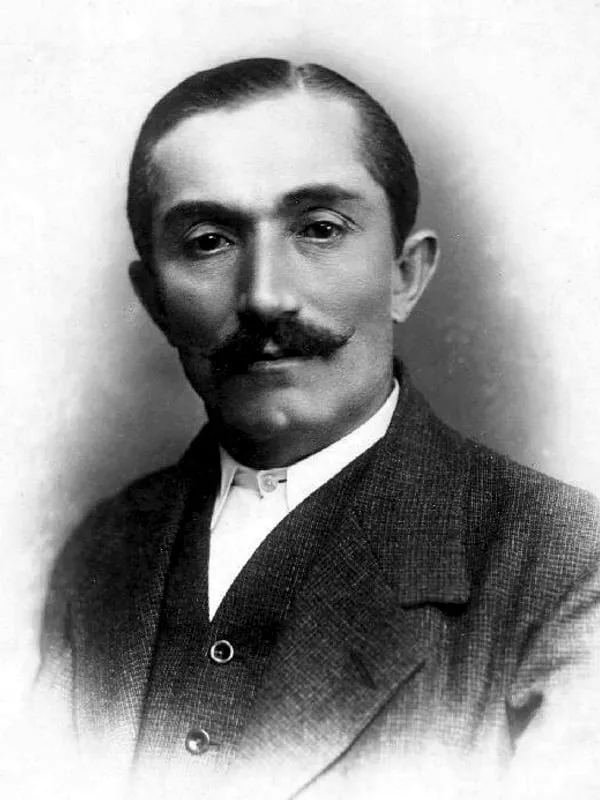
- Born:
- 21 January 1874, Wierzchosławice near Tarnów (Galicia, Austria-Hungary)
- Died:
- 31 October 1945, Kraków
- Author:
- Łukasz Skowroń
- Photo:
- autor nieznany, domena publiczna, Wikimedia Commons

Wincenty Witos was the most outstanding Polish politician of peasant origin and a symbol of the countryside’s entry into high politics. A farmer and the wójt (village head) of his home village near Tarnów, a self-taught man who did not know German well, he became one of the most important Galician politicians during the war. In 1914 he and his party backed the Legions and the Supreme National Committee. Once convinced that Vienna would not fulfil Polish hopes, he led the populists into a break with the pro-Austrian policy. It was on his initiative that in May 1917 the Polish deputies from Galicia declared an independent and united Poland to be the nation’s aim. In October 1918 he chaired the assembly which proclaimed that Galicia belonged to the Polish state, and he became head of the Polish Liquidation Commission, the first Polish authority in the former Austrian partition. He was later three times prime minister of reborn Poland.
Before the war
He was born on 21 January 1874 in Wierzchosławice near Tarnów, into a poor peasant family. He attended only the village primary school and acquired the rest of his knowledge himself, reading books and newspapers. From his youth he worked hard on the land and as a forest labourer. He joined the peasant movement in the second half of the 1890s, when the Polish People’s Party (PL) was founded. In 1908 he became wójt of Wierzchosławice and remained so for more than twenty years, and in the same year he entered the Galician Diet in Lviv. He quickly attracted attention as a sober, matter-of-fact speaker, and in 1911 he was elected to the Imperial Council in Vienna.
In 1913 the People’s Party split after a scandal around its leader Jan Stapiński (PL), accused of secret deals with the conservatives and the government. Witos was one of the instigators of the revolt against him. In December 1913 most of the populist deputies formed the Polish People’s Party “Piast”, named after the title of its paper. The deputy Jakub Bojko became its president and Witos its vice-president, but he was soon the party’s real leader. “Piast” stood for land reform, the democratisation of Galicia and uniting the countryside around the national cause. Witos also belonged to the Provisional Commission of Confederated Independence Parties, which was preparing Polish participation in the expected war with Russia.
1914–1916: with the Legions
The news of war found him touring the districts before elections. In his memoirs he described how people burst into the small room where he was talking with peasants, shouting: “Good God, war!” On 16 August 1914 the Polish deputies from Galicia set up the Supreme National Committee in Kraków as the political base of the Polish Legions. Witos became one of the vice-presidents of its western section. He urged the peasants with conviction to support the Legions and later claimed that his word was often an order to them, which explained the large number of peasants’ sons in the Legion units.
The enthusiasm soon cooled. The Austrian high command rejected the Committee’s demands that the legionaries swear an oath to the freedom of Poland and fight as a single body. The Eastern Legion fell apart, and in October 1914 the National Democrats and the conservatives from Lviv left the Committee. Witos, though he still supported the idea of a Polish army as such, looked with growing scepticism at Józef Piłsudski and his camp. He wrote that Piłsudski acted on his own, without consulting the representatives of society, and that the villages did not everywhere remember the legionaries fondly: he complained of ruthless requisitions and of the Legion gendarmerie in the Kingdom of Poland.
The peasants were alienated even more by the actions of the Austrian authorities. For two years Galicia was a battlefield, changing hands, and the population suffered from requisitions, deportations and repression of those suspected of sympathising with Russia. The government in Vienna still made no promises on the Polish question. The Act of 5 November 1916 did announce a Kingdom of Poland, but without Galicia, and the emperor promised Galicia only wider autonomy in return.
1917: the turn towards independence
Witos understood sooner than other Galician politicians that after the revolution in Russia, after the declarations of Woodrow Wilson and after the United States entered the war, autonomy within the monarchy was ceasing to be an aim worth pursuing. On 6 May 1917 he called a meeting of “Piast” deputies in Kraków, which declared the separation of Galicia no longer relevant and withdrew the party’s representatives from the Supreme National Committee. On 14 May the populists repeated this at a meeting of the Polish Club in Vienna, and on 16 May the Club adopted a resolution put forward by their deputy Włodzimierz Tetmajer. Witos proposed that the final decision be taken by the Polish Parliamentary Club, that is, all the Polish parliamentarians from Galicia.
They met in Kraków on 27 and 28 May. Witos recalled that the conservatives had brought police to the town hall, and the deliberations began only when, at the deputies’ demand, the police were removed from in front of the building and crowds of Kraków people entered the square. On 28 May the assembly passed the Polish Club resolution: the sole aspiration of the Polish nation was an independent, united Poland with access to the sea. Only two deputies voted against. For the first time Polish politicians in Galicia openly set themselves the aim of a state made up of all three partitions.
On 16 June 1917 Witos spoke in the Vienna parliament. He had never done so before, because he knew German poorly, so he delivered the whole speech in Polish. He listed the wrongs done to the Polish population during the war by the Austrian and German civil and military authorities, and defended the Club’s national position. When the conservatives tried to back away from the May resolution, “Piast” concluded an agreement with the National Democrats known as the Inter-Party Union, whose aim was an independent Poland “without ties to anyone”. At a stormy session of the Parliamentary Club in Kraków on 2 September 1917 Witos demanded the dissolution of the Supreme National Committee, and when the conservatives came out against the May resolution, the Union’s deputies left the hall. According to his memoirs he came close to being elected president of the Polish Club in September. In the end, in the third ballot, Stanisław Łazarski was re-elected.
1918: from Brest to the Liquidation Commission
Witos watched the peace negotiations at Brest with growing anxiety, because the Central Powers did not admit Polish representatives to them. The peace with Ukraine of 9 February 1918, which gave it the Chełm Land, provoked an outburst of indignation in Galicia. On 18 February the whole life of the country came to a halt: railways, offices and factories. “On that day all life came completely to a standstill throughout Galicia,” Witos recalled. The Polish Club went into opposition. In May 1918 Witos went to Prague for the fiftieth anniversary celebrations of the National Theatre, which the Czechs turned into a demonstration of the Slav nations of the monarchy. Together with other Polish guests he took part in secret political talks. The Austrian authorities responded with tighter surveillance of “Pan-Polish propaganda”.
In the autumn, as the monarchy was disintegrating, Witos called the executive and the deputies of “Piast” to Kraków, and they decided to take power in Galicia in agreement with the other parties. As leader of the largest club he was authorised to convene all the Polish deputies from Galicia. On 28 October 1918 more than sixty politicians gathered in the Kraków town hall elected him chairman. The assembly proclaimed that the lands of the former Austrian partition belonged to the Polish state and set up the Polish Liquidation Commission for Galicia and Cieszyn Silesia. Three days later Polish soldiers took over Kraków without a fight. The Commission did not subordinate itself to the Regency Council in Warsaw and acted as an independent authority. Witos chaired it until early 1919, when its powers were gradually taken over by the Warsaw government.
On 31 October Witos went to Lviv to prepare the transfer of the Commission’s seat there. As he wrote, the local politicians assured him that there was no danger from the Ukrainians. The following night Ukrainian soldiers seized the city. The Commission announced conscription to support the defenders, and Witos travelled around the country trying to bring under control the chaos, looting and anti-Jewish excesses that broke out in many places in Western Galicia. According to his account, a trip to Warsaw to seek help for Lviv brought no results at the time.
Witos kept his distance from the governments formed in November. His name appeared on the posters of Ignacy Daszyński’s Lublin government, but he left the meeting that constituted the cabinet and announced that he would not sit in it. He later called the government itself “unheard-of recklessness”. From 17 November he was listed in the Moraczewski government as minister without portfolio, but he did not support the cabinet, which he considered too left-wing and lacking representatives of the Prussian partition, and he left it at the end of December. In his memoirs he presented his participation in both governments as something he had refused.
After the war
In 1919 Witos became a deputy to the Legislative Sejm and one of the most influential politicians in the chamber. In July 1920, at the most dangerous moment of the Polish–Soviet War, he became head of the government of national defence, with Daszyński as deputy prime minister. He was prime minister twice more: in 1923 and in May 1926, when his cabinet was overthrown by Piłsudski’s coup d’état. Arrested in 1930 together with other opposition leaders, he was convicted in the Brest trial and in 1933 left for Czechoslovakia. He returned to the country in 1939. During the German occupation he refused to collaborate with the Germans. He died on 31 October 1945 in Kraków.
Assessment
In Polish tradition Witos belongs to the circle of fathers of independence alongside Piłsudski, Roman Dmowski, Ignacy Jan Paderewski, Daszyński and Wojciech Korfanty. Historians of the peasant movement stress that it was he who brought the peasants into national politics and that without the turn of “Piast” in May 1917 Galicia would have clung longer to the Austro-Polish programme. His role in October and November 1918 is also highly rated: the takeover of power in Galicia was quick and essentially bloodless, and the Liquidation Commission ensured the continuity of administration amid the chaos of the monarchy’s collapse.
Critics point out that Witos, like almost all Galician politicians, linked the Polish cause with the Habsburgs during the first years of the war, and that his turn came when the wind began to blow the other way. The Piłsudskiites could not forgive him his dislike of the Commandant and his cooperation with the National Democrats, while the left regarded him as a politician too conciliatory towards the right and the landowners. His memoirs, written years later and in the heat of later disputes, are a valuable but partisan source, especially in their judgements of Piłsudski and the Legions. Even so, both his supporters and his opponents agree that he was one of the most talented politicians of his generation, and his path from a peasant farmstead to the prime minister’s chair became a symbol of the democratisation of Polish society.
Sources
Spotted a mistake?Report an error
Mentioned in battles
(01)Often appears with
People who appear in the same events.