Poland · The Polish cause
Wojciech Korfanty
Deputy to the Reichstag (1903–1912, 1918) and the Prussian Landtag, from November 1918 member of the Commissariat of the Supreme People's Council in Poznań
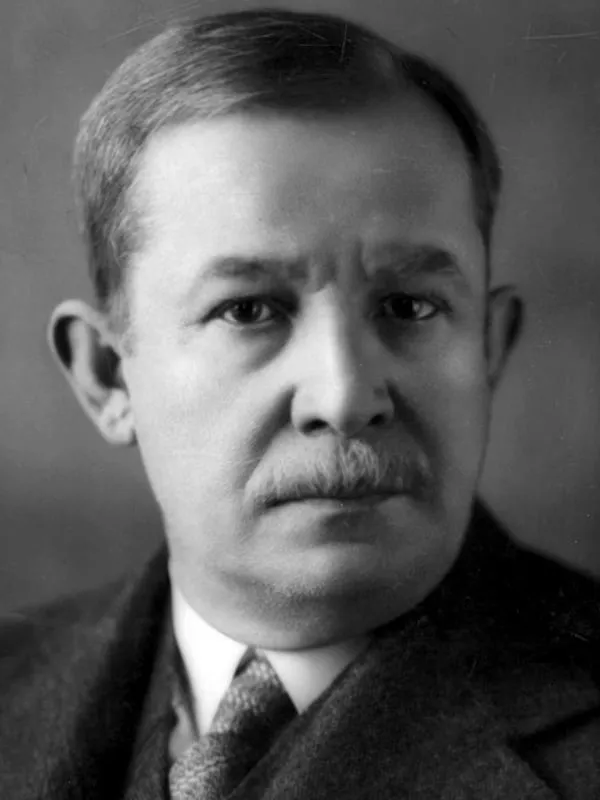
- Born:
- 20 April 1873, Sadzawki near Siemianowice (Upper Silesia, Prussia)
- Died:
- 17 August 1939, Warsaw
- Author:
- Natalia
- Photo:
- autor nieznany, domena publiczna, Wikimedia Commons

Wojciech Korfanty was the most important leader of the Polish national movement in Upper Silesia and one of the ablest Polish politicians in the German Empire. A miner’s son, in 1903 he became the first to win a Reichstag election on openly Polish slogans, breaking with the tradition in which Silesian Catholics voted for the German Centre Party. He spent most of the war, however, on the margins of politics, pushed there by conflicts with his former allies. He returned to the stage in 1918, as Germany was collapsing. In June he won a by-election to the Reichstag, and on 25 October, from its rostrum, he demanded that the lands of the Prussian partition and Upper Silesia be joined to Poland. In November he took the lead of the Polish movement in the Prussian partition in Poznań as a member of the Commissariat of the Supreme People’s Council. His greatest work, the struggle for Upper Silesia in 1919–1921, came after the Great War.
Before the war
He was born on 20 April 1873 in Sadzawki, a mining settlement that now belongs to Siemianowice Śląskie, as Adalbert Korfanty. His father worked in a mine; at home the family spoke Polish and cultivated Catholic piety. At the Katowice gymnasium Korfanty and his friends founded a secret circle that spread Polish culture. For statements against Bismarck he was expelled from the final-year class in August 1895, and he passed his school-leaving examination as an external candidate thanks to the intercession of the Greater Poland Reichstag deputy Józef Kościelski. He studied at the technical university in Charlottenburg, then philosophy, law and economics in Breslau and Berlin. Among his teachers in Breslau was the economist Werner Sombart, with whom he remained friends for years.
Already as a student he became involved with National Democracy and the secret National League, in which he worked with Roman Dmowski. From 1901 he edited the Katowice daily “Górnoślązak (PL)”. For articles in the Poznań paper “Praca” calling on Upper Silesians to national awareness he spent several months in prison at Wronki. His pamphlet “Precz z Centrum” (“Down with the Centre”) was a call for Polish Catholics in Silesia to stop voting for the German Centre Party, which defended them as Catholics but not as Poles. In 1903 Korfanty won a Reichstag seat in the Katowice–Zabrze constituency, and in 1904 he also entered the Prussian Landtag. He belonged to the Polish Circle and was famous for speeches defending the Silesian worker against exploitation and the policy of Germanisation. Printed in Polish newspapers, they circulated through the mines and ironworks.
The following years brought a crisis. In 1908 Korfanty broke with the National Democrats, seeking closer ties with the clergy and a political position of his own. He lost control of “Górnoślązak”, the daily “Polak” that he published ran into financial trouble, and his former supporters regarded his attempts to reach an understanding with the Polish wing of the Centre as betrayal. Accusations gathered around his business affairs, and his opponents exploited them mercilessly. In 1912, aware that he would lose, he did not stand for the Reichstag and moved to Berlin, where he ran a press agency dealing with Eastern Europe. In April 1914 the German authorities noted with satisfaction that his influence in the authoritative Polish circles had almost entirely vanished.
During the war
The outbreak of war found Korfanty in Berlin. According to his biographers, in the summer of 1914 he, like many of his contemporaries, expected a short war and favoured Polish-German cooperation in exchange for a softening of Prussia’s anti-Polish policy. The illusions were soon dispelled. The authorities had no intention of changing anything in their treatment of the Poles in the Reich, and by the autumn of 1914 Korfanty had returned to sharp criticism of the government. He kept his seat in the Prussian Landtag, but for most of the war he remained on the sidelines of Polish political life. Not even the Act of 5 November 1916 changed this, in which the Central Powers announced a Kingdom of Poland made up solely of the lands of the Russian partition. There was no place in that project for the Poles of Greater Poland, Pomerania and Silesia.
The situation changed in 1918. After the Peace of Brest-Litovsk Germany seemed master of Eastern Europe, but its army in the west was beginning to wear out, and at home hunger and war-weariness were growing. On 6 June 1918 Korfanty won a by-election to the Reichstag in the Gliwice–Toszek–Lubliniec constituency. His candidacy was put forward by the Polish national camp and backed by the Polish trade unions, and Korfanty campaigned with strong emphasis on the Polishness of the population of Upper Silesia. He won about 63 per cent of the vote, almost twice as much as the Centre candidate Benno Nehlert, and won even in German-dominated Gliwice. The result surprised both sides and showed that Upper Silesians, weary of war and want, were beginning to vote against the Reich.
The speech of 25 October 1918
In the autumn of 1918 Germany asked President Woodrow Wilson for an armistice on the basis of his Fourteen Points. The thirteenth of them promised an independent Poland with the territories “inhabited by indisputably Polish populations” and with free access to the sea. For the Poles in the Reich this meant that the fate of Greater Poland, Pomerania and Silesia was becoming an international matter. On 7 October the Regency Council in Warsaw announced a united Polish state made up of all the Polish lands.
On 25 October 1918 Korfanty spoke in the Reichstag. Invoking Wilson’s programme, whose author he called the spokesman and leader of the democratic world, he demanded that the Polish districts of Upper and Middle Silesia, the Province of Posen, the Polish part of West Prussia and the Polish districts of East Prussia be joined to Poland. “We do not want a single inch of German land. We demand only, in accordance with the thirteenth point of Wilson’s programme, our own, one Poland, made up of the lands of the three partitions,” he said. He argued that no statistical tricks would change the fact that the left bank of the Vistula all the way to Hel was inhabited by an indisputably Polish population. He also recalled that the military authorities forbade the Polish press even to write about Poland’s future borders.
The speech caused outrage in the chamber, but it entered Polish tradition as one of the most important speeches in the history of Polish parliamentarism. It was also the last speech by a Polish deputy in the Reichstag of the Empire. The Polish deputies decided that their mission in the German parliament was over and stopped attending it. For the Germans, Korfanty became from then on the symbol of Polish claims to the eastern provinces of the Reich.
November and December 1918
At the beginning of November revolution broke out in Germany, the Emperor abdicated and the Prussian authorities lost their self-assurance. In Poznań a clandestine inter-party committee that had been active since 1916 came into the open. Korfanty arrived in the city on 11 November, and on 12 November he joined the three-man Commissariat, alongside Father Stanisław Adamski and Adam Poszwiński (PL). Two days later the organisation adopted the name Supreme People’s Council and called elections to a Polish provincial diet.
In mid-November Korfanty travelled to Warsaw with other activists from the Prussian partition. On 17 November he took part in talks with Józef Piłsudski on forming a government. As a National Democrat and an opponent of a left-wing government, he objected to giving the premiership to the socialist Ignacy Daszyński and demanded a national cabinet. The meeting ended in disappointment: neither Korfanty nor his colleagues received portfolios in the Moraczewski government. The biographers of both politicians date their lasting mutual dislike, which weighed on Polish politics for the next two decades, from this conversation.
At the Provincial Diet, which met in Poznań from 3 to 5 December, Korfanty was one of the leading figures. The six-member Commissariat of the Supreme People’s Council elected afterwards entrusted him with military and foreign affairs. The Council wanted to win the lands of the Prussian partition by peaceful means, awaiting the decision of the peace conference, and Korfanty opposed a premature armed rising that could provoke the Germans into a reckoning with the Poles. On 25 December, at the head of a Council delegation, he welcomed Ignacy Jan Paderewski in Danzig and accompanied him on the journey to Poznań. On 27 December the Greater Poland Uprising broke out in the city. The Commissariat had not planned it, but it had to accept the fait accompli and take political responsibility for the fighting. As commissioner for military affairs, Korfanty later claimed credit for organising the Greater Poland army, which drove the Germans out of most of the province.
After the war
Korfanty was a deputy to the Legislative Sejm and, from the end of 1919, Polish plebiscite commissioner in Upper Silesia. From his headquarters in the Hotel Lomnitz in Bytom he directed the campaign before the plebiscite of 20 March 1921, in which a majority of voters chose Germany. On the night of 2–3 May 1921 he took the lead of the Third Silesian Uprising, whose pressure contributed to a partition of the region more favourable to Poland, with its most industrialised part. In July 1922 the Sejm designated him prime minister, but in the face of Piłsudski’s opposition he did not form a government. In the autumn of 1923 he was deputy prime minister in Witos’s government. After the May Coup he was among the fiercest opponents of the Sanation regime. In 1930 he was imprisoned in the Brest fortress, and in 1935, threatened with another arrest, he left for Czechoslovakia. He returned to the country in April 1939, when Germany was threatening Poland, and was immediately put in prison. Released because of illness, he died in Warsaw on 17 August 1939, two weeks before the outbreak of war.
Assessment
In Poland Korfanty is regarded as one of the fathers of independence and as the man without whom Upper Silesia would not have found itself within Poland’s borders. His speech of 25 October 1918 belongs to the canon of the Polish parliamentary tradition. His biographers draw attention to his ability to regain his position: in 1914 he was a defeated politician of whom the German police wrote that he had lost his influence, and four years later one of the leaders of the Poles across the whole Prussian partition.
Assessments of his role during the war are not unequivocal, however. For most of it Korfanty played no significant role, and he returned to active politics only when Germany’s defeat was becoming apparent. His supporters see in this a sense of timing, his critics opportunism. The quarrel with Piłsudski that began in November 1918 weighed on him throughout the interwar period and ended in persecution under Sanation. For decades German historiography portrayed him as a nationalist and agitator responsible for violence in Upper Silesia, Polish historiography as a national hero. Today it is increasingly acknowledged on both sides of the border that he was an outstanding politician, though hot-tempered and ruthless in a fight, and that his achievement of 1918–1921 largely determined the shape of the western border of reborn Poland.
Sources
Spotted a mistake?Report an error
Mentioned in battles
(01)Often appears with
People who appear in the same events.