Poland · The Polish cause
Stanisław Thugutt
Minister of internal affairs in the Lublin government (November 1918) and in the government of Jędrzej Moraczewski (17 November 1918 – 16 January 1919)
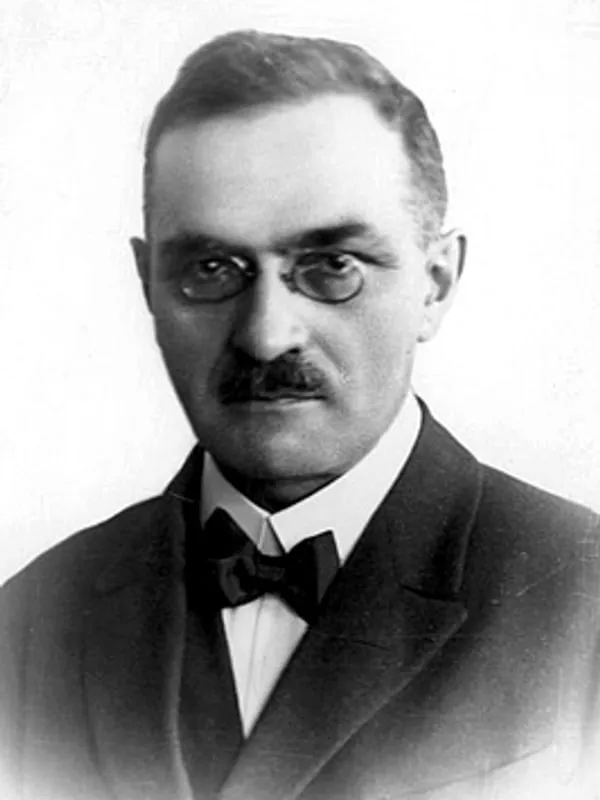
- Born:
- 30 July 1873, Łęczyca (Kingdom of Poland, Russian Empire)
- Died:
- 15 June 1941, Stockholm
- Author:
- Natalia
- Photo:
- Marian Fuks, domena publiczna, Wikimedia Commons

Stanisław August Thugutt came to politics late and from an unusual direction. Until the outbreak of the war, when he was already over forty, he was a bookkeeper, a writer on Polish regions and the author of guidebooks to Warsaw and the Kingdom of Poland. The outbreak of war drew him into the independence underground, took him into the Legions and then into the peasant movement, of which he became one of the most outstanding leaders. In February 1918 the Germans imprisoned him for criticising the Regency Council. He was released in October, and a few weeks later he was minister of internal affairs in the first governments of independent Poland, first the Lublin one, then the Warsaw one. He built the Polish administration amid the chaos of November 1918, and in January 1919 he almost lost his life during a failed right-wing coup.
Before the war
He was born on 30 July 1873 in Łęczyca, the youngest of the six children of the district doctor Augustyn Thugutt. In Warsaw he finished a non-classical secondary school, but he could not go on to study at home. He worked as a labourer in a Łódź textile factory, then as a debt collector and bookkeeper in Warsaw. He devoted his free time to exploring and describing the country. He belonged to the Polish Sightseeing Society (PL), was literary editor of its magazine “Ziemia”, and wrote a book on the Duchy of Warsaw, a guide to Warsaw and a guide to the Kielce and Radom regions, published in 1914. He was also active in the Circle of Friends of the Kashubians, which supported the Poles in Pomerania. As Ewa Marcinkowska of the Museum of the History of the Polish Peasant Movement writes, this “building of Poland” under the partitions reinforced his conviction that Poland could be served from any post.
During the war
In 1914, as he recalled, he “for the first time in his life threw himself headlong into politics”. He went to endless meetings, drafted appeals and secret papers, and became treasurer of the rifle organisations for the Russian partition. Together with a group of Warsaw intelligentsia activists he co-founded the secret Union of Patriots (PL), a group of the independence left close to Piłsudski. At the end of 1915, aged over forty, he joined the Legions and as a soldier of the 2nd Infantry Regiment fought in Volhynia, on the Styr and the Stokhid.
In mid-1916 he returned to Warsaw and took up politics in the Central National Committee (PL), the representation of the independence left, whose press organ he edited. He worked on one of the committees of the Provisional Council of State. In March 1917 the Union of Patriots turned into the National Independence Party (PL), but in the middle of the year Thugutt went over to PSL “Wyzwolenie”, the radical peasant party in the Kingdom. According to his biographies, in mid-1917, at the time of the oath crisis and Piłsudski’s arrest, he abandoned his remaining illusions about German promises. In January 1918 he became secretary of the PSL “Wyzwolenie” main board and editor of its paper.
The independence left did not recognise the Regency Council as a Polish authority but regarded it as a creation of the occupiers. Thugutt criticised it publicly, and in February 1918 the Germans arrested him together with other Piłsudskiites. Until October 1918 he was held in the Modlin Fortress.
November 1918
Immediately after leaving prison he joined the left’s preparations to take power. On the night of 6–7 November 1918 the Provisional People’s Government of the Republic of Poland of Ignacy Daszyński was formed in Lublin, and Thugutt took charge of internal affairs in it. Together with Tadeusz Hołówko he drafted the government’s manifesto, which announced a people’s republic, universal elections with votes for women and the eight-hour working day. The Lublin government lasted a few days and placed itself at the disposal of Józef Piłsudski, who returned to Warsaw on 10 November.
On 17 November Thugutt joined the government of Jędrzej Moraczewski as minister of internal affairs. The ministry he took over had a year of work behind it in the Regency Council’s governments, but the state was only just coming into being: there were no borders, no police and no unified administration. Thugutt organised the administration and the forces of order, including the People’s Militia subordinate to the government. His opponents on the right accused him of Bolshevik sympathies, citing among other things the militia and the fact that the ministry used a seal with an eagle without a crown.
He lived through his most dangerous moment on the night of 4–5 January 1919. Conspirators from National Democratic and landowning circles, led by Colonel Marian Januszajtis and Prince Eustachy Sapieha, made an attempted coup. Shots were fired at Thugutt in his flat, and he was then imprisoned. According to accounts, the conspirators even considered drowning him in the Vistula. The coup quickly collapsed and the ministers regained their freedom. Piłsudski nevertheless concluded that the country needed a government of understanding with the right, and on 16 January Moraczewski’s cabinet gave way to the government of Ignacy Jan Paderewski. Thugutt was not included in it.
After the war
In the 1919 elections to the Legislative Sejm he did not win a seat, because his party gave priority on its lists to peasants. Piłsudski delegated him to the Polish National Committee in Paris, as part of the Polish representation at the peace conference. In the summer of 1920, as a forty-seven-year-old volunteer, he went to the war against the Bolsheviks and was badly wounded near Suraż, losing the use of his hand. In 1921–1923 he was president of PSL “Wyzwolenie”, and from 1922 a deputy and chairman of its parliamentary club. He played a large part in the election of Gabriel Narutowicz as president, and in 1924–1925 he was deputy prime minister in the government of Władysław Grabski. After the May Coup he became disillusioned with Piłsudski’s rule and went into opposition, co-founding the Centrolew. He also led the cooperative movement. After the outbreak of war in 1939 he made his way through Wilno to Sweden, where, after the German occupation of Norway, he was stranded for good. He died in Stockholm on 15 June 1941.
Assessment
The historian of the peasant movement Stanisław Lato counted Thugutt, alongside Wincenty Witos and Maciej Rataj, among the most outstanding leaders of the Polish peasant movement and stressed that he “played a significant role in the history of the Republic”. During the war he was a typical representative of the intelligentsia of the independence left, which followed Piłsudski into the Legions and then, distrusting the occupiers, paid for it with imprisonment. In November 1918 he became one of the men who carried the programme of the Lublin manifesto into the politics of the reborn state. For the right he was then a symbol of revolutionary radicalism, for his supporters a model democrat who believed that independent Poland must be a state governed by law and socially just. His later defence of parliamentary government against the Sanation regime and his role in the cooperative movement contributed to this reputation.
Sources
Spotted a mistake?Report an error
Often appears with
People who appear in the same events.