Poland · The Polish cause
Leon Wasilewski
Minister of Foreign Affairs in the government of Jędrzej Moraczewski (17 November 1918 – 16 January 1919)
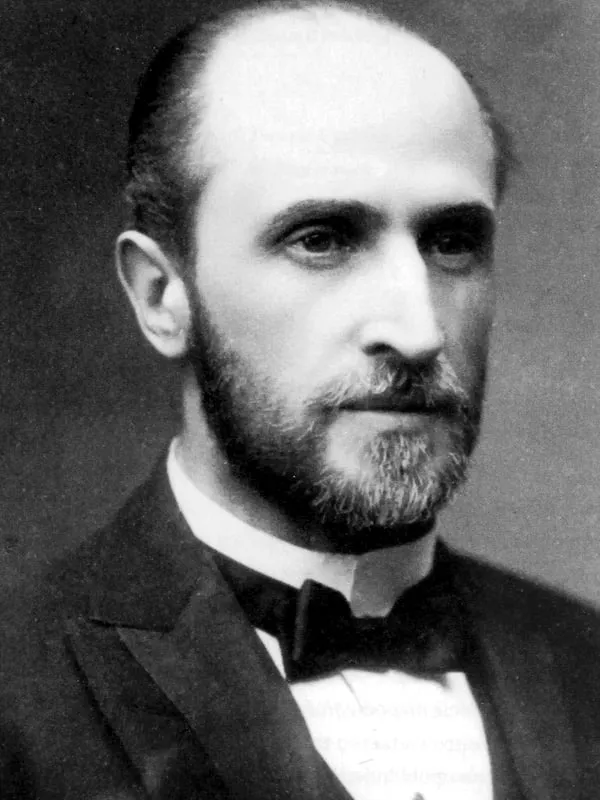
- Born:
- 24 August 1870, Petersburg (Russian Empire)
- Died:
- 10 December 1936, Warsaw
- Author:
- Łukasz Skowroń
- Photo:
- autor nieznany, domena publiczna, Wikimedia Commons

Leon Wasilewski was one of Józef Piłsudski’s closest associates from the days of the underground Polish Socialist Party and the independence camp’s leading expert on the peoples of the old Commonwealth: the Lithuanians, Belarusians and Ukrainians. During the war he was active in Piłsudskiite organisations in Galicia and in the Kingdom, and his writings on Lithuania, Ukraine and the Chełm region prepared the ground for a Polish eastern programme. In November 1918, in the first government appointed by Piłsudski, he became foreign minister. For two months he built Polish diplomacy from scratch, in a country that none of the Entente powers had yet recognised. Historians call him one of the architects of Piłsudski’s eastern policy.
Before the war
He was born on 24 August 1870 (12 August by the Julian calendar) in Petersburg, into the family of an organist at one of the city’s Catholic churches. His ancestors came from Lithuania and originally bore the name Woyszwiłło. He began with ethnographic writings on the South Slavs in progressive Russian periodicals. In 1893–1894 he belonged to the National League, but soon moved to the PPS and met Piłsudski. He spent several years in London, where he edited the party’s “Przedświt (PL)”, and later in Galicia he worked on “Robotnik”. After the split of 1906 he stayed with Piłsudski in the PPS – Revolutionary Faction and edited its papers. He joined the Provisional Commission of Confederated Independence Parties and the Polish Military Treasury (PL), which were preparing an armed effort in Galicia.
His most important field of work, however, was the question of nationalities. In the books “Litwa i jej ludy” (“Lithuania and Its Peoples”, 1907), “Ukraina i sprawa ukraińska” (“Ukraine and the Ukrainian Question”, 1911) and “Litwa i Białoruś” (“Lithuania and Belarus”, 1912) he described the awakening of modern nations in the lands of the old Commonwealth. He believed that their aspirations were lasting, and that independent states in the east, above all a Ukraine centred on Kyiv, could be Poland’s allies against the Russian empire.
During the war
In 1914 Wasilewski was in Kraków with Piłsudski. He joined the council of the Polish National Organisation, set up by Piłsudski in September 1914 as the political base of the riflemen, and ran its press affairs. When in December the PON joined the Supreme National Committee, Wasilewski was also active in it, in 1915–1917, and in 1915 he was in the leadership of the Union of Independence Parties (PL). In the same year he published in Vienna a study of national and cultural conditions in the lands the Russians called Western Russia, that is Lithuania, Belarus and Ukraine.
After the Central Powers occupied the Kingdom he also worked in Warsaw. In 1917 he was active in the left-wing Central National Committee (PL) and joined the Polish Military Organisation. He worked in the office of the prisoners-of-war commission of the Provisional Council of State, set up after the Act of 5 November. In the summer of 1917, after the oath crisis, Piłsudski was put in a German prison and his camp went underground against the occupiers.
Wasilewski was now writing above all about Poland’s future borders. In 1917 he published “Kresy Wschodnie” (“The Eastern Borderlands”), a book on Lithuania, Belarus, Podlasie, the Chełm region, Eastern Galicia and Ukraine. He was critical of the negotiations at Brest-Litovsk, and when in February 1918 the Central Powers awarded the Chełm region to the Ukrainian People’s Republic, he responded with the book “Dzieje męczeńskie Podlasia i Chełmszczyzny” (“The Martyrdom of Podlasie and the Chełm Region”). The same year saw his pamphlet “O wschodnią granicę państwa polskiego” (“For the Eastern Border of the Polish State”) and articles on the Lithuanian question.
Foreign minister
On 11 November 1918 Piłsudski, freed from Magdeburg, took over military authority in Warsaw, and a few days later supreme authority. After Ignacy Daszyński withdrew, on 17 November he entrusted the task of forming a government to the socialist Jędrzej Moraczewski. In the Moraczewski government Wasilewski took foreign affairs. He is regarded as the first foreign minister of reborn Poland, although as early as October 1918 the portfolio had been held, in the Regency Council’s government of Józef Świeżyński, by the National Democrat Stanisław Głąbiński.
The ministry had to be built almost from nothing. According to the diplomatic historian Marcin Maryniak, Wasilewski created its first organisation, based on pre-partition and foreign, especially French, models. It had three sections and 14 departments, with an overgrown administrative part, so it was soon restructured. The Minister’s Cabinet and the Diplomatic Department were then created, the latter containing the political departments, Western and Eastern, that were the most important from the very start. Normal relations with foreign countries did not yet exist. The Entente powers dealt with the Polish National Committee in Paris, led by the National Democrats, and regarded a government made up of former allies of the Central Powers with mistrust. The only foreign envoy in Warsaw was the German Harry Kessler. Once the transit of German troops returning from the east had been settled with him, the government, under pressure from the National Democrats and the Poznań Poles, broke off relations with Germany on 15 December.
As minister Wasilewski tried to carry out Piłsudski’s eastern programme: a federation with Lithuania and Belarus and an alliance with an independent Ukraine. Reality, however, went in another direction. In Lviv Polish-Ukrainian fighting had been going on since 1 November, and the Red Army was advancing into the eastern lands evacuated by the Germans. Wasilewski himself envisaged an independent Ukraine with Kyiv as its capital, with Poland keeping Lviv and the largest towns of Eastern Galicia. In mid-January 1919 Piłsudski, seeking an understanding with the right, replaced the Moraczewski cabinet with a government under Ignacy Jan Paderewski, who also took over foreign affairs.
After the war
Wasilewski went to Paris as the Chief of State’s delegate to the Polish National Committee, which had been turned into the delegation to the peace conference, where he kept in touch with the Ukrainian delegation. In 1920–1921 he was envoy to Estonia, took part in the negotiations that ended with the Treaty of Riga, and then chaired the Polish side of the mixed border commission. Later he turned to scholarship: he headed the Institute for Research into Modern Polish History, founded the journal “Niepodległość (PL)” and became head of the Institute for Nationality Research (PL). After the May Coup he briefly advised the government on minority affairs, but, disappointed with the Sanation’s policy, he became active in the opposition PPS and in 1931 became vice-chairman of its Supreme Council. He died in Warsaw on 10 December 1936. His daughter was Wanda Wasilewska, later a communist activist.
Assessment
His biographer Adam Próchnik wrote that because of his democratic, parliamentary and moderate views Wasilewski was at bottom not a socialist. Historians see him above all as an ideologist of federalism and of the Promethean (PL) movement, and as the best expert on nationality questions in interwar Poland, friendly to the Ukrainians, Belarusians and Lithuanians and at the same time aware of the limits of the possible. Juliusz Bardach pointed out that his thought inspired the Paris “Kultura” of Jerzy Giedroyc after the Second World War, and disputed the view that Wasilewski was hostile to Russia on principle: he opposed tsarism and the Bolsheviks, in whom he saw the continuers of imperialism, not the Russian nation. His ministry lasted only two months and fell at a time when Poland did not yet have normal relations with the outside world, but he left behind the nucleus of the organisation from which the Polish diplomatic service grew.
Sources
Spotted a mistake?Report an error
Often appears with
People who appear in the same events.