Russia · The Entente
Adolph Joffe
Chairman of the Soviet delegation at Brest-Litovsk (1917–1918), representative of the RSFSR in Germany (1918)
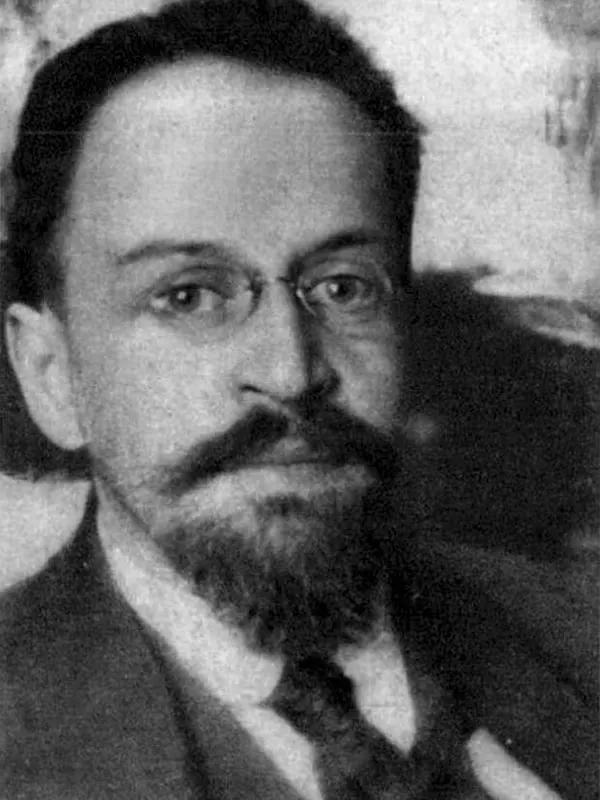
- Born:
- 22 October 1883, Simferopol (Crimea)
- Died:
- 16 November 1927, Moscow
- Author:
- Natalia
- Photo:
- Moisej Nappelbaum, domena publiczna, Wikimedia Commons

Adolph Joffe was the first diplomat of the Bolshevik revolution. A friend and the closest collaborator of Leon Trotsky, a doctor by training and a revolutionary by conviction, in December 1917 he headed the delegation that negotiated an armistice with the Central Powers at Brest-Litovsk. It meant Russia’s de facto exit from the war, and so from the Entente camp to which it formally belonged. At Brest Joffe presented the Soviet programme of a peace without annexations or indemnities, and later, as a member of the delegation, watched the Germans shatter these illusions. From the spring of 1918 he was the representative of Soviet Russia in Berlin, where he signed onerous agreements supplementing the Brest treaty while at the same time funding German revolutionaries. A few days before the end of the war the Germans expelled him from the country.
Before the war
He was born on 22 October 1883 (10 October in the Julian calendar) in Simferopol in the Crimea, into a very wealthy merchant family. The family’s origin was described as Jewish, and according to some sources as Karaite. His father owned postal and transport businesses in the Crimea and had connections with the minister Sergei Witte. While still at grammar school the son drew close to the Social Democrats, and from 1903 he was active in the party, associated with the Menshevik faction. He worked illegally in Baku and Moscow, took part in the 1905 revolution, and studied medicine in Berlin and law in Zurich.
From 1906 he lived mainly in Vienna. There he became friends with Trotsky and in 1908–1912 helped him publish the newspaper Pravda, which he also supported with family money. In Vienna he completed his medical studies, and because of a neurosis he was treated by the psychiatrist Alfred Adler, with whom he later worked. In 1912, during a trip to Russia, he was arrested in Odessa and, after sentencing, exiled to Siberia. There the war found him.
1917: with Trotsky to the Bolsheviks
Freed by the February Revolution, in the spring of 1917 he came to Petrograd as a Menshevik internationalist opposed to the war. Together with Trotsky he joined the small group of the “Mezhraiontsy”, which merged with the Bolsheviks in the summer. At the Sixth Party Congress at the turn of July and August Joffe became a candidate member of the Central Committee, and soon its secretary. He led the Bolsheviks in the Petrograd city council.
In the autumn he backed Vladimir Lenin and Trotsky in the dispute over the armed seizure of power. He sat on the Military Revolutionary Committee, which carried out the October coup. Trotsky later wrote that during the days of the coup it was Joffe who chaired the committee; other sources name the Left Socialist Revolutionary Pavel Lazimir and Nikolai Podvoisky as its chairmen. Joffe was also elected to the Constituent Assembly.
The armistice at Brest
The new government demanded an armistice on all fronts, and when the envoys of the Commander-in-Chief Nikolai Krylenko returned from behind the German lines with consent to talks, Trotsky, as Commissar for Foreign Affairs, entrusted the leadership of the delegation to Joffe. On 2 December 1917 the delegation crossed the front line, and the next day at Brest-Litovsk, at the headquarters of Field Marshal Prince Leopold of Bavaria, the negotiations began. Sitting alongside Joffe were, among others, Lev Kamenev, the Left Socialist Revolutionary Anastasia Bitsenko, the secretary Lev Karakhan and “representatives of the people”: a sailor, a soldier, a worker and a peasant.
Joffe opened the talks with a declaration that the armistice was to lead to a general peace without annexations or contributions, and proposed inviting all the belligerent states. The head of the Central Powers’ delegation, General Max Hoffmann, replied that he was a soldier and had no authority to discuss peace. The Russians demanded an armistice for six months, the evacuation of the Moonsund islands and a ban on transferring troops to the west. Hoffmann considered the demand concerning the islands one that is put to a defeated enemy. Joffe would not sign a separate armistice without Petrograd’s consent, so it ended with a temporary ceasefire and a break in the talks. On its return the delegation came prepared for an armistice for Russia alone. On 15 December Joffe and his companions signed the armistice along the whole front from the Baltic to the Black Sea and in the Caucasus. A formal ban on transfers was included in the text, but the Germans had already issued orders to move most of their troops from the east to the west.
Peace without annexations
On 22 December the peace conference opened. Joffe presented six principles of peace: no forcible annexations, the restoration of independence to nations that had lost it during the war, free referendums for nations that had not had it, the protection of minorities, no indemnities, and the same rules for colonies. The foreign ministers of Austria-Hungary and Germany, Ottokar Czernin and Richard von Kühlmann, counted on the Entente rejecting the talks, leaving the Bolsheviks with only a separate peace. On 25 December the Central Powers accepted the Russian principles as a basis for discussion, on condition that all the belligerent states joined them. Joffe received this with joy, but a few days later Hoffmann explained to him over lunch that “without annexations” did not apply to Poland, Lithuania and Courland, which in the Germans’ view had separated themselves from Russia. According to witnesses Joffe was shaken, and the delegation returned to Petrograd.
Czernin, who sat next to Joffe at dinner on 20 December, recorded that in a gentle, almost pleading tone he expressed the hope that it would be possible to start a revolution in Austria too. At the beginning of January 1918 Joffe, on behalf of the government, proposed moving the negotiations to Stockholm, which the Central Powers rejected. In January Trotsky himself took over as head of the delegation, and Joffe remained in it as a member. He supported Trotsky’s formula of “neither war nor peace” and on 10 February signed the declaration in which Russia announced the end of the war without signing a peace. When, after the German offensive, the Bolsheviks decided to accept Germany’s terms, he went to Brest in February only as an adviser and, as a sign of protest, refused to lead the delegation. The Treaty of Brest-Litovsk was signed on 3 March by Grigori Sokolnikov.
Ambassador in Berlin
In April 1918 Joffe became the diplomatic representative of Soviet Russia in Berlin, at the same time as Wilhelm von Mirbach arrived in Moscow. The mission took over the former building of the tsarist embassy on Unter den Linden. To German politicians and industrialists he presented the Bolsheviks as pragmatists ready to do business, while at the same time his mission printed and distributed revolutionary leaflets and maintained contacts with the left-wing Social Democrats and the Spartacists.
Throughout the summer he negotiated in Berlin, together with Leonid Krasin, additional agreements to the Brest treaty. The talks were not interrupted even by the assassination of Mirbach in Moscow. On 27 August Joffe signed with the new Secretary of State Paul von Hintze the supplementary treaty with a financial agreement, in which Russia undertook to pay Germany 6 billion marks, as well as confidential notes on co-operation against the Entente troops in northern Russia. Historians wonder whether Joffe, cut off from news of the defeats on the Western Front, underestimated Germany’s weakness. In September two trains carrying Russian gold went to Germany.
In the autumn, as the Reich was tottering, the German authorities grew increasingly worried by the activities of the legation. At the beginning of November a crate of the legation’s courier luggage broke open at a Berlin railway station, and revolutionary proclamations were found inside. According to many historians this was an accident staged by the police. On 5 November the government of Prince Max of Baden demanded the departure of the whole mission, and on 6 November Joffe left Berlin, three days before the revolution in the capital. Before leaving he handed money for the needs of the revolution to the left-wing Social Democrat deputy Oskar Cohn, and later he himself admitted that he had supported the German revolutionaries with money.
After the war
After 1918 Joffe was one of the leading Soviet negotiators. In 1920 he concluded peace treaties with Estonia, Latvia and Lithuania, and in the autumn he headed the Soviet delegation in the negotiations with Poland in Riga. On 18 March 1921 he signed there the Treaty of Riga, signed on the Polish side by, among others, Jan Dąbski. In 1922 he was in the delegation at the Genoa Conference, then representative in China, where in January 1923, together with Sun Yat-sen, he issued a declaration that opened the way to co-operation between Moscow and the Kuomintang. At the invitation of Gotō Shinpei, a former minister in the government of Terauchi Masatake, he held talks in Japan, which were interrupted by illness. In 1924–1925 he was the representative in Vienna.
He remained loyal to Trotsky and belonged to the Left Opposition. Seriously ill with polyneuritis, he was refused permission to be treated abroad. A few days after Trotsky’s expulsion from the party, on 16 November 1927, he shot himself in Moscow. In his farewell letter he wrote to Trotsky: “You have always been right, and you have always given way.” Trotsky’s speech at his grave was the opposition leader’s last public appearance in the Soviet Union. Joffe’s wife and daughter spent many years in the Gulag camps, and his son was shot in 1937.
Assessment
Lenin wrote of him in 1921 that he was “one of the first and best diplomats and politicians”. Historians of the Brest peace, starting with John Wheeler-Bennett, see in him an idealistic and educated man who came to Brest believing in the power of revolutionary slogans and quickly realised that the German generals treated them as a screen for annexations. His main achievement was the armistice, which meant the end of the war in the east and was for the Bolsheviks a condition of survival, and for Germany a great strategic gain.
Assessments of his mission in Berlin are more divided. Some stress that, as the first Soviet ambassador, he combined ordinary diplomacy with subversive activity against the state to which he was accredited, and in this way set the pattern for later Soviet practice. Others draw attention to the price of the August agreements, which Russia signed when Germany was already losing. In Polish history Joffe is remembered above all as a signatory of the Treaty of Riga, which for almost twenty years fixed the eastern border of the Polish Republic.
Sources
Spotted a mistake?Report an error
Often appears with
People who appear in the same events.