Poland · The Polish cause
Zdzisław Lubomirski
President of Warsaw (1916–1917), member of the Regency Council of the Kingdom of Poland (1917–1918)
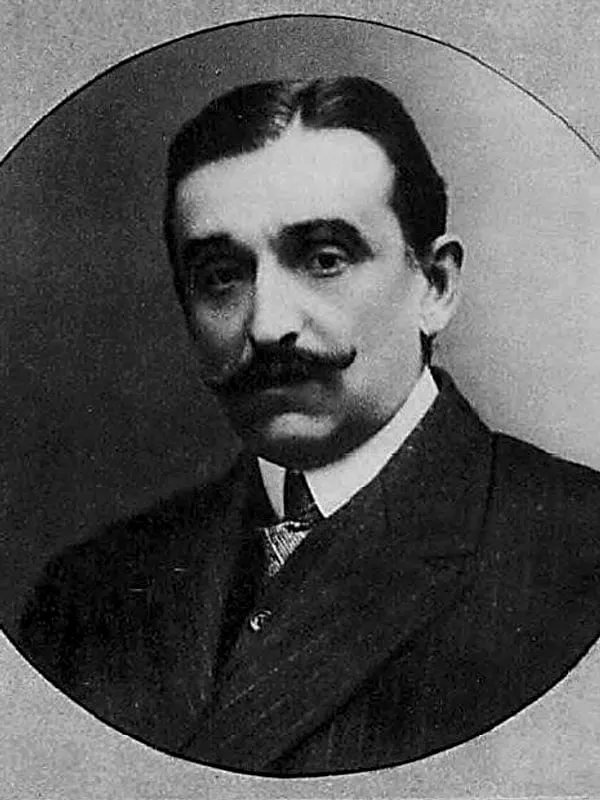
- Born:
- 4 April 1865, Nizhny Novgorod (Russian Empire)
- Died:
- 31 July 1943, Mała Wieś near Grójec
- Author:
- Łukasz Skowroń
- Photo:
- autor nieznany, domena publiczna, Wikimedia Commons

During the Great War Prince Zdzisław Lubomirski was the steward of Warsaw and then one of the three regents of the Kingdom of Poland. Until 1914 he was known above all as a charitable and social activist. In August 1915, as the Russians were leaving the city, it was to him that they handed over the administration of the capital, and under German occupation he defended its inhabitants against requisitions and deportations for forced labour. The popularity he won then led to his joining the Regency Council in 1917, where he was regarded as the most energetic of the regents. On 10 November 1918 it was he who waited at the station for Józef Piłsudski returning from Magdeburg, and four days later, together with the other regents, he handed all power over to him. His life shows the path taken by a large part of the Kingdom’s elite: from loyalty to Russia through cautious cooperation with the occupier to an independent state.
Before the war
He was born on 4 April 1865 in Nizhny Novgorod, where the Russian authorities had exiled his father, Jan Tadeusz Lubomirski, for his part in the conspiracy at the time of the January Uprising. His parents wanted to bring him up in a Polish spirit, so they sent him to St Anne’s Gymnasium in Kraków. He studied law at the Jagiellonian University and in Graz. In 1893 he married Countess Maria Branicka and settled in Warsaw, in the palace on Frascati, and on the estate at Mała Wieś near Grójec.
Before the war he did not engage in high politics. He was vice-president and, from 1908, president of the Warsaw Charitable Society, looked after educational and medical institutions, and supported Polish schools and libraries at a time when official schooling in the Kingdom was Russian. Politically he was close to the conservative realists, who were ready for a settlement with Russia in exchange for liberties for the Poles. This work gave him a name and the trust of people from different circles, on which he was to draw during the war.
1914–1915: the Citizens’ Committee
On 3 August 1914 Lubomirski joined the Citizens’ Committee of the City of Warsaw, which dealt with supplies and care for the unemployed and refugees and over time took over more and more of the municipal council’s tasks. As president of its general section he was the de facto head of the Committee. At that time he shared the pro-Russian orientation. He signed a telegram of thanks in response to the proclamation of Grand Duke Nicholas, and in November he joined the Polish National Committee, in which Roman Dmowski and the conservatives tied the Polish cause to Russia.
In the summer of 1915, as the Russian army retreated and the authorities evacuated offices, factories and part of the population into the interior of the empire, Lubomirski decided to stay. In the days when the Germans were occupying Warsaw, the last Russian president of the city, Aleksander Miller, handed the municipal administration over to him. Sources differ as to whether this happened on 4 or on 5 August. The German occupation authorities left him in this post, recognising the Citizens’ Committee as a Polish auxiliary body.
Under German occupation
For the next two years Lubomirski was the main intermediary between the people of Warsaw and the occupation authority of Governor-General Hans von Beseler. He sought to make the Committee not merely a charitable institution but the nucleus of a Polish administration. Under his presidency a network of Polish schools developed. According to his biographers he refused to give the occupiers lists of people receiving benefits, as this would have exposed them to deportation for labour in Germany, and thanks to his efforts Warsaw was largely spared the forced recruitment of the unemployed. He also pressed for better food allocations for the starving city. In July 1916, with the occupiers’ consent, the first elections to the city council were held, and Lubomirski became President of Warsaw.
His standing soon reached beyond the city. On 5 November 1916 he stood in the front row at the Royal Castle as the Act of 5 November was read out. In December, when Piłsudski came to Warsaw, it was with Lubomirski that he talked before joining the Provisional Council of State. According to the biographers, their long acquaintance dated from that meeting. The prince himself kept his distance from the activists, and in 1917 he became associated with the Inter-Party Political Circle (PL), which gathered groups distrustful of the Central Powers. Beseler wrote of him to the Kaiser that the prince was as far from full loyalty to Germany as from sincere support for cooperation with it, but that “the power of facts” would eventually steer him onto the path of activism.
Regent
After the patent of 12 September 1917 Lubomirski, alongside Archbishop Aleksander Kakowski, was regarded from the start as a certain candidate for the Regency Council. According to Zdzisław Julian Winnicki, the historian of the Council, he joined it reluctantly and doubted that Germany would win. What tipped the balance was fear of what was happening in Russia and the conviction that a Polish state had to be built. He set conditions. His wife, Maria Lubomirska, noted in her diary that the prince would join the Council only if the Germans proclaimed a political amnesty and Beseler ordered the offices to treat the population benevolently. It was he who put forward the third regent, the landowner Józef Ostrowski. On 15 October Berlin and Vienna approved the regents, and on 27 October they assumed power at the Royal Castle.
On the Council Lubomirski, the only one of the three regents with experience of running an administration, played the most active role. The regents created ministries, courts, schools and offices that the independent state later took over. They had, however, to agree every major decision with the occupiers, who rejected their first candidate for prime minister and, after the Treaty of Brest-Litovsk with Ukraine, cast them as powerless witnesses of a “new partition”. The Council then protested in a proclamation of 13 February 1918. When Germany was losing the war in the autumn, the regents found the courage to act independently. On 7 October 1918 they issued a proclamation announcing an independent state comprising all Polish lands, with access to the sea. Lubomirski’s biographers credit him with the main role in this decision. In the following days the Council took over command of the army.
November 1918
On the morning of 10 November 1918 Lubomirski and an aide-de-camp waited at the Vienna Station for the train from Berlin carrying Piłsudski and Kazimierz Sosnkowski. He took Piłsudski and the POW commandant Adam Koc to his residence and talked with them about the country’s situation. According to the biographers he was convinced that only Piłsudski could keep order and create an army at that moment. On 11 November the regents handed him military authority and supreme command, and on 14 November, under pressure from the left and in the face of the hostility of the Lublin government, they dissolved the Council and placed all supreme authority in his hands. Lubomirski later recalled that the aim had been to avoid a dual power and a struggle between parties.
After the war
After the dissolution of the Council the prince withdrew from public life to Mała Wieś for several years. He returned to politics during the May Coup of 1926. According to accounts, on 13 May he talked with Piłsudski, trying to mediate between the sides, and then found himself among the candidates the Marshal saw in the office of president. He declined. From 1928 to 1935 he was a senator from the list of the Nonpartisan Bloc for Cooperation with the Government, and then a senator nominated by the president, and he chaired the Senate’s foreign affairs committee. In the late 1930s he distanced himself from the ruling camp. In September 1939 he was active in the Citizens’ Committee of besieged Warsaw and was one of the hostages the city handed over to the Germans on its capitulation. On 10 November 1942 he was arrested by the Gestapo. After two months in Pawiak prison he was released with his health ruined, and he died on 31 July 1943 at Mała Wieś.
Assessment
For decades Lubomirski was a figure on the margins of the memory of the regaining of independence. The Regency Council, appointed by the occupiers, was regarded as their tool, and in the Polish People’s Republic an aristocratic regent fitted none of the official narratives. This changed with Zdzisław Julian Winnicki’s research into the history of the Council, the publication of his wife’s diary of 1914–1918 and a biography by Magdalena Jastrzębska in 2018. Historians today stress that during the occupation Lubomirski managed to shield Warsaw from some German measures, and as a regent helped to build the administration on which reborn Poland relied. The handover of power to Piłsudski in November 1918, without disputes over legitimacy, is considered his most important political act.
Critics point out that the prince’s path, from the telegram to Grand Duke Nicholas in 1914 to cooperation with Beseler, was that of a conservative landowner who adapted to successive authorities, and that the regents took office on the occupiers’ terms, accepting limitations that the left rejected. His defenders reply that in the occupied Kingdom there was no other way to build Polish institutions. The judgement of Lubomirski therefore depends largely on how one judges the very idea of working for Poland within the framework created by the Central Powers.
Sources
Spotted a mistake?Report an error
Often appears with
People who appear in the same events.