Poland · The Polish cause
Maurycy Zamoyski
Vice-president and treasurer of the Polish National Committee in Paris (1917–1919), Polish envoy to France (1919–1924)
- Born:
- 30 July 1871, Warsaw (Kingdom of Poland)
- Died:
- 5 May 1939, Klemensów near Szczebrzeszyn
- Author:
- Natalia
- Photo:
- autor nieznany, domena publiczna, Wikimedia Commons

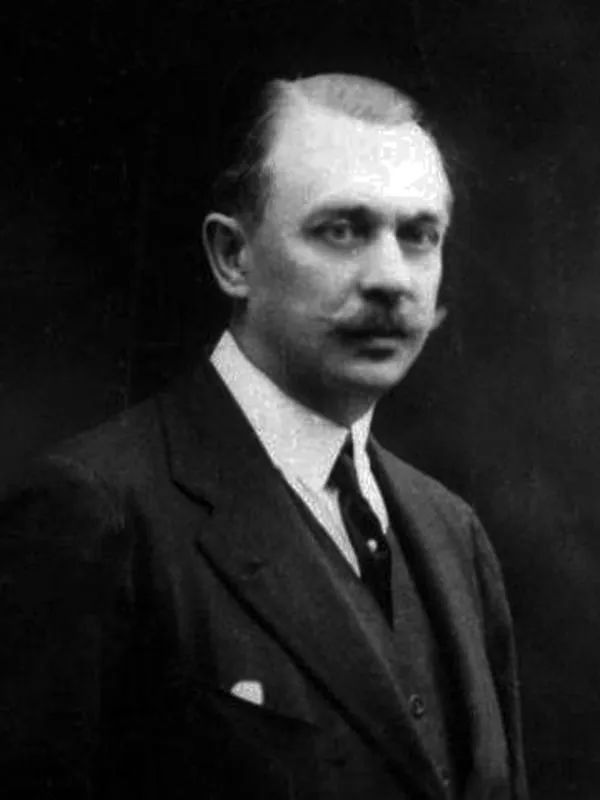
Count Maurycy Zamoyski, the 15th holder of the Zamość entail, was one of the richest men in the Polish lands and Roman Dmowski’s closest ally among the aristocracy. He was neither a great orator nor an ideologue, but without his money, name and connections the politics of the national camp in the West during the Great War is hard to imagine. Following Dmowski, he moved from Russia to the West, and in August 1917 he became vice-president and treasurer of the Polish National Committee. When Dmowski was in the United States in the autumn of 1918, Zamoyski ran the Committee in Paris. After the war he was reborn Poland’s first envoy to France, and in 1922 the right’s candidate for president.
Before the war
He was born on 30 July 1871 in the Blue Palace in Warsaw, the son of Tomasz Zamoyski and Maria née Potocka. He inherited the Zamość entail, one of the largest landed fortunes in Poland. According to Wojciech Roszkowski’s list, as late as 1922 he owned nearly 191,000 hectares. He studied in Stuttgart, where he came into contact with Polish painters, and all his life he was a patron of culture. He supported the Zachęta, in 1908 he paid off the debts of the Warsaw Philharmonic and for years was its president, and as president of the committee for the monument to Frédéric Chopin in Warsaw he had the deciding voice in the choice of design. He opened the family Library of the Zamoyski Entail to readers.
He was brought into politics by Dmowski, whom, according to his wife’s memoirs, he met around 1903. From 1905 Zamoyski belonged to the secret National League. He financed the press of National Democracy, including the “Gazeta Warszawska”, was a co-founder of the Polish School Society (PL) and a member of the Society for Secret Teaching. On 5 November 1905 he obtained the governor-general’s permission for a great national procession through the streets of Warsaw. In 1906 he sat with Dmowski in the First State Duma, though he played no active part in it.
1914–1917: from Warsaw to Paris
At the start of the war Zamoyski, like Dmowski’s whole camp, staked on Russia. He signed a telegram of thanks in reply to Grand Duke Nicholas’s proclamation to the Poles, in which the signatories wrote that the blood of Poles shed together with the blood of Russians in the struggle against the common enemy would become a pledge of peace and friendship between the two Slavic nations. He joined the Polish National Committee formed in Warsaw in November 1914, which brought together supporters of the Russian orientation. He was also a member of the Swiss General Committee for the Relief of War Victims in Poland (PL), headed by Henryk Sienkiewicz.
When in 1915 the Germans took Warsaw and Russia would give the Poles nothing but vague promises, Dmowski decided that the Polish cause had to be carried to the West. According to Zamoyski’s biographer Aneta Mintzberg, the two men first lobbied for it in London, at social gatherings attended by influential British politicians, and then in Paris. The count paid for Dmowski’s activity and later for the costs of the Paris headquarters on the Avenue Kléber. He also worked with the Polish press agency in Lausanne, where Erazm Piltz (PL) and Marian Seyda were active.
After the Act of 5 November 1916 the national camp regarded the emperors’ manifesto as an attempt to bind the Poles to Germany. According to Mintzberg, Zamoyski and Piltz then tried to persuade Sienkiewicz to sign a protest against German action in the Polish lands. The writer, who as president of the relief committee wished to remain neutral and saw in the act a chance to rebuild the state, refused.
Vice-president of the Polish National Committee
On 15 August 1917 the Polish National Committee was founded in Lausanne. Zamoyski became its vice-president and treasurer, and together with Dmowski, Piltz, Seyda and Jan Emanuel Rozwadowski (PL) he formed the Committee’s leadership in Paris. Mintzberg writes that the Committee was able to operate thanks to money from Zamoyski’s Kiev account, and that the count also largely financed the creation of the Polish Army in France, pawning family jewels, including his wife’s jewellery. Zamoyski’s aristocratic name and social connections were capital for the Committee no less than his money. By the autumn of 1917 the Committee had been recognised by France, Great Britain, Italy and the United States.
In the summer of 1918 Dmowski left for the United States to seek the support of Washington and the American Polish community. Zamoyski then acted as president in Paris. During this time the Committee concluded with the French government the agreement of 28 September 1918, which recognised the Polish Army as allied and co-belligerent, and on 4 October it appointed General Józef Haller commander-in-chief. A photograph survives in the National Digital Archive captioned as Zamoyski appointing Haller.
According to Mintzberg, a measure of Zamoyski’s standing was that he was offered a seat on the Regency Council of the Kingdom of Poland, set up by the occupiers in 1917. He stayed in Paris, however. His wife’s memoirs indicate that during their work in the Committee there were conflicts between him and Dmowski, though their friendship survived.
After the war
In 1919 Zamoyski was a member of the Polish delegation to the Paris Peace Conference. Paderewski’s government appointed him Polish envoy to France, and Zamoyski held the post from August 1919 to January 1924. During the war with the Bolsheviks in 1920, using his acquaintance with Alexandre Millerand, French prime minister and from September president, he sought French help and, according to his biographer, pledged the whole entail as security for arms deliveries. In December 1922 he was the right’s candidate in the presidential election. He led in the first rounds, but in the final vote he lost to Gabriel Narutowicz by 227 votes to 289. From January to July 1924 he was foreign minister in Władysław Grabski’s government. He died on 5 May 1939 at Klemensów and was buried in the Zamość collegiate church.
Assessment
Dmowski wrote of Zamoyski in “Polityka polska i odbudowanie państwa” that he was “a man who thought for himself”, who understood twentieth-century Poland in a modern way, and that he could therefore not only help Polish politics materially but took an active part in it and “in many things was simply irreplaceable”. His biographer stresses above all his financial role: the count’s fortune allowed the Polish National Committee to maintain offices, a press and missions in several capitals. The same wealth and aristocratic origin had another side, however. The Committee, dominated by landowners, conservatives and National Democrats, with no one from the left or from Piłsudski’s camp, was criticised as representing only part of society. In 1922 the peasant parties did not support Zamoyski in the presidential election, according to his biographer precisely because he was a great landowner. His own memoirs burned in 1939 together with most of the Library of the Zamoyski Entail, so his role is known mainly from the accounts of others.
Sources
Spotted a mistake?Report an error
Often appears with
People who appear in the same events.