Poland · The Polish cause
Michał Bobrzyński
Minister for Galicia in the Austrian government (31 October 1916 – 1 June 1917), earlier Governor of Galicia (1908–1913)
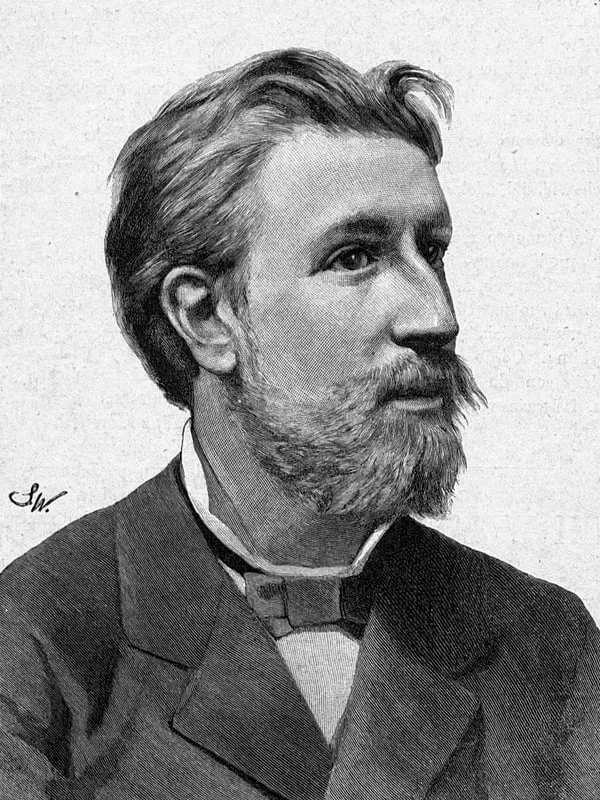
- Born:
- 30 September 1849, Kraków (Galicia, Austrian Empire)
- Died:
- 3 July 1935, Łopuchówko near Poznań
- Author:
- Łukasz Skowroń
- Photo:
- Stanisław Witkiewicz, domena publiczna, Wikimedia Commons

Michał Bobrzyński was the most eminent scholar among the Polish politicians of the Habsburg monarchy and one of the last great defenders of the so-called Austro-Polish idea. A legal historian and the author of the celebrated “Dzieje Polski w zarysie” (“An Outline History of Poland”), leader of the Kraków conservatives, he governed Galicia as its Statthalter in 1908–1913. All his life he believed that the Poles would gain most by supporting the Habsburgs in exchange for freedom of national development. During the Great War this belief was put to its severest test. In the autumn of 1916, after the Act of 5 November, which announced a Kingdom of Poland without Galicia, Bobrzyński joined the Vienna government as Minister for Galicia in order to carry out the separation of the province promised by the Emperor. After seven months he left, defeated by parliament, the Austrian Germans, the Ukrainians and his own countrymen, who were turning ever more clearly towards full independence.
Before the war
He was born on 30 September 1849 in Kraków, into a doctor’s family. He graduated in law from the Jagiellonian University, took his doctorate in 1872 and his habilitation a year later, and after studies in Berlin and Strasbourg became professor of the history of Polish and German law. Together with Józef Szujski he founded the Kraków historical school (PL). His “Dzieje Polski w zarysie”, published in 1879, caused a storm: in his view the main cause of the fall of the Commonwealth was not the greed of its neighbours but the weakness of central authority and the anarchy of the nobility. He opposed insurrections, which he considered harmful, and supported organic work.
Politically he joined the Stańczyks (PL). He sat on the Kraków city council, in the Diet of Galicia and in the Vienna Imperial Council, and in 1891–1902, as vice-president of the Provincial School Board, he rebuilt the Galician school system. In April 1908, after the Statthalter Andrzej Potocki was murdered by a Ukrainian student, he took over the governorship. He tried to reach an understanding with the Ukrainians and to reform the electoral law for the Diet, but was blocked by a coalition of East Galician conservatives, National Democrats and bishops. He resigned in May 1913. In March 1914 the Emperor made him a life member of the House of Lords.
During the war: defender of the Legions
After the outbreak of war Bobrzyński held no office, but he had great influence in Vienna and the confidence of Franz Joseph. He intervened many times in defence of the Polish Legions, which the Austrian command did not want to treat as the nucleus of a Polish army, and supported the Supreme National Committee. From the autumn of 1914 it was led by his long-standing associate Władysław Leopold Jaworski. The aim of both was the Austro-Polish solution: the union of Galicia and the Kingdom of Poland in a single state under the Habsburg sceptre. Bobrzyński set out his case in 1916 in pamphlets, among them “Dialog o zasadach i kompromisach” (“A Dialogue on Principles and Compromises”).
In the summer of 1916, however, Vienna had to give way to Berlin. The Act of 5 November announced a “self-standing” Kingdom of Poland made up of the lands of the Russian partition and dependent above all on Germany. For the Galician supporters of Austria it was a blow. By way of consolation, in a handwritten letter of 4 November, published the next day together with the Act, the Emperor promised Galicia the right to arrange its own affairs “to the full extent compatible with its belonging to the whole of the state and with the state’s welfare”. This was the so-called separation of Galicia from the Austrian half of the monarchy. The Foreign Minister István Burián later wrote that it was Bobrzyński himself who had suggested the idea to him.
Minister for Galicia
On 31 October 1916, at the express wish of the Emperor, Bobrzyński joined the new government of Ernest von Koerber as Minister for Galicia. Formally he was a minister without portfolio, but by custom he was regarded as the man of confidence of the Polish Club (PL) in the government and as Galicia’s “advocate” in the Council of Ministers. The appointment made an impression; even the “Neue Freie Presse”, usually unfriendly to the Poles, counted him among the most outstanding political personalities in the state. One jarring note was that he had been appointed without the Club’s knowledge, which particularly offended its president, Leon Biliński. From then on Bobrzyński had to work with Biliński, an ambitious and experienced politician, and their relations soon deteriorated.
At the end of 1916 a special commission of the Polish Club met, made up of the most important Polish politicians, from the conservatives to the socialist Ignacy Daszyński and the democrat Juliusz Leo. Bobrzyński wanted to carry out the separation by octroi, that is by an imperial act bypassing parliament, because a change to the constitution required a two-thirds majority in the Imperial Council, which did not exist. The Ukrainians protested, fearing that they would be delivered to the mercy of the Poles; the Czechs and other Slavs feared that once the Poles left parliament the Germans would gain the upper hand there. Bobrzyński saw in the separation a chance of an understanding with the Ukrainians and of democratising the electoral law. The death of Franz Joseph on 21 November and the resignation of Koerber, who reportedly saw the separation as “the break-up of Austria”, shook his position, but in December Heinrich Clam-Martinic kept him in his new cabinet.
In the spring of 1917 the matter stalled. In mid-April Emperor Karl I decided that there would be no constitutional change by octroi, and the government rejected the Club’s draft as revised by Bobrzyński. The minister offered his resignation and threatened that the Poles would go into opposition. Clam-Martinic then promised guarantees and negotiations, so the resignation was refused, but the announcement that the Imperial Council would be convened at the end of May ruled out the extra-parliamentary path. At a conference with the government on 1 May Biliński outbid everyone, demanding for Galicia not merely autonomy but something close to a separate state, which alienated the ministers and angered Bobrzyński. At the beginning of May Bobrzyński persuaded the Emperor and Empress Zita to visit Kraków. The visit was meant to renew the Poles’ attachment to the dynasty, but it did not live up to hopes, and Bobrzyński admitted to one of his fellow ministers that the Poles were no longer a “government party”.
The collapse of the Austro-Polish idea
At the end of April the National Democrats withdrew from the work on the separation, and at the beginning of May Wincenty Witos’s peasant party left the Supreme National Committee and declared the separation no longer relevant. On 14 May they demanded in the Club that the minister go, and on 16 May the Club adopted the resolution of Włodzimierz Tetmajer calling for an independent and united Polish state with access to the sea. Bobrzyński decided to resign. According to the historian Damian Szymczak, he tried to the very end to prevent the Diet Club in Kraków from repeating the resolution, all the more so as the irritated Emperor threatened not to appoint a successor and to change his policy towards the Poles. On 28 May, however, the Polish Club’s resolution was adopted by almost everyone, the conservatives included, which hurt him particularly. He did not yield to the Emperor’s requests that he stay. The letter accepting his resignation, couched in unusually warm terms, was dated 1 June 1917. No successor was found at once, and a few weeks later the whole cabinet fell and Ernst von Seidler became prime minister.
After the war
In reborn Poland Bobrzyński did not return to active politics. He settled in Greater Poland, where he bought the estate of Garby near Środa Wielkopolska. He worked as an expert: he chaired a commission assessing draft constitutions and himself prepared a draft, modelled on the American system, with a strong president independent of the Sejm, which was not adopted. In 1926 he sat on a commission for the reform of the administration. In the two-volume “Wskrzeszenie państwa polskiego” (“The Resurrection of the Polish State”, 1920–1925) he described the years 1914–1923 and defended the stance of the Kraków conservatives. He died on 3 July 1935, according to some sources at Łopuchówko near Poznań, according to others in Poznań itself, and was buried in the Rakowicki Cemetery in Kraków. Some sources also give his year of birth as 1848.
Assessment
For historiography Bobrzyński has remained above all a great, if controversial, historian, whose thesis that the internal weakness of the state was to blame for the partitions still provokes debate. As a politician he was a tragic figure. Damian Szymczak writes that his resignation in June 1917 had a symbolic dimension, because with it went the politician who was the main pillar and authority of the Austro-Polish idea. The separation of Galicia proved unrealistic because of constitutional obstacles, the resistance of other nationalities and the progressive decay of the monarchy, and the disappointment it brought hastened the Poles’ turn away from the Habsburgs. Paradoxically, as Szymczak concludes, the emancipation of Galicia from Vienna’s influence began precisely under the ministry of one of the greatest champions of the link with Austria: instead of the planned separation of Galicia came an unplanned “separation” of Polish society from the monarchy.
Sources
Spotted a mistake?Report an error
Often appears with
People who appear in the same events.