Romania · The Entente
Alexandru Marghiloman
Leader of the Conservative Party, Prime Minister of Romania (March–November 1918)
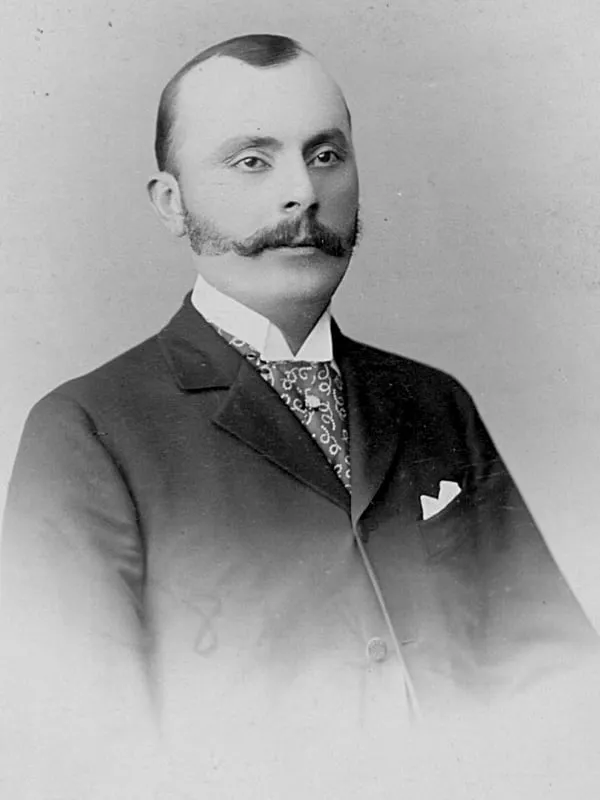
- Born:
- 1854, Buzău (Wallachia)
- Died:
- 10 May 1925, Buzău
- Author:
- Natalia
- Photo:
- autor nieznany, CC BY-SA 3.0, Wikimedia Commons

Alexandru Marghiloman was the last leader of the old Romanian Conservative Party and the best-known advocate in Romania of good relations with Germany. In 1914–1916 he opposed going to war on the side of the Entente, and when the king and the government fled from the invader to Moldavia, he stayed in occupied Bucharest. In the spring of 1918, when Romania, cut off from its allies by the revolution in Russia, had to sue for peace, the king entrusted the government to him. Marghiloman signed the humiliating Peace of Bucharest, but his cabinet also accepted the union of Bessarabia with Romania. To the end of his life he believed that he had saved the state, the dynasty and the army. For most of his compatriots he remained “the Germans’ man”, and his time in office was soon overshadowed by the Entente’s victory. The political diary he kept for nearly thirty years is one of the most important sources for the history of Romania during the Great War.
Before the war
He was born in 1854 in Buzău in Wallachia. The exact date is disputed: most encyclopaedias give 4 July, and some Romanian regional studies the turn of January and February. His father, Iancu Marghiloman, was a wealthy lessee of landed estates and an influential local figure. The son graduated from the Saint Sava College in Bucharest and studied law and political science in Paris. He was a prosecutor, a judge and a lawyer, and in 1884 he entered parliament for the first time. From 1888 he was repeatedly a minister in Conservative governments, among others of justice, foreign affairs and finance, and in 1910–1912 minister of the interior in the government of Petre P. Carp. He was rich and elegant and bred racehorses that won the Romanian Derby many times. His compatriots called him “the Wallachian lord”. His first wife, Elisa Știrbey, sister of Prince Barbu Știrbey, after their divorce married the Liberal leader Ion I. C. Brătianu, Marghiloman’s chief political rival.
The Conservatives were traditionally a party friendly to Germany and Austria-Hungary. They supported the secret alliance with the Triple Alliance that King Carol I had concluded in 1883, and they believed in the might of the German army. Marghiloman, who took over the leadership of the party in 1914, shared these views but was a realist. He understood that most Romanians dreamed of Transylvania, which belonged to Hungary, and that a war alongside the Habsburg monarchy would be very unpopular in the country.
Neutrality (1914–1916)
On 3 August 1914, at the crown council in Sinaia, King Carol I and Carp wanted to stay loyal to the alliance and enter the war on Germany’s side. Marghiloman, together with most of those present, declared for neutrality. After the death of Carol I in October 1914 the new king, Ferdinand I, and the prime minister, Brătianu, slowly shifted Romania’s policy towards the Entente. Marghiloman argued that the country should remain strictly neutral, because Germany was invincible and an alliance with Russia was more dangerous than Vienna’s hostility. His party was crumbling: in 1914–1915 the most vocal supporters of war with Austria-Hungary, led by Nicolae Filipescu, left him.
The Austro-Hungarian diplomat Ottokar Czernin, minister in Bucharest until 1916, later wrote that had Vienna agreed to cede part of the Hungarian lands to Romania, a government of Marghiloman or Titu Maiorescu would have brought its army into the war on the side of the Central Powers. The Hungarians, however, would not agree to such concessions. On 27 August 1916, at the crown council in the Cotroceni Palace, Marghiloman once again opposed the declaration of war on Austria-Hungary. The decision had already been taken, and Marghiloman did not join Brătianu’s government.
In occupied Bucharest
For Romania the war began in disaster. In December 1916 Bucharest fell, and the king, the government and parliament moved to Iași. Marghiloman stayed in the capital. As president of the Romanian Red Cross he mediated between the occupation authorities of Field Marshal August von Mackensen and the population, intervening on the inhabitants’ behalf. The Germans wanted to make use of his authority and urged him to form a government in Bucharest to rival the king’s. Marghiloman refused. He recognised the king’s legitimacy and did not want to split the state, but he made no secret of his view that the war was Brătianu’s mistake. In Iași he was suspected of treason, while in occupied Bucharest many saw him as the only Romanian politician whom the victors took into account.
Prime minister of peace
At the end of 1917 the revolution in Russia left Romania alone. After the Armistice of Focșani and the German ultimatum of February 1918 Brătianu stepped down, and the government was taken over by General Alexandru Averescu. On 27 February Czernin, by then Foreign Minister of Austria-Hungary, told King Ferdinand that in his view a Marghiloman cabinet would accept the peace terms. On 5 March Averescu’s government signed the preliminary peace of Buftea, and a few days later it resigned. On 18 March 1918 (5 March by the Julian calendar, which Romania then used) the king entrusted the government to Marghiloman. The new prime minister also took the interior ministry and entrusted foreign affairs to his associate Constantin Arion. The government included, among others, the geographer Simion Mehedinți and General Constantin Hârjeu as minister of war.
Marghiloman had no illusions about the terms. According to Czernin’s memoirs, before agreeing he wanted to know them in detail. He accepted the cession of Dobruja as unavoidable, because the Central Powers had promised it to Bulgaria. He did, however, obtain a reduction of the Austro-Hungarian demands in the Carpathians by roughly half and the abandonment of claims to inhabited places such as Turnu Severin. He also made it a condition that Germany drop the idea of an occupation of Wallachia lasting many years after the conclusion of peace. Czernin recalled that the German economic demands were later reduced as well, and that Marghiloman accepted them in a softened form.
On 7 May 1918 Marghiloman and Arion signed in Bucharest the peace treaty with Germany, Austria-Hungary, Bulgaria and Turkey. Romania lost Dobruja and the crests and passes of the Carpathians, and its oil and grain passed for many years under the control of the victors. In the summer the government held elections, and the new parliament, dominated by the Conservatives, ratified the treaty. The government majority even spoke of putting Brătianu’s ministers on trial for dragging the country into the war. King Ferdinand, however, never signed the treaty or promulgated it.
The government’s most lasting achievement proved to be Bessarabia. Marghiloman made sure with the Germans and with Entente diplomats that they would not oppose the union, and at the beginning of April he came to Chișinău and addressed the Sfatul Țării (Council of the Country). When the council voted for union, he accepted it “in the name of the Romanian people and its king”. Two representatives of Bessarabia, Ion Inculeț and Daniel Ciugureanu, joined the government.
Relations between the prime minister and the court in Iași were cool. Queen Marie, who opposed the peace to the last, in August 1918 visited villages that under the treaty were to go to Austria-Hungary and assured the peasants that the Allied guns would have the last word. According to her biographers Marghiloman went to the king at Bicaz to protest against this demonstration, but the queen replied that she cared nothing for his diplomatic scruples.
Resignation
In the autumn of 1918 the Central Powers were collapsing. At the beginning of November Marghiloman, at the request of the Romanian National Council in Czernowitz, ordered the army to enter Bukovina. On 6 November 1918 the king summoned him and told him that the Entente’s representatives had no confidence in his government. Marghiloman resigned at once. He noted bitterly that it was sad when foreigners made and unmade Romanian governments. His place was taken by the cabinet of General Constantin Coandă, which on 10 November brought Romania back into the war, dissolved the parliament elected under Marghiloman and declared its acts null and void, including the ratification of the Peace of Bucharest. Marghiloman himself argued to his supporters that his government had preserved the dynasty and the army for the country and had given it Bessarabia and Bukovina.
After the war
When the court returned to Bucharest, the former prime minister was not invited to the celebrations. In the liberated capital the reckoning with the occupation began, and he himself was accused of collaborating with the occupier. The party, renamed the Conservative-Progressive Party, won only a handful of seats in the elections held under universal suffrage from 1919. The Conservatives, the party of the great landowners, had no place in the country after the land reform. Marghiloman died on 10 May 1925 in his native Buzău. From 1927 his diary, Note politice (“Political Notes”), covering the years 1897–1924, was published in print.
Assessment
During his life and long after his death Marghiloman was in Romania a symbol of Germanophilia and capitulation. The Peace of Bucharest was regarded as an act little short of treason, and Brătianu’s Liberals, who built the post-war legend of the war of unification, had no reason to defend his memory. His critics accuse him of misjudging the strength of the belligerents, of making it easier for the occupier to govern by his presence in occupied Bucharest, and of signing a treaty that subordinated the country’s economy to Germany for years.
Some historians, especially after 1989, judge him more leniently. They point out that peace was unavoidable in 1918 and that someone had to take on the odium of signing it. Marghiloman negotiated terms milder than the original demands, prevented the king’s dethronement and the disarmament of the army, and under his government Romania annexed Bessarabia. In 2019 the National Bank of Romania honoured him with a series of coins marking the centenary of the union, and there is a bust of him in Moldova. The old dispute over whether he was “the Germans’ man” or a politician who saved the state at its worst moment has not been settled, but hardly anyone today questions his personal integrity or the importance of his diary as a source.
Sources
Spotted a mistake?Report an error
Often appears with
People who appear in the same events.