Russia · The Entente
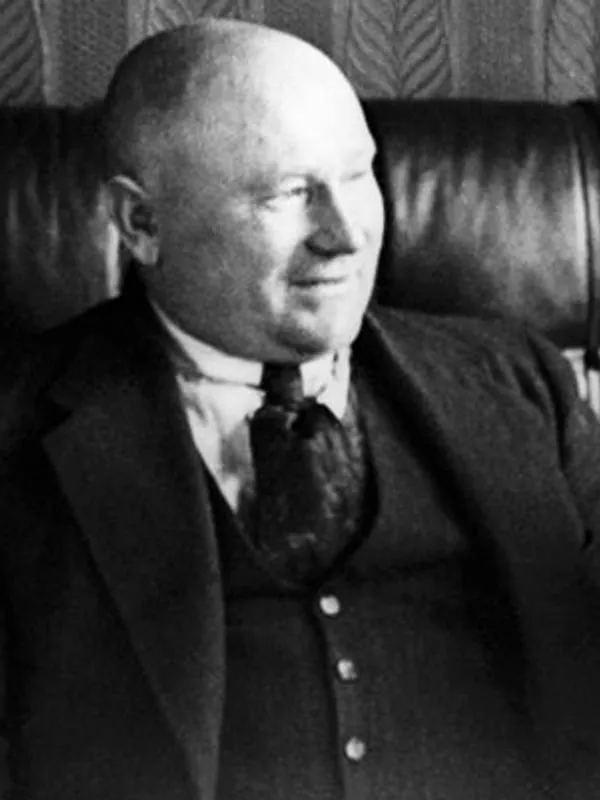
Jukums Vācietis
Commander of the 5th Zemgale Latvian Rifle Regiment (1915–1917), commander of the Latvian Rifle Division (1918), commander-in-chief of the armed forces of Soviet Russia (1918–1919)
- Born:
- 23 November 1873, Jaunmuiža near Kuldīga (Courland, now Latvia)
- Died:
- 28 July 1938, Moscow
- Author:
- Natalia
- Photo:
- Д. И. Богданов (ок. 1880 — до 1940), domena publiczna, Wikimedia Commons

Jukums Vācietis, known in Russia as Ioakim Vatsetis, was a Latvian officer of the Tsarist army who rose from commanding a rifle battalion at Riga to become commander-in-chief of the Red Army. In 1915–1917 his 5th Zemgale Latvian Rifle Regiment was among the best units of the Russian 12th Army, which held the line of the Daugava. After the revolution Vācietis, although he never joined the party, sided with the Bolsheviks, and his Latvians became their most reliable troops. In 1918 he fought the Polish corps of Dowbor-Muśnicki, crushed the revolt of the Left Socialist Revolutionaries in Moscow, commanded the front against the Czechoslovaks on the Volga, and from September was the first commander-in-chief of the armed forces of the Soviet republic. The Bolsheviks, who took Russia out of the war with Germany, built their army largely through former Tsarist officers like him. He died in 1938, shot during the Great Purge.
Before the war
He was born on 23 November 1873 (11 November in the Julian calendar) on the Jaunmuiža estate in Courland, into the large family of a landless farmhand. According to family tradition the surname, which means “German” in Latvian, was given to his grandfather by the local baron. As a child he herded cattle, then worked in a match factory and collected Latvian folk songs. He could not afford university, so in 1891 he joined the army, which offered the chance to study at state expense. He graduated from the cadet school in Vilna and, in 1906–1909, from the Nicholas General Staff Academy in St Petersburg, an exceptional path for the son of a Latvian peasant. In 1912, as a lieutenant-colonel, he took command of a battalion of the 102nd Vyatka Infantry Regiment in Grodno.
East Prussia and the Latvian Riflemen
At the beginning of the war his battalion took part in the offensive in East Prussia, and in the autumn of 1914 Vācietis fought in Poland, where in November he was wounded in the leg near Warsaw. After recovering he taught tactics at the military school in Vilna. Meanwhile, in the summer of 1915, when the Germans occupied Courland and approached Riga, the government agreed to the formation of volunteer battalions of Latvian Riflemen. In November 1915 Vācietis became a colonel and commander of the 5th Zemgale Latvian Rifle Battalion in the 12th Army.
The Latvian Riflemen fought on the approaches to Riga with exceptional tenacity, because they were defending their own country against the Germans, whom they also associated with the hated Baltic barons. Vācietis prided himself that his soldiers, educated and knowing the ground, were superior to the average Russian soldier. After bloody fighting in July 1916 he pressed for the battalions to be turned into regiments, which happened in the autumn. His 5th Zemgale Regiment fought in December 1916 and January 1917 in the Mitau operation, called by the Latvians the Christmas Battles, in which the riflemen broke through the German line, but the incompetence of the command threw the success away and the losses were very heavy. Bitterness after these battles pushed many riflemen towards revolution. Vācietis was wounded and concussed several times, and the papers for his promotion to general got stuck at Stavka.
After the February Revolution he publicly supported the new order and the slogan “a free Latvia in a free Russia”, that is, Latvian autonomy, and saw in Kerensky the man who ought to lead the army. On 1 September 1917, when the Germans forced the Daugava at Ikšķile, the soldiers of the 5th Zemgale Regiment under his command, according to Latvian accounts, were the first to occupy the trenches on the little river Mazā Jugla and held up the German 2nd Guards Division there for a time. The riflemen’s resistance on the Mazā Jugla covered the retreat of the 12th Army, but did not save the city, which the Germans took on 3 September, during the Battle of Riga.
With the Bolsheviks
The Provisional Government was in no hurry to grant Latvia autonomy, and Vācietis’s views quickly radicalised, as did those of his soldiers, among whom the Bolsheviks had enormous influence. After the October coup his regiment helped the Bolsheviks take over the headquarters of the 12th Army in Valka, and in November Vācietis became commander of that army. In December he was summoned to Stavka at Mogilev, where, as head of the operations department of the Revolutionary Field Staff, he began to organise the armed forces of the new government, and for a short time even deputised for the commander-in-chief, Nikolai Krylenko. He never joined the Bolshevik party.
In January 1918, according to Russian accounts on 26 January (13 January Old Style), he was put at the head of the troops sent against the Polish I Corps of General Józef Dowbor-Muśnicki. He threw Latvian Riflemen, sailors and the remnants of old regiments against the Poles and drove them back from Rogachev, but could not destroy the corps, which on the night of 2–3 February seized the fortress of Bobruisk. The German offensive of February 1918 interrupted the formation of the Latvian Rifle Corps, which he was to command. After the Treaty of Brest-Litovsk, in April, he became commander of the Latvian Rifle Division, the most efficient unit the Bolsheviks had. He reportedly hoped that if Soviet power fell he would lead it back to Latvia.
July 1918: Moscow and the Volga
On 6 July 1918 the Left Socialist Revolutionaries, opponents of peace with Germany, assassinated the German ambassador Wilhelm von Mirbach and arrested the head of the Cheka, Felix Dzerzhinsky. Most regiments of the Moscow garrison declared themselves neutral. Command of the Latvians was given to Vācietis, whom, as historians write, Lenin himself never fully trusted. On the morning of 7 July the Latvians shelled the headquarters of the rebel Cheka detachment with artillery, and by the afternoon the revolt had been crushed. Without the Latvian Riflemen, as many historians believe, the Bolsheviks might then have lost Moscow.
A few days later, when the commander of the Eastern Front, the Left Socialist Revolutionary Mikhail Muravyov, tried to turn his troops against the government and was killed on 11 July, Vācietis took over his command. The front in practice still had to be created out of scattered units fighting along the Volga and in the Urals against the Czechoslovak Legion and Russian volunteers. At the beginning of August the Czechoslovaks and Vladimir Kappel’s troops took Kazan, where Vācietis had his headquarters and where the Russian gold reserve was kept. The front commander himself barely escaped capture. In August Leon Trotsky came to the Volga and imposed iron discipline on the army. On 10 September the Red Army retook Kazan. It was its first major victory in the Civil War, and the Czechoslovaks began to fall back eastwards.
Commander-in-chief
At the beginning of September 1918, on Lenin’s initiative, Vācietis became the first commander-in-chief of all the armed forces of Soviet Russia and a member of the Revolutionary Military Council of the Republic, chaired by Trotsky. Sources give the date as 1 or 2 September. He directed the fast-growing Red Army, whose staffs and commands were built largely by former Tsarist officers. When Germany lost the war in November 1918 and the Bolsheviks annulled the Treaty of Brest-Litovsk, on 16 November he ordered an advance behind the withdrawing German troops along the whole front from the Gulf of Finland to Ukraine. His troops occupied most of Latvia, and in January 1919 he himself took command of the army of Soviet Latvia.
The commander-in-chief’s position was not an easy one. After the loss of Perm in December 1918 he had the military council of the Eastern Front put on trial, which entangled him in the disputes between Trotsky and his opponents in the party, led by Joseph Stalin. General Andrei Snesarev, one of the former Tsarist officers serving the Bolsheviks, regarded him as a fantasist and a dilettante.
After the war
In the summer of 1919 Vācietis lost a strategic dispute with the commander of the Eastern Front, Sergei Kamenev: he wanted to halt the offensive in the Urals and switch forces against Denikin, while Kamenev wanted to pursue Kolchak. Lenin backed Kamenev, who in July replaced him as commander-in-chief. On 8 July Vācietis was arrested on a charge of taking part in a conspiracy, but in August he was released and the charges were dropped. He later became a professor at the Military Academy of the Red Army and a historian of the Civil War and of the Latvian Riflemen, and in 1935 he was given the rank of komandarm 2nd rank. On 29 November 1937 the NKVD arrested him on a charge of belonging to a “Latvian fascist organisation”. On 28 July 1938 he was sentenced to death for espionage and shot the same day. He was rehabilitated in 1957.
Assessment
Vācietis was one of the most able Latvian officers of the Russian army and, alongside Trotsky, one of the most important builders of the Red Army. Trotsky wrote that it was hard to say which of the two colonels, Vācietis or Kamenev, was the more able, but that Vācietis was the more stubborn and capricious. Some historians point out that his authority as commander-in-chief was largely formal, because strategy was decided by the politicians. In Latvia his memory is ambivalent. He was a hero of the riflemen who defended Riga against the Germans in 1915–1917, and at the same time the commander of the Red Army which at the turn of 1918 and 1919 tried to crush the independent Latvian state. He himself later explained that the riflemen defended Soviet power because only its victory would give Latvia a chance of freedom.
Sources
Spotted a mistake?Report an error
Often appears with
People who appear in the same events.