Key event
Germans take Mount Kemmel
- Category:
- Military operations
- Front:
- Western Front
- Date:
- 25 April 1918
- Author:
- Natalia
- Battle:
- Second Battle of Kemmel Ridge
- Tags:
- France, Germany, Great Britain, chemical weapons
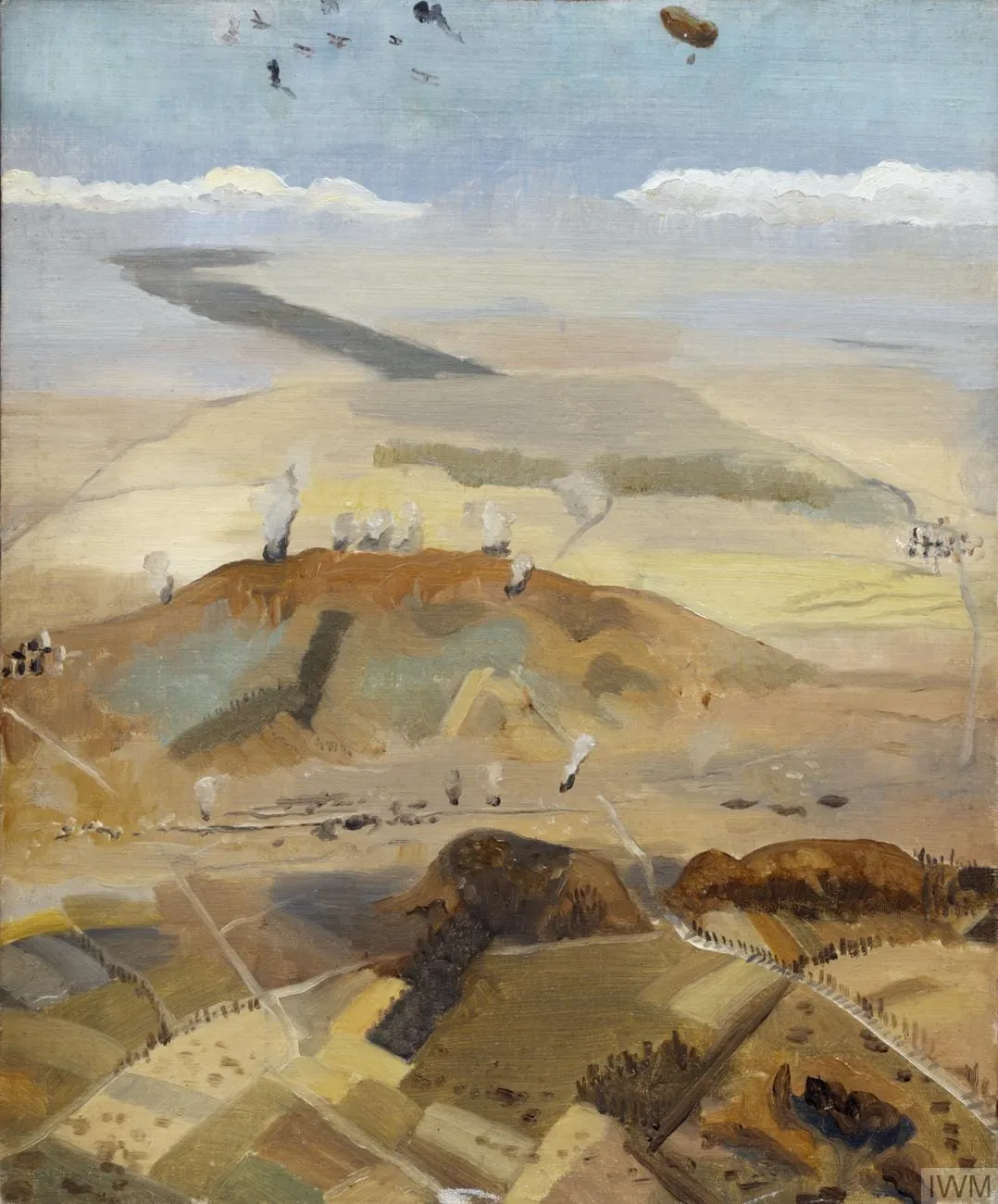
On 25 April 1918, the seventeenth day of the German offensive on the Lys, the Germans won their most celebrated success in Flanders. After several hours of bombardment, in which gas shells smothered the French batteries, German mountain troops of the Alpenkorps broke onto the Kemmelberg, the hill from which the Allies had since 1914 observed the whole plain south of Ypres. The summit fell in just over an hour, and by midday the Germans had taken the whole hill, the village of Kemmel (PL) and several neighbouring villages. The German evening communiqué spoke of 6,500 prisoners, mostly French. On the same day British battalions east of the hill fought one of the most stubborn defensive actions of that spring and prevented the Germans from closing the Ypres salient.
The night before the assault
The Germans had already attacked the chain of hills on the Franco-Belgian border on 17 April, but the British had then repulsed the attack. Over the following days the exhausted British divisions were relieved by the French. Ferdinand Foch, for a few days now Allied commander-in-chief, sent General Antoine de Mitry’s Detachment of the Army of the North to Flanders. The Kemmelberg was defended by the French 28th Infantry Division, with the 154th and 34th Divisions to its west. The British left with the French their heavy artillery, their air units and a small detachment that knew the tunnels and dugouts of the hill, built up over four years of war.
The last days before the battle were restless. The German artillery pounded the hills ever harder, and on 24 April intelligence identified the Alpenkorps opposite the Kemmelberg. In the evening prisoners taken by the 28th Division stated that an attack using gas would come at three in the morning, and the warning was sent out to the units around midnight. Even so, the French tried during the night to push their line forward near Lindenhoek. They gained little, suffered losses and by dawn had not managed to sort out their intermingled units. The same night British aircraft bombed the headquarters of the German Fourth Army at Kortrijk and damaged its telephone communications. The Germans responded with a raid on Poperinge, on which, according to the British official history, 16 tons of bombs fell. On the orders of General Herbert Plumer the town was evacuated every night.
Gas and fog
At 2.30 a.m. British time the bombardment began. For two hours the German guns smothered the Allied batteries, roads and reserves with mustard gas, tear gas and high-explosive shells. After a half-hour pause the fire shifted to the front-line trenches. Frenchmen who remembered Verdun said afterwards that they had not experienced such fire even there. The French batteries, crowded into a deep valley north of the hills, were almost completely gassed. Thick fog lay over the whole battlefield, and at five in the morning visibility was at most 50 metres.
At six the German infantry went in to the assault. The Alpenkorps headed straight for the Kemmelberg, and the 56th Division for the village of Kemmel. The French line on the lower slopes was broken by the first wave. At 7.10 a.m. soldiers of the Bavarian Infantry Life Guards Regiment, who besides their weapons carried supplies for four days, stood on the summit, supported by low-flying aircraft. The French reserves did not even manage to leave the dugouts cut into the slope. Half an hour later the village of Kemmel fell. A British officer present on the hill wrote that there were too many men in the trenches, who were dying under the bombardment and began to leave the hill even before the assault, and that the reserves stood too close to create a defence in depth. The French historian General Palat later admitted that no real resistance was seen in the first and second lines, even though two regiments of the 28th Division wore the shoulder cord (fourragère) for earlier distinction.
Isolated machine-gun nests held out longer. The commander of the British hill defence detachment, Lieutenant-Colonel H. D. Bousfield, fired at the Germans at the entrance to the tunnel leading to the observation posts until a senior French officer told him to stop. A British field company of engineers and a pioneer company, which during the night had been digging a trench linking Kemmel with the Scherpenberg, tried to return to the hill and were almost wiped out by fire from the ground and from aircraft. According to the French, the last resistance ended at about 10.30 a.m., according to the Germans at noon. Throughout the day British airmen reported that French soldiers were still lying on the summit, and even in the evening Second Army headquarters believed that part of the garrison was holding out. They were most probably the dead and wounded.
The British on the flank
East of the hill, as far as the Ypres–Comines canal, the front was held by weak brigades of the British XXII Corps. The leading battalions repulsed the frontal attack, but as early as 6.30 a.m. French soldiers were falling back along the road from Kemmel to La Clytte, many without gas masks, shouting only “gas” and “all is lost”. The Germans followed close behind them. The first news of the assault was brought to 27th Brigade headquarters by a wounded French battery commander. The Scottish 12th Battalion, Royal Scots, which adjoined the French, was attacked on both flanks, and by evening 88 men of it had been gathered. The Yorkshire battalions in the salient at Wijtschate fell back fighting from wood to wood, while the Germans supported their advance with flamethrowers and trench mortars.
All day the British patched up the front, sending into battle cyclists, motor machine guns and further battalions from reserve. Three strongpoints proved crucial: the craters at St. Eloi, held by the Scottish Cameron Highlanders until nightfall, the area of Vierstraat, where Yorkshiremen fought, and Hill 44, on which the 9th Battalion, King’s Own Yorkshire Light Infantry, three times stopped the Germans a hundred metres in front of its trenches. Between 2 and 4 p.m. a thunderstorm passed over the battlefield. In the afternoon the German attack petered out. The exhausted divisions halted, and their reserves were pinned down under artillery fire on the Wijtschate ridge. Despite poor visibility the air forces of both sides attacked ground targets throughout the day. According to the British, ten German aircraft were shot down in the Kemmel area that day.
A victory not exploited
There was anxiety behind the Allied lines. A gap yawned between the French line at La Clytte and the British flank, and for several hours the only obstacle to the Germans was two weak battalions of the French 99th Infantry Regiment on the slopes of the Scherpenberg. Plumer drove to de Mitry and agreed that at 5 p.m. the French 39th Division and the British 25th Division would retake the hill. The French division, however, was more than 20 kilometres from the battlefield and did not arrive in time. The counter-attack was postponed to three in the morning. A British radio message sent at ten in the morning, reporting the loss of Kemmel and the planned counter-attack, was intercepted by the Germans, but they deciphered it only at 5.15 p.m.
On the German side the chief of staff of the Fourth Army, General Fritz von Loßberg, was full of hope in the morning. At 3.15 p.m. he told the Guards Corps that the British would almost certainly abandon the Ypres salient. Guards patrols, however, met determined resistance everywhere. Erich Ludendorff had been warning since the morning against counter-attacks and ordered the artillery to be brought up first. The assault divisions, intermingled and deprived of many officers, stood on their first objective under the fire of the Allied guns. In the evening the corps command reported that the Alpenkorps would not attack again that day, and the advance was put off until morning.
The day brought the Germans a great success in terms of prestige. They had taken an observation point that had been in Allied hands for four years, and the defeat of the French division that had given up the hill in an hour sharpened recriminations between the allies. The British felt they had been let down. The counter-attack on 26 April did not regain the hill, and Plumer shortened the Ypres salient. But the planned breakthrough towards Poperinge did not come. When the Germans tried for the last time on 29 April, the Allies were waiting for them with fresh forces.
Remember the articles you have read? Only in this browser; nothing is sent anywhere.How it works
Read ·
Voices from the front
“We must storm the Kemmelberg. Like a block this hill has lain before our eyes for years. […] Successes such as that at Kemmel lift up not only the troops who achieved them, they put new life into whole armies. So onward, at least as far as Cassel!”
Translated · Original (de)
Wir müssen den Kemmelberg stürmen. Wie ein Klotz liegt dieser Berg seit Jahren vor unseren Augen. […] Erfolge, wie der am Kemmel, reißen nicht nur die Truppe empor, die solches geleistet hat, sie beleben ganze Armeen. Also weiter vor, zunächst wenigstens bis Cassel!
“Clemenceau comes back at about four to tell me: “I don’t bring good news. The Germans claim on their radio that in taking Mont Kemmel they made 6,500 prisoners, most of them French. Is it Plumer’s fault or Mitry’s? I don’t know; in any case, it is bad.””
Translated · Original (fr)
Clemenceau revient vers quatre heures pour me dire : « Je ne vous apporte pas une bonne nouvelle. Les Allemands prétendent dans leur radio qu’ils ont fait, en prenant le mont Kemmel, 6 500 prisonniers, la plupart français. Est-ce la faute de Plumer ou celle de Mitry ? Je ne sais ; en tout cas, c’est mauvais. »
Spotted a mistake?Report an error
Meanwhile
(04)Elsewhere in the same days.
- 23 April 1918 · DiplomacyGuatemala declares war on GermanyOn 23 April 1918 President Estrada Cabrera promulgated a decree by which Guatemala adopted towards Germany the same belligerent attitude as the United States.
- 23 April 1918 · War at seaZeebrugge raidOn St George's night, 23 April 1918, the Royal Navy attacked Zeebrugge and Ostend to seal the Germans' exits from Bruges. Two blockships were sunk at Zeebrugge.
- 23 April 1918 · Asia and the PacificMotono resignsOn 23 April 1918 Japan's ailing foreign minister Ichirō Motono resigned. He was replaced by Shinpei Gotō, also a supporter of intervention in Siberia.
- 22 April 1918 · Middle EastTranscaucasia declares independenceOn 22 April 1918 the Transcaucasian Sejm in Tiflis proclaimed the independent Transcaucasian Democratic Federative Republic, the Turks' condition for new talks.
Related events
(04)The same battle, people or subject.
- 17 April 1918 · Western FrontStart of the First Battle of Mount KemmelOn 17 April 1918 the Germans attacked the Flanders hills near Kemmel and the Belgians at Merkem. British, Australians, French and Belgians beat off the attacks.
- 29 April 1918 · Western FrontFighting for the ScherpenbergOn 29 April 1918 the Germans attacked the Scherpenberg and Mont Rouge. The French and British repulsed them, and that evening Ludendorff halted the offensive.
- 15 April 1918 · Western FrontGermans take BailleulOn 15 April 1918 the Germans took the Ravelsberg ridge east of Bailleul. That night the British left the town, which in later months was reduced to ruins.
- 15 April 1918 · Western FrontEnd of the Battle of HazebrouckOn 15 April 1918 the front before Hazebrouck settled at Nieppe Forest. Artillery broke up German attempts to attack the 5th Division and the Australians.