Russia · The Entente
Nikolai Bukharin
Bolshevik leader in Moscow (1917), editor of Pravda, leader of the Left Communists opposed to the Peace of Brest (1918)
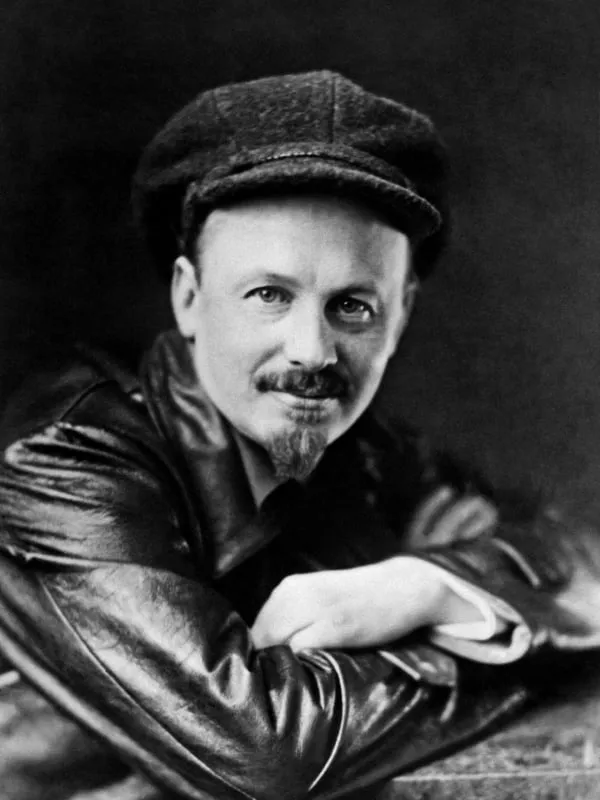
- Born:
- 9 October 1888, Moscow (Russian Empire)
- Died:
- 15 March 1938, Moscow
- Author:
- Łukasz Skowroń
- Photo:
- autor nieznany, domena publiczna, Wikimedia Commons

Nikolai Bukharin was the youngest of the great Bolshevik leaders and their ablest theorist. During the war, as an émigré, he wrote works on imperialism that Vladimir Lenin drew on, while at the same time arguing with him over the national question and the state. In 1917 he led the Bolsheviks in Moscow, and after the revolution he took over the editorship of Pravda. His role in the history of the war is concentrated in a few weeks at the turn of 1917 and 1918. When Lenin decided to accept the peace imposed by Germany, Bukharin put himself at the head of the Left Communists, who demanded a “revolutionary war” against imperialism and counted on revolution in Europe. For several weeks he had the majority of the party behind him and very nearly brought about a split. In the history of the USSR he later made his name as the theorist of the New Economic Policy, an opponent of forced collectivisation and a victim of one of the great show trials.
Before the war
He was born on 9 October 1888 (27 September in the Julian calendar) in Moscow, into a family of teachers. As a secondary-school pupil he and his friend, the future writer Ilya Ehrenburg, took part in student rallies during the Revolution of 1905, and in 1906 he joined the Social Democratic party, in its Bolshevik faction. He studied economics at Moscow University and soon joined the party’s Moscow committee. He was arrested several times, and in 1911 he was exiled to Onega in Arkhangelsk Governorate. In the same year he escaped from exile and went abroad, to Hanover and then to Austria-Hungary. In 1912 he met Lenin in Kraków. In emigration he studied economics diligently, including the works of the Austrian Marxists and of theorists outside the mainstream, which more than once led to disputes with Lenin.
The war in emigration
The outbreak of war found him in Vienna. The Austrian authorities arrested him on suspicion of spying for Russia and deported him to Switzerland. There in 1915 he wrote Imperialism and World Economy, in which he presented the war as the inevitable result of the struggle of the great capitalist states for markets and raw materials. Lenin wrote a preface to it and used some of its theses in his own, more famous pamphlet on imperialism of 1916. At the same time the two argued fiercely. Bukharin, together with Yuri Pyatakov, rejected Lenin’s slogan of the right of nations to self-determination, and in articles on the imperialist state he argued that the revolution must smash that state. Lenin called his views on the national question a “caricature of Marxism”, and in a letter of 1916 wrote that Bukharin was a sound economist but credulous towards gossip and “devilishly unstable” in politics. Later Lenin adopted some of his theses on the state.
In 1916 Bukharin moved to Sweden, where under an assumed name he wrote for the Scandinavian left-wing press. In March the Swedish police arrested him together with Pyatakov and Yevgenia Bosch, and after a few weeks deported him to Norway. In the autumn of 1916 he left for New York, where he edited the Russian socialist newspaper Novy Mir. In January 1917 he was the first of the émigrés to welcome Leon Trotsky there, and the two worked together on its editorial staff. During the war years he sat in prisons in Austria-Hungary and Sweden, and on his way home also in Japan.
The year 1917
On news of the February Revolution he set out for Russia via Japan, where he was briefly detained, and in May 1917 he reached Moscow. He joined the party’s Moscow leadership and became the leader of the young, radical Bolshevik left in the city, which demanded a swift seizure of power. At the Sixth Party Congress in the summer of 1917 he was elected to the Central Committee. The American journalist John Reed wrote that he was regarded as “more left than Lenin”. In November, when after a week of street fighting in Moscow the Bolsheviks seized power, Bukharin was the most important Bolshevik in the city. He wrote the decrees of the Moscow soviet and represented it in dealings with the government in Petrograd. Soon afterwards he became editor of Pravda, the party’s main newspaper.
Revolutionary war
Bukharin believed that the world war would turn into revolution throughout Europe, and that the Russian revolution was only its beginning. He regarded peace with Imperial Germany as a betrayal of that cause, and at the same time he rejected any help from the Entente powers. When during the negotiations at Brest it became clear that Germany had no intention of giving up Poland, Lithuania and Courland, Lenin concluded that peace had to be signed, even an annexationist one, because there was no army left and the revolution needed a “breathing space”. Bukharin and his supporters, called the Left Communists, demanded that the negotiations be broken off and a “revolutionary war” be waged, if necessary by partisan detachments deep inside the country. At a meeting of party activists on 21 January 1918, 32 of the 63 present came out for this position, only 15 for Lenin and 16 for Trotsky. The Central Committee then adopted as a compromise Trotsky’s formula, and on 10 February he proclaimed at Brest “neither war nor peace”.
On 18 February the Germans went over to the offensive and met almost no resistance. On 17 February and again on the morning of 18 February Bukharin and his supporters helped to reject Lenin’s motion for the immediate resumption of talks, but in the evening, after the fall of Dvinsk, Trotsky went over to Lenin’s side and the Central Committee agreed to peace. On 23 February, when even harsher German terms arrived, Lenin threatened to resign if they were not accepted. Seven members of the committee voted to accept them, four against, among them Bukharin, and four abstained. During the night of 23–24 February, in the All-Russian Central Executive Committee, Bukharin voted against the peace in defiance of party discipline. Together with several other leaders of the left he resigned his posts in the party leadership, and he left the editorship of Pravda.
The Left Communists published their own journal, Kommunist, in Petrograd and Moscow, and in those weeks they had the support of many party organisations, including the Moscow one. At the Seventh Party Congress in March 1918 Bukharin delivered a co-report against the peace, but according to the most often cited figures Lenin’s resolution was adopted by 30 votes to 12 with 4 abstentions. The Treaty of Brest-Litovsk, signed on 3 March, handed vast territories to Germany and its allies. At the Congress of Soviets that ratified it on 15 March, the Left Communists did not support the treaty and abstained. Some years later, in 1924, Bukharin revealed that the Left Socialist Revolutionaries had then proposed to him that Lenin be arrested for a day and a government of opponents of the peace be formed, which he refused. He wrote that the party had been at that time “a hair’s breadth from a split, and the country a hair’s breadth from ruin”.
After the Peace of Brest
The resistance of the Left Communists weakened as revolution in Europe failed to come, and the revolt of the Left Socialist Revolutionaries in July 1918 showed what continued struggle against the peace could lead to. Bukharin was reconciled with Lenin and in the summer returned to the editorship of Pravda. In November 1918, after Germany’s defeat and the outbreak of revolution in Berlin, Soviet Russia annulled the Treaty of Brest-Litovsk, which the Left Communists could regard as a partial vindication of their case, although it was not revolutionary war but the victory of the Entente that undid the German peace.
After the war
In March 1919 Bukharin joined the leadership of the Communist International and became a candidate member of the Politburo. During the Civil War he supported War Communism and wrote, with Yevgeni Preobrazhensky, the popular ABC of Communism. After 1921 he became the chief theorist of the NEP, and after Lenin’s death Stalin’s ally against Trotsky, and in 1926–1929 he headed the Comintern. When Stalin began forced collectivisation, Bukharin, as leader of the “Right Deviation”, lost all his important posts in 1929. Later he edited Izvestia and helped to draft the 1936 constitution. In 1937 he was arrested, and in March 1938 he was sentenced to death in a show trial. He was shot on 15 March 1938. He was rehabilitated only in 1988.
Assessment
In his so-called testament Lenin called Bukharin “the most valuable and biggest theoretician of the party” and “the favourite of the whole party”, but added that his views could be regarded as fully Marxist only with great reservation. Historians agree that in the dispute over the Peace of Brest Lenin was right: Russia had no army, and a revolutionary war would probably have ended with the Germans occupying Petrograd and Moscow. Bukharin’s American biographer Stephen Cohen stresses, however, that the position of the Left Communists was not simple recklessness. It grew out of the conviction that revolution in backward Russia could survive only as part of a European revolution, and out of the fear that a compromise with German imperialism would distort the revolution itself. The dispute of 1918 was the first great split in the party after the seizure of power and the first test of strength for Lenin’s leadership.
Sources
Spotted a mistake?Report an error
Often appears with
People who appear in the same events.