Bulgaria · The Central Powers
Aleksandar Malinov
Leader of the Democratic Party, Prime Minister of Bulgaria (1908–1911, June–November 1918, 1931)
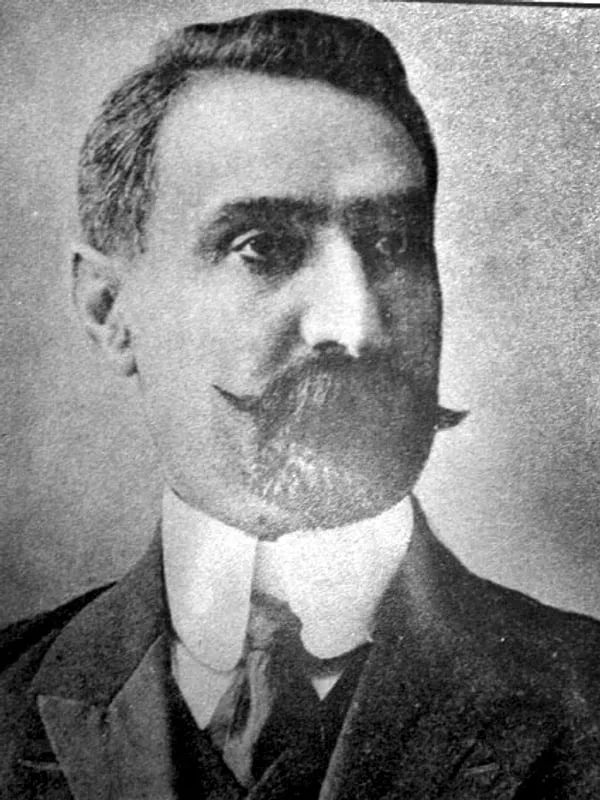
- Born:
- 3 May 1867, Pandakli in Bessarabia (now Orikhivka, Ukraine)
- Died:
- 20 March 1938, Sofia
- Author:
- Łukasz Skowroń
- Photo:
- originally uploaded by Nk, domena publiczna, Wikimedia Commons

Aleksandar Malinov led the Bulgarian Democratic Party for 35 years and was prime minister three times. His first government proclaimed Bulgaria’s independence in 1908, and his second, appointed in June 1918, had to end the Great War for it. In 1915 Malinov was among the opposition leaders who warned Tsar Ferdinand against war on the side of the Central Powers and predicted a second national catastrophe. Three years later, as the prediction was coming true, the tsar entrusted him with power. Malinov was unable to lead Bulgaria out of the war on its own terms. After the collapse of the front in Macedonia his government asked for an armistice, put down a soldiers’ mutiny near Sofia and accepted the tsar’s abdication. Although he himself had opposed the alliance with Germany, it was he who signed the acts of defeat of a country that others had led into it.
Before the war
He was born on 3 May 1867 in the village of Pandakli in Bessarabia, into a family of the local Bulgarians, descendants of settlers who at the beginning of the 19th century had fled Turkish rule to Russia. He studied at the Bulgarian gymnasium in Bolgrad and at a boarding house for Bulgarian youth in Mykolaiv, and in 1891 graduated in law from the university in Kiev. He then moved to Bulgaria, where he was a judge, prosecutor and lawyer in Plovdiv. He belonged to the circle of young intellectuals around the writer Aleko Konstantinov and was reputedly the model for one of the minor characters of his satire Bay Ganyo. His wife Yulia was a well-known activist of the Bulgarian women’s movement.
He joined the Democratic Party of Petko Karavelov, and after Karavelov’s death in 1903 became its leader. The Democrats were a party of moderate liberals, the middle classes and the intelligentsia, well disposed towards Russia. In January 1908 Prince Ferdinand entrusted the government to Malinov. On 5 October 1908, during the Bosnian crisis, Bulgaria’s full independence was proclaimed in Veliko Tarnovo, and Ferdinand took the title of tsar. Malinov’s government also introduced proportional representation and prepared the constitutional amendment of 1911, which widened the monarch’s powers in foreign policy. In March 1911 Malinov made way for a coalition of the Nationalists and Progressive Liberals under Ivan Geshov, which led the country into the Balkan Wars.
Against the war (1914–1916)
After the defeat in the Second Balkan War power passed to the cabinet of Vasil Radoslavov, which was close to Vienna and Berlin. When the Great War broke out in 1914, Malinov was among the supporters of neutrality. He warned that rapprochement with Germany would end in the country’s subordination to its war economy, and argued for an understanding with the Entente. The opposition, including the Democrats, fiercely opposed the German loan taken out in the summer of 1914.
In the summer of 1915 the tsar and Radoslavov decided to bind themselves to the Central Powers. On 17 September 1915 Ferdinand received the opposition leaders: Geshov, Malinov, Stoyan Danev, the Radical Naycho Tsanov and the Agrarian Aleksandar Stamboliyski. They warned him that Bulgaria would have to fight three Balkan states and four great powers, and that this would end in a second national catastrophe. They demanded that parliament be convened. The tsar did not change his mind, and a few weeks later Bulgaria entered the war against Serbia.
In the face of a war that brought Bulgaria Macedonia, the opposition fell quiet. Malinov, however, made no secret of the fact that he did not want war with Russia. When Romania entered the war in August 1916, the tsar cut Radoslavov off from the world at his residence in the Rila mountains and refused to receive Malinov, who wanted to ask on behalf of the opposition for a crown council to be convened. On 1 September Bulgaria declared war on Romania, and thereby found itself in open war with the Russians fighting in Dobruja.
The last-chance government
By the spring of 1918 Bulgaria was exhausted. Food and clothing were short, riots broke out in the towns, and the Peace of Bucharest had not given it the whole of Dobruja. In June Radoslavov resigned, and on 21 June 1918 the tsar appointed a Malinov government made up of Democrats and Radical Democrats. The prime minister also took the foreign ministry, and Andrey Lyapchev became minister of finance. According to some historians, the tsar chose Malinov precisely because, if need be, he could open the way to talks with the Entente.
In Berlin the change was received with concern. Ludendorff later wrote that Malinov was no friend of the alliance, and that some of his ministers openly favoured the Entente. The new prime minister declared, however, that Bulgaria would remain loyal to its allies and would fight on. According to Bulgarian studies, he believed that the Entente would not make peace with Bulgaria on any terms other than unconditional surrender, and that a unilateral break with Germany, whose troops and staffs were stationed in the country and at the front, was impossible. The government pressed its allies for help and for the whole of Dobruja to be handed over to Bulgaria. Bulgarian soldiers were still waiting for a victorious peace, but war-weariness was growing in the country and at the front.
Defeat and armistice
On 15 September 1918 the Entente armies broke through the front at Dobro Pole, and the Vardar offensive shattered the Bulgarian army within a few days. Sofia asked its allies for urgent help but received evasive answers. After a meeting attended by the tsar, the government decided to ask for a ceasefire. On 26 September a Bulgarian envoy crossed the British lines with a letter from General Georgi Todorov. Malinov also tried a second route: he asked the American chargé d’affaires in Sofia to pass on to President Woodrow Wilson an appeal for mediation, but nothing came of this attempt.
At the same time a mutiny broke out. Shattered regiments were returning home on their own, and on 24 September mutinous soldiers seized the headquarters at Kyustendil. Malinov’s government released Stamboliyski and his associate Rayko Daskalov from prison, hoping that they would calm the soldiers. The opposite happened: on 27 September Daskalov proclaimed a republic at Radomir, and several thousand soldiers marched on Sofia. The government defended the capital thanks to loyal units, cadets of the military school and the German 217th Division, brought in hastily from the Crimea. On 30 September the rebels were routed near Vladaya, and on 2 October government troops recovered Radomir.
The delegation sent by Malinov, headed by Lyapchev, arrived in Salonika on 28 September. General Louis Franchet d’Espèrey refused any bargaining, and an instruction came from Sofia to conclude an agreement on whatever terms they could get. Late in the evening of 29 September the Armistice of Salonika was signed. Bulgaria was the first of the Central Powers to leave the war. The news of its request helped to bring about Ludendorff’s demand for an armistice for Germany too a few days later.
The tsar’s abdication
The Allies made it known that they expected Ferdinand to go. According to the Bulgarian historian Georgi Markov, the tsar still tried to persuade the military to stage a coup and continue the war, but was refused. On the evening of 3 October 1918 he received Malinov, told him that he was abdicating, and signed a manifesto which the prime minister countersigned. Markov quotes Ferdinand’s bitter remark that he had once accepted the resignations of his prime ministers in this study, and now a prime minister was accepting his. The 24-year-old Boris III became tsar, and Malinov’s government remained in power. In October and November foreign agencies spread reports of a peasant republic and of Boris’s abdication, but they were false.
On 17 October Malinov reshaped his cabinet into a broad coalition. The foreign ministry was taken over by the Nationalist leader Teodor Teodorov, and the Broad Socialist Yanko Sakazov and the Agrarian representative Tsanko Tserkovski also joined the government. The prime minister kept the justice portfolio. The government demobilised the army and received the Allied troops, which under the armistice were allowed to cross the country. The question of Dobruja proved the most painful. In November, after Romania re-entered the war, the Romanians, with Entente support, began to take over southern Dobruja as well, which Bulgaria had lost in 1913. On 28 November 1918 Malinov resigned in protest. Teodorov formed a new government, and Bulgarian troops left Dobruja at the beginning of December.
After the war
Malinov remained one of the leaders of the parliamentary opposition. In 1922, under Stamboliyski’s government, he was imprisoned together with other opposition leaders. After the coup of 9 June 1923 he joined Aleksandar Tsankov’s Democratic Alliance camp, but as early as 1924 returned to opposition. In 1931 the People’s Bloc coalition, created with his participation, won the elections, and Malinov became prime minister for the third time. After a few months, according to some sources because of poor health, he handed the office to his party colleague Nikola Mushanov and became speaker of parliament. He died on 20 March 1938 in Sofia, during an election rally. One of the capital’s boulevards and a Sofia Metro station bear his name.
Assessment
Bulgarian historians see Malinov as one of the most consistent democrats and parliamentarians of the era, a moderate politician who in 1915 correctly foresaw the consequences of a war alongside Germany. His name is associated above all with the proclamation of independence in 1908. Critics point out that in 1918 he lacked the will and the means to lead Bulgaria out of the war before defeat did so. For three months his government assured its allies of its loyalty, and only the shattering of the front forced it to ask for an armistice, concluded on terms dictated by the victors.
Others stress that the prime minister’s room for manoeuvre was negligible. The Entente had no intention of rewarding Bulgaria for changing sides, and the country was full of German troops and dependent on German aid. In these conditions Malinov’s government did what was possible: it quickly concluded an armistice, defended the capital against the mutiny, carried out a change on the throne without revolution, and handed over power at the moment when the victors began to decide the borders. It was largely thanks to this that Bulgaria, though defeated, avoided the revolutionary upheavals that Russia, Hungary and Germany were going through at the time.
Sources
Spotted a mistake?Report an error
Mentioned in battles
(01)Often appears with
People who appear in the same events.