Germany · The Central Powers
Georg Michaelis
Chancellor of the German Empire and Minister-President of Prussia (July–November 1917)
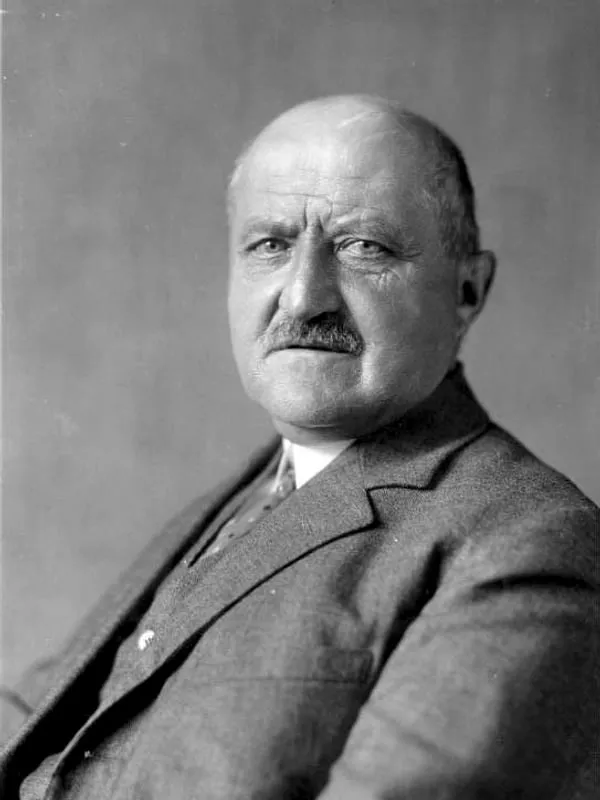
- Born:
- 8 September 1857, Haynau, now Chojnów (Silesia, now Poland)
- Died:
- 24 July 1936, Bad Saarow (Brandenburg)
- Author:
- Łukasz Skowroń
- Photo:
- Bundesarchiv, Bild 183-2004-0720-500, CC BY-SA 3.0 DE, Wikimedia Commons

Georg Michaelis was Chancellor of the German Empire for three and a half months, from 14 July to 1 November 1917. Until then he was known only to a narrow circle of officials and officers: he was an efficient Prussian administrator who during the war organised the country’s supply of grain and bread. He became chancellor because the Kaiser, after the fall of Theobald von Bethmann Hollweg, needed someone who would be accepted by the Supreme Army Command of Paul von Hindenburg and Erich Ludendorff and who would not immediately alienate the Reichstag. During his short time in office parliament passed a peace resolution, the Pope issued an appeal for peace, and a sailors’ mutiny broke out in the fleet. Michaelis failed to cope with any of these matters. He was the first chancellor without a noble title and the first whose departure was forced by the Reichstag parties.
Before the war
He was born on 8 September 1857 in Haynau, today’s Chojnów in Lower Silesia, into a family of lawyers. His father, a judge, died of cholera in 1866, and his mother, née von Tschirschky, brought up seven children in Frankfurt an der Oder. Michaelis studied law in Breslau, Leipzig and Würzburg, and in 1884 obtained a doctorate in Göttingen. He needed it because he had accepted an invitation from the Japanese government: in 1885–1889 he taught constitutional and administrative law at the German law school in Tokyo. Japan and the culture of the Far East made a great impression on him.
After his return he moved from the public prosecutor’s office to the administration. He worked in the district governments in Trier and Arnsberg, where in 1897 he became the youngest senior government councillor in Prussia, and in 1900 vice-president of the district government in Liegnitz. There he came into contact with the pietist revival movement in the Evangelical Church and experienced what he himself called a conversion. From then on he avoided social entertainments and devoted much time to charitable works. In 1902–1909 he was deputy to the Oberpräsident of the Province of Silesia in Breslau, and after the flood of 1908 he directed the construction of flood defences in the Oder valley. In 1909 he became under-secretary of state in the Prussian Ministry of Finance. He was regarded as an energetic, honest official of the old Prussian school, a conservative and monarchist who belonged to no party.
Grain and bread
The war gave him a task equal to his abilities. The naval blockade cut Germany off from food imports, and the state had to take over the purchase and distribution of grain. In November 1914 Michaelis became chairman of the supervisory board of the War Grain Company; in 1915 he became Reich Commissioner for bread grain and flour, with the right to requisition stocks; and from the summer of 1915 he headed the Imperial Grain Office, which bought, stored, milled and distributed grain for the population and the army. His office became one of the pillars of the system of ration cards and allocations that allowed Germany to survive successive winters, though ever more poorly. At the end of 1916 he advised the governments of Austria-Hungary and Turkey on these matters. In February 1917, in the middle of the “turnip winter”, he became Prussian Food Commissioner. In sharing out scarcity he won the confidence of Ludendorff, who valued his firmness.
Chancellor by accident
In July 1917 Hindenburg and Ludendorff, with the support of some deputies, brought down Bethmann Hollweg. Kaiser Wilhelm II did not want the former chancellor Bernhard von Bülow, and the Bavarian Minister-President Georg von Hertling declined. According to historians, Michaelis’s name was put forward by Magnus von Braun, head of the press office in the Reich Office of the Interior, who on 12 July presented him to the Supreme Army Command, while the vice-chancellor Karl Helfferich recommended him to the Kaiser. Wilhelm II did not know him personally. The appointment of 14 July 1917 surprised everyone, including Michaelis himself. Historians argue over whose candidate he was. Ernst Rudolf Huber and Hans-Ulrich Wehler see him simply as the Supreme Army Command’s man. His biographer Bert Becker and Rudolf Morsey write more cautiously that the military did not put him forward but readily accepted him, because the appointment kept the Reichstag out of the choice of chancellor.
The deputies learned of it as a fait accompli and from the start regarded the new head of government with distrust. His style did not help him either. At one of his first meetings with the party leaders he said that until then, as an ordinary contemporary, he had merely run alongside the cart of high politics and followed it like a newspaper reader. It was meant as modesty, but was remembered as an admission of unpreparedness. The journalist Erich Dombrowski described him as a small, dried-up little man and mocked that Venus was born of the sea foam and Michaelis of the dust of files.
The resolution “as I understand it”
The first matter was the Reichstag peace resolution, prepared by the Social Democrats, the Centre and the liberals under the leadership of Matthias Erzberger. Michaelis tried to replace it with his own declaration, but the Social Democrats would not give way. On 19 July, in his first speech in the Reichstag, he therefore declared that Germany’s aims could be achieved within the framework of the resolution, “as I understand it”. With these few words he deprived it of its meaning. A few days later he wrote to the heir to the throne, Crown Prince Wilhelm, that his interpretation had stripped the resolution of what was most dangerous in it, and that any peace could be made with it. The left considered him insincere; the right, which was just then founding the German Fatherland Party, considered him too yielding.
Of greater importance was Benedict XV’s peace note of 1 August 1917. The Pope proposed a return to the pre-war state of affairs, and the most important test of Germany’s will for peace was Belgium. The British let it be understood that talks were possible if Berlin undertook to restore its full independence. The nuncio Eugenio Pacelli asked the chancellor for such a declaration. On 11 September, at a crown council in Bellevue Palace, the Kaiser agreed that the Foreign Secretary Richard von Kühlmann, who had replaced Arthur Zimmermann, should look for a way to talks with London, but the Supreme Army Command and the Admiralty would not hear of giving up the “guarantees” in Belgium. Germany’s official reply of 19 September was vague, and in a letter to Pacelli of 24 September the chancellor replied evasively that it was still too early for a binding declaration on Belgium. The Vatican and the Entente took this as a refusal. After the war Erzberger accused Michaelis of having deliberately torpedoed the Pope’s mediation as a devout Protestant in the year of the four-hundredth anniversary of the Reformation. Most historians regard this charge as unfounded, but agree that the chancellor wasted one of the few real opportunities for talks.
During his chancellorship Germany and Austria-Hungary issued on 12 September the patent on the Regency Council for the Kingdom of Poland, and in the east the German army took Riga. Michaelis thought of the economic subordination of the Baltic lands and their political attachment to the Reich. In domestic politics he did not advance the reform of the Prussian franchise announced by the Kaiser, because he did not want to antagonise the conservatives or the military. He let a few parliamentarians into the government, but mainly from the right and in subordinate posts.
Mutiny in the fleet and fall
The final blow turned out to be the sailors’ affair. In the summer of 1917 unrest broke out on the ships of the High Seas Fleet, and in September two leaders were executed, Max Reichpietsch and Albin Köbis. On 9 October Michaelis and the Secretary of State for the Navy, Admiral Eduard von Capelle, accused deputies of the Independent Social Democratic Party of Germany in the Reichstag of complicity in a conspiracy. They presented no evidence, and in doing so the chancellor broke earlier agreements with the leaders of the parliamentary groups. The Social Democrats backed a motion of no confidence. It failed because the Centre and the liberals did not want to bring down the government at an open sitting, but they decided that Michaelis must go.
The chancellor left on a journey to the Balkans and returned on 21 October. In the meantime the Inter-Party Committee drew up a minimum programme and demanded that the Kaiser consult the Reichstag before appointing a successor. On 26 October Michaelis proposed a solution that was meant to save his power: Hertling would become chancellor, while he himself would remain Minister-President of Prussia. The parties did not agree, because real power would then have remained in Michaelis’s hands. On 31 October he submitted his resignation, and on 1 November 1917 the Kaiser appointed Hertling to both posts. Michaelis declined the post in the Reich government offered to him.
After the war
He spent the winter in the Harz mountains, and on 1 April 1918 became Oberpräsident of the Province of Pomerania in Stettin. There the November Revolution found him. For several months he cooperated with the workers’ and soldiers’ councils and organised social assistance for war victims and for Baltic Germans fleeing the Bolsheviks, until at the turn of March and April 1919 the new Prussian authorities sent him into retirement. He joined the conservative German National People’s Party. He devoted the rest of his life to the Church and to the German Christian Students’ Association, which he headed. In 1921 he published his memoirs “Für Staat und Volk”, and in 1922 he travelled to a conference of Christian students in Peking. In 1926 he had to account before a Reichstag committee for his handling of the papal note. After Hitler came to power he joined, as Becker established, the NSDAP. He died on 24 July 1936 at his home in Bad Saarow near Berlin.
Assessment
Historians agree on one point about Michaelis: the office was too much for him. Theodor Heuss called his appointment “reaching for a Prussian official for want of a better solution”, and Rudolf Morsey wrote of a capable, energetic administrator who, unprepared for politics, was thrown into a post that demanded precisely political sense. He was judged most harshly by those who had hoped for peace in 1917. The lawyer and deputy Johann Victor Bredt, who in the 1920s prepared an expert opinion on the matter for the Reichstag committee, wrote that “this little man” might perhaps have spared the world a year of war and millions of victims, but closed the road to a negotiated peace at its very outset.
More recent research, especially Bert Becker’s biography of 2007, paints a more complex picture. Becker points out that in the war economy Michaelis was one of the most effective officials of the Reich, that as chancellor he supported Kühlmann’s cautious attempts to moderate German war aims and in principle favoured a negotiated peace. He could not, however, and would not cooperate with the Reichstag parties, and he had no influence at all on the military. His fall was the first case in the history of the Empire in which a chancellor was brought down by the parliamentary parties, and in that sense it heralded the parliamentarisation of Germany, which he himself opposed.
Sources
Spotted a mistake?Report an error
Often appears with
People who appear in the same events.