1918: The Italian front
Second Battle of the Piave
- Dates:
- 15–24 June 1918
- Front:
- Italian Front
- Location:
- The front from the Tonale Pass across the Asiago plateau (Sette Comuni) and the Monte Grappa massif between the Brenta and the Piave to the lower Piave, from the Montello hill to the Adriatic, Veneto and Lombardy (Italy)On the battle map →
- Sides:
- Italy, United Kingdom and FranceArmando Diaz, Pietro Badoglio, Prince Emanuele Filiberto, Duke of Aosta, Gaetano Giardino, Giuseppe Pennella, Luca Montuori, Lord Cavan, Jean-César GrazianiAustria-HungaryEmperor Charles I, Arthur Arz von Straußenburg, Franz Conrad von Hötzendorf, Svetozar Boroević, Archduke Joseph August, Wenzel von Wurm, Viktor von Scheuchenstuel, Alexander von Krobatin
- Result:
- Victory for Italy and its allies. The offensive in the mountains collapsed on the first day, and the divisions that had crossed the Piave withdrew to the left bank after a week of fighting. Austria-Hungary lost about 118,000 killed, wounded and prisoners, and about 140,000 men including the sick.
- Author:
- Łukasz Skowroń
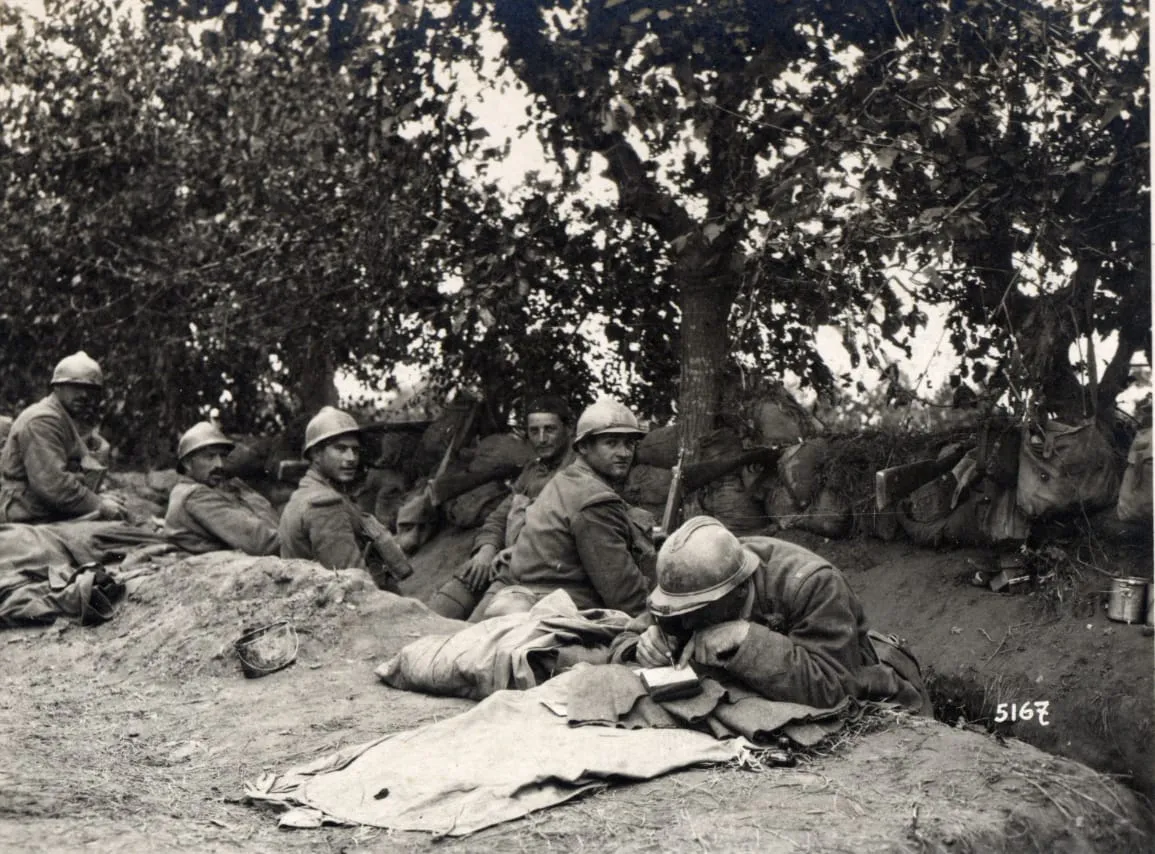
The Second Battle of the Piave was the last great offensive of the Austro-Hungarian army. With Russia and Romania out of the war, the Habsburg monarchy could for the first time throw almost all its forces onto a single front, and it resolved to crush Italy before the fate of the war was decided in the west. On 15 June 1918 it struck simultaneously from the mountains, on the Asiago plateau and in the Monte Grappa massif, and across the Piave, from the Montello hill to the sea. The Italians, however, knew the day and hour of the attack. In the mountains the offensive collapsed on the very first day. On the Piave the Austrians crossed the river and won bridgeheads, but the river, swollen by rain, and aircraft destroyed their bridges, and Italian reserves arrived faster than Austrian ones. On 20 June Emperor Charles I agreed to a retreat, and on the night of 22/23 June the troops crossed back to the left bank. The defeat cost the monarchy about 140,000 men and took away its last hope of victory.
Name and dates
The Italians call the battle the battaglia del Solstizio, the Battle of the Solstice; the name is attributed to the poet Gabriele D’Annunzio. It is also called the Second Battle of the Piave (seconda battaglia del Piave), and in some Italian works the third, if the fighting of November and December 1917 is counted separately. In German it is the zweite Piaveschlacht or the Junischlacht in Venetien, and the Austrian official history (Österreich-Ungarns letzter Krieg) entitled its account “The last offensive of the Austro-Hungarian army”. The British single out from it the Battle of Asiago (15–16 June), in which their divisions fought, and call the whole the Battle of the Piave, 15–24 June.
The closing dates of the battle vary. The Polish Wikipedia ends it on 23 June and the German on 22 June, while the Italian Wikipedia, the British official history and the British chronology of the war end it on 24 June. We adopt the dates 15–24 June 1918. On 15 June the main offensive began (a diversionary attack at the Tonale Pass on 13 June was a prelude to the battle). On the night of 22/23 June most of the Austro-Hungarian troops withdrew behind the Piave, but the last rearguards near the river mouth crossed it only on the night of 23/24 June, under pressure from an Italian attack, and only on 24 June was the whole right bank in Italian hands again. On that same day, 24 June, the Italians attacked on the Grappa.
Background
In the First Battle of the Piave in the autumn of 1917 the Italian army, shattered at Caporetto, halted the Austrians and Germans on the line of the Piave, the Grappa and Asiago. Over the winter General Armando Diaz rebuilt it almost from scratch: he replenished the artillery, improved food and leave, and in January recaptured on the Asiago plateau the three mountains lost in December. Italy now had 54 divisions in the field. They were supported by three British divisions of Lord Cavan’s XIV Corps and two French divisions of General Graziani’s XII Corps, which had remained in Italy from the autumn reinforcements, although some of the French and British divisions had returned to France in the spring. In April the Italians in turn sent a corps of their own to the Western Front.
The plan of the offensive was born of a dispute between two field marshals. As early as 30 January Franz Conrad von Hötzendorf, commander of the army group in the Tyrol, argued that the decision lay between the Adige and the Piave and wanted, as in 1916, to descend from the mountains onto the Italians’ rear. Svetozar Boroević, commander of the army group on the Piave, preferred not to attack at all, to husband the army and wait for the Germans to decide the war in France, and, if attack he must, to strike across the Piave towards Treviso. When the German spring offensive began on 21 March, the Army High Command at Baden near Vienna decided to attack. The chief of the general staff, General Arthur Arz von Straußenburg, and Emperor Charles I did not want to refuse either field marshal, so in the end, in April and early May, they approved both thrusts as the two arms of a pincer that were to meet near Padua. Divisions and artillery were divided roughly equally between the two army groups, so that neither had enough strength for a breakthrough. Pressure also came from Erich Ludendorff, who at the end of April demanded from his ally some action, any action, to relieve the Western Front.
The offensive in the mountains (Operation “Radetzky”) was to be conducted by General Viktor von Scheuchenstuel’s Eleventh Army on the Asiago plateau and in the Grappa massif, and the diversion at the Tonale Pass (Operation “Lawine”, Avalanche) by the Tenth Army of Field Marshal Alexander von Krobatin. Across the Piave (Operation “Albrecht”) were to go the Sixth Army of Archduke Joseph August, which attacked the Montello, and General Wenzel von Wurm’s Isonzo Army, whose main blow, across the island of Grave di Papadopoli and at Ponte di Piave, was to hit Treviso. According to the Austrian official history the forces were almost equal: against 725 Italian and Allied battalions, about 7,550 guns and 524 aircraft the monarchy fielded 642 battalions, 6,833 guns and 280 aircraft. The Austrians, however, were short of ammunition, bridging equipment and food. The soldiers were underfed, and in the ranks there was talk of a “hunger offensive”. Even so, the headquarters believed in a second Caporetto.
Secrecy was not kept. Deserters crossed over to the Italian side, among them, just before the attack, three Austrian officers with orderlies carrying their suitcases. The Italians also listened in on Austrian telephone conversations. By 13 and 14 June Italian intelligence knew not only the day but also the hour at which the bombardment would begin. Diaz, who had been preparing an offensive of his own, gave it up and placed strong reserves, above all the Ninth Army between Vicenza and Padua, ready to be moved by lorry and rail to any threatened sector.
Course
Tonale, 13 June. Two days before the main blow, Feldmarschalleutnant Metzger’s group attacked at the Tonale Pass in the Alps in order to threaten Lombardy. The Italians, who had occupied the surrounding peaks in May, repulsed the attack. Only the Monticello ridge was taken, and the Tenth Army forbade further attacks. According to the Austrian official history the undertaking, which had been expected to gain ground and tie down large enemy forces, “collapsed on the first day”.
The mountains, 15–16 June. On 15 June at three in the morning the Austro-Hungarian artillery opened fire along the whole front from Asiago to the sea, firing gas shells as well. The gas proved of little effect, because the Italians already had good British masks. On the Asiago plateau the Italian and French artillery began firing even before midnight, hitting the places where the Austrian infantry was concentrated; to this day 15 June is Artillery Day in Italy. The infantry set off at about seven, in thick mist and in the woods. The French repulsed the attack with fire. The British 23rd Division held its line, while the 48th Division, weakened by influenza, gave up in places up to several hundred metres of woodland, which it regained in a counter-attack early on 16 June. The Austrians penetrated deepest, by one and a half to three kilometres, into the sector of the Italian XIII Corps by the Brenta gorge, taking among other places the Col del Rosso. In the Grappa massif, defended by General Gaetano Giardino’s Fourth Army, they took several positions, among them the Col Moschin, but on 16 June it was retaken by the arditi of Major Giovanni Messe, and the attacks on Monte Asolone and Monte Spinoncia broke down. On the evening of 15 June the Eleventh Army command ordered its divisions to halt where they stood, since there could be no question of resuming the attack. Reports from the front, as the Austrian official history writes, described the state of the beaten troops as “serious, even critical”.
The Piave, 15 June. On the river things went better. Thick morning mist and smoke allowed the infantry to cross the wide, stony bed in boats and pontoons. Feldmarschalleutnant Goiginger’s XXIV Corps of the Sixth Army took the eastern part of the Montello hill and by the afternoon had advanced more than three kilometres. Further downstream the IV and VII Corps of the Isonzo Army seized bridgeheads on both sides of Ponte di Piave, and VII Corps took Zenson and about 2,400 prisoners. XXIII Corps formed a bridgehead at San Donà di Piave about five kilometres wide and about four deep. Only XVI Corps failed to cross the river from the island of Grave di Papadopoli, losing thousands of men there. The key, however, was the Montello: British and Italian aircraft bombed the pontoon bridges, and in the afternoon a British squadron broke a bridge on the upper reach, and its pontoons, carried off by the current, smashed a second one.
The flood, 16–18 June. For the Austrians 16 June was a lost day. Boroević issued no new orders, and on the Montello there was a shortage of bridges, guns and ammunition. On 17 and 18 June torrential rain in the mountains turned the Piave into a raging torrent. The water and floating debris broke most of the bridges, and ferrying men and supplies by pontoon to the other bank and back took several hours. Even so, the Austrians on the lower Piave joined their bridgeheads into a single strip roughly twenty kilometres wide and drew close to the little river Meolo, taking thousands of prisoners. But they lacked the strength for an advance on Treviso. Meanwhile Diaz, now sure that nothing threatened him in the mountains, was moving division after division to the Piave.
Counter-attack and the decision to retreat, 19–20 June. On 19 June General Giuseppe Pennella’s Eighth Army, reinforced by two corps from the reserve, attacked the Montello. The Austrians held on to the hill, and they recaptured Nervesa, which had been taken from them, the following day. On 19 June Francesco Baracca, the most successful Italian fighter pilot, with 34 victories, was killed over the Montello. The circumstances of his death have never been fully explained: according to the official version he was hit by ground fire, according to some historians by the gunner of an Austrian aircraft. On 19 June at Spilimbergo Boroević put to the emperor a proposal to withdraw the troops behind the Piave. The army could no longer be supplied, and food was short at home and in the army. Charles I reportedly replied that “Conrad wants” the battle to continue. He hesitated for the whole of the next day, touring army and corps headquarters. On the evening of 20 June, after the emperor’s return, Arz at last issued the order: the troops of Boroević’s army group were to withdraw to the left bank of the Piave. Almost at the same time Pennella halted his costly attacks, and Diaz decided not to shed blood in a counter-offensive, since the enemy had to withdraw anyway.
The retreat, 21–24 June. On the night of 21/22 June the Austrians withdrew their artillery, trains and wounded, and on the night of 22/23 June the infantry. It came down from the Montello unnoticed, and the first Italian patrols appeared on the bank only on the morning of 23 June. On the lower Piave XXIII Corps withdrew in two stages. On 23 June the Italians attacked its rearguards and inflicted heavy losses on them, and the last units crossed the river on the night of 23/24 June. Many soldiers drowned in the swollen river. On 24 June the Italian Fourth Army attacked on the Grappa to drive the Austrians off the peaks overlooking the plain, but the attack failed. The Italians retook the Col del Rosso on the Asiago plateau only on 30 June, and in the first days of July they drove the Austrians out of the marshy triangle between the Piave and the old river bed near the mouth.
Losses
According to the Austrian official history, between 14 and 25 June the Eleventh Army lost 5,692 killed, 32,901 wounded, 10,370 missing and 14,117 sick, about 63,000 men in all, and the two armies on the Piave about 69,000 killed, wounded and missing and more than 10,000 sick. Including the sick, this gives about 140,000 men. A frequently cited tally gives 11,643 killed, 80,852 wounded and about 25,500 prisoners, that is, about 118,000 casualties excluding the sick. The Italian official history stated that 24,475 prisoners and 70 guns were taken. Italian losses are estimated at about 85,000–87,000 killed, wounded and missing, of whom according to some tallies more than half were missing and prisoners; the Austrians claimed to have taken about 50,000 prisoners. The British divisions on the Asiago lost about 1,500 men.
Significance
The offensive, begun in the belief in a second Caporetto, ended in defeat. The British official history judged that the plan was strategically excellent, but that it was a plan of “armchair strategists”: Austria-Hungary had neither the men nor the equipment to carry it out, and the terrain, both the wooded mountains and the wide Piave, favoured the defenders. Splitting the forces between Conrad and Boroević meant that neither thrust had enough strength, and the Italian reserves, using shorter routes, reached the battlefield faster. The Italian army showed that Caporetto was a thing of the past, and it did so without much help from its allies. It was helped by the downpours that broke the bridges, but also by good reconnaissance and its air force.
For the monarchy the consequences were disastrous. According to the British official history the chief of staff, Arz, never recovered from the news of the defeat in the mountains. The number of deserters grew, soldiers did not return from leave, and bands of stragglers roamed the rear areas. In Vienna and Budapest a culprit was sought, and in mid-July the emperor removed Conrad from his command. Charles I also finally had to send some divisions to the Western Front, as Ludendorff had long been asking. The Austro-Hungarian army was no longer capable of any offensive, and when in October the Italians advanced from the Piave and the Grappa, it fell apart together with the monarchy.
Spotted a mistake?Report an error