France · The Entente
Albert Thomas
Under-Secretary of State for Artillery and Munitions (1915–1916), French Minister of Armament (1916–1917)
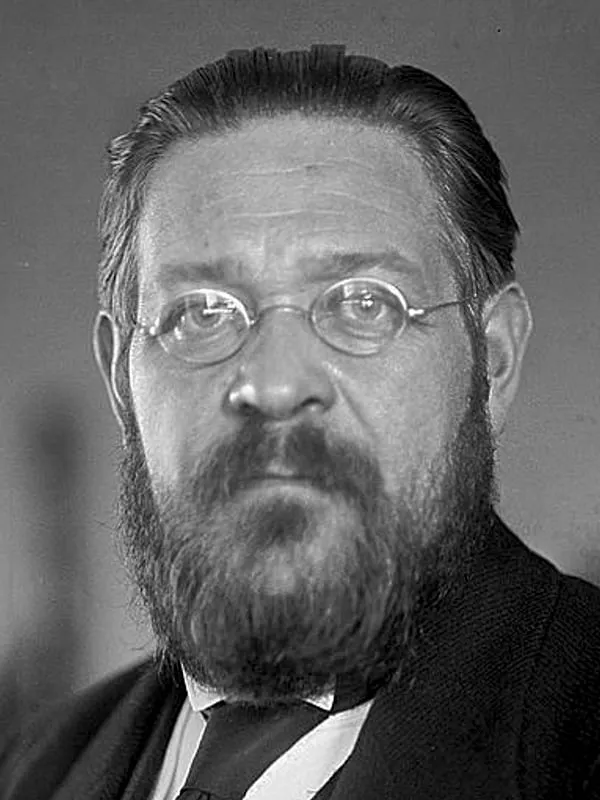
- Born:
- 16 June 1878, Champigny-sur-Marne (France)
- Died:
- 7 May 1932, Paris
- Author:
- Natalia
- Photo:
- National Photo Company, domena publiczna, Wikimedia Commons

Albert Thomas was the most important socialist in France’s wartime governments and the man who turned her industry into a munitions factory. In 1914 the French army was using shells much faster than the country, deprived of the occupied north with its mines and steelworks, could make them. Thomas, a historian and journalist who had never run a business, organised arms production from the autumn of 1914, from May 1915 as under-secretary of state and from December 1916 as France’s first minister of armament. He worked with the great industrialists while also looking after the working conditions of hundreds of thousands of men and women workers. He was also one of the fathers of the Entente’s economic cooperation and France’s envoy to revolutionary Russia. He left the government in September 1917, when his party abandoned the “sacred union”. After the war he headed the International Labour Office in Geneva for thirteen years.
Before the war
Albert Aristide Thomas was born on 16 June 1878 in Champigny-sur-Marne near Paris, the son of a baker. He was an outstanding pupil. As a prizewinner in the national secondary-school competition he received a travel scholarship, and in 1898 he went by the Trans-Siberian Railway as far as Krasnoyarsk. He studied at the École normale supérieure, and in 1902 he passed the agrégation in history and geography first on the list. He then studied in Berlin, where he got to know the German trade union and cooperative movement. His first book was about German trade unions.
From 1904 he wrote for the daily L’Humanité of Jean Jaurès, whose close collaborator he was, and founded the Revue syndicaliste. In the same year he became a councillor in his native Champigny, and in 1912 its mayor. In 1910 he was elected to the Chamber of Deputies for the Seine department on the socialist list, and he was re-elected in 1914. He belonged to the reformist wing of the French Section of the Workers’ International (SFIO): he believed in reforms, cooperatives and bargaining with employers more than in revolution. In parliament he dealt with the railways, workers’ pensions and miners’ working conditions.
Munitions
In August 1914 Thomas joined the army as a second lieutenant in a territorial regiment. He was soon called back to Paris, however. At first he was to coordinate rail transport between the General Staff and the Ministry of Public Works, and in October 1914 the minister of war, Alexandre Millerand, entrusted him with organising arms production. The task was enormous. The army, prepared for a short war, had in the first weeks used up its stocks of ammunition for the 75 mm field guns at an alarming rate, and the General Staff demanded 100,000 shells a day, while the factories were producing only a fraction of that. In time came demands for heavy guns and large-calibre shells, without which trench warfare could not be waged.
Thomas, together with Millerand, based production on private industry. The country was divided into industrial regions with businessmen responsible for distributing orders, so that even the smallest workshops were kept busy. Thomas kept close contacts with the great industrialists, among them Robert Pinot, secretary-general of the Comité des forges, and Louis Renault, who switched his works to shells. At the same time state factories were built, and in 1916 he began building a great arsenal at Roanne. This investment later became the cause of sharp criticism in the Senate: in March 1917 his ministry was accused of spending without parliamentary approval and of administrative disorder. Thomas defended himself by saying the idea had been sound, although he admitted that irregularities had occurred.
Labour was also short. Thomas brought skilled workers back from the front, and in June 1915 he set up a service to assign them to factories. The munitions works took on women and workers from the colonies and from abroad. According to French estimates, by the end of the war about 1.7 million people worked in war industry, among them more than 400,000 women, who were called “munitionnettes”.
Under-secretary and minister
On 18 May 1915 Thomas became under-secretary of state for artillery and military equipment in René Viviani’s government, subordinate to the minister of war. The council of ministers then imposed deputies on Millerand, who was accused of having lost control of the army’s supply. Thomas kept his post in Aristide Briand’s government, formed in October 1915. He was not only an organiser but also a skilful negotiator. After the Ministry of Munitions was set up in London, he met David Lloyd George regularly. In November 1915 he proposed setting up a joint munitions bureau of the Allied powers, though the idea never got beyond paper. He took part in the inter-Allied conference in Paris in March 1916, and in the spring of that year he went to Russia with the minister of justice, the former prime minister Viviani, to discuss mutual supplies and Russian help for France.
On 12 December 1916 Briand reshuffled his government. Thomas’s under-secretariat was turned into an independent Ministry of Armament and War Production, and he himself joined the five-member war committee that was to direct the war. His deputy was the industrialist Louis Loucheur, who concentrated on production efficiency and did not always agree with the minister on social questions. Thomas saw the war as a laboratory for new labour relations. He introduced compulsory arbitration in disputes at works producing for the state, supported the election of workers’ delegates and collective agreements, and the ministry’s committee on women’s work recommended, among other things, limiting night work by girls and setting up crèches at factories. In 1917, when strikes, often involving women, swept Paris and the industrial towns, the minister settled disputes by negotiating with employers and trade unionists.
In January 1917 he went with Briand to the conference in Rome, and in March to London, to the conference on the command. After Briand’s fall he kept his ministry in Alexandre Ribot’s government. In mid-April he warned Lloyd George that the French government would not allow a drawn-out slaughter like the Battle of the Somme and would stop General Nivelle’s offensive if it did not bring great gains in the first days.
Mission to Petrograd
In April 1917 the government sent Thomas to Russia, where the February Revolution had overthrown the tsar. A socialist and a minister, he was to persuade the new leaders that Russia should go on fighting alongside the Allies. According to the memoirs of the ambassador Maurice Paléologue, Thomas arrived in Petrograd on 22 April and at once showed enormous confidence in the revolution. The ambassador, associated with the old court, soon left Russia. Thomas spoke at mass meetings, talked to the leaders of the Petrograd Soviet and the Provisional Government, and witnessed the April Crisis and the formation of the first coalition government. He particularly supported the new minister of war, Alexander Kerensky, who was preparing a great offensive. After a visit to the front, however, he admitted that what he had seen in the Russian army caused astonishment and alarm. He returned to France in June.
Leaving the government
In the summer of 1917 Thomas’s position in the party became difficult. In the SFIO a minority was growing in strength that wanted a quick peace, the rebuilding of the International and participation in the socialist conference in Stockholm, and Ribot’s government, like the British one, refused passports. Thomas was a spokesman for national defence and a minister in that government. In September, when Ribot’s cabinet fell and the new prime minister, Paul Painlevé, wanted to keep Ribot at the foreign ministry, the party refused to take part in the government. Thomas bowed to its decision so as not to cause a split, and Loucheur took over the Ministry of Armament. For the first time since 1914 there was no socialist in the French government.
Until the end of the war Thomas was once more an ordinary deputy, and he founded a society for social studies, from which his weekly later grew. He remained the leader of the socialists who supported the war until victory but wanted a peace based on the rights of nations. In February 1918, at the Inter-Allied Socialist Conference in London, he declared that the French party and trade unions had endorsed the British draft of war aims, which included a league of nations and an independent Poland with access to the sea. In April 1918 in Rome he observed the congress of the nations of Austria-Hungary that adopted the Pact of Rome.
After the war
In 1919 Thomas became deputy for the Tarn department. In November that year, at the first conference of the International Labour Organization in Washington, the governing body elected him, by a small majority, director of the International Labour Office. The appointment was confirmed unanimously in January 1920. Thomas built the office from scratch: from a handful of officials in London he made an institution with several hundred staff and its own building in Geneva. He travelled widely in Europe, America and Asia, pressing for the ratification of labour conventions. In 1924 the City Council of Łódź made him an honorary citizen. He died suddenly in Paris on 7 May 1932, aged 53. Some French sources give the date as 8 May.
Assessment
Historians agree that Thomas was one of the most capable organisers of the French war effort. France, which in 1914 had huge shortages of ammunition and heavy artillery, was by 1918 producing so much that it sold arms to its allies, including the American army. He shares most of the credit with Millerand and Loucheur, and some historians, such as the American scholar Richard Kuisel, believe that it was only Loucheur, surrounded by engineers, who fully subordinated industry to the needs of production, while Thomas’s men, without administrative or industrial experience, cared more about the interests of the workers.
Among socialists Thomas aroused extreme feelings. For some he was the model reformist, who had proved that the labour movement could govern and protect workers even in wartime. For the party’s left he was a minister who had worked with the “cannon kings”, urged workers to work harder and supported governments that were waging war until victory. His achievement in Geneva seems more lasting: the cooperation of governments, employers and trade unions that he had tried out in the munitions factories became the founding principle of the International Labour Organization.
Sources
Spotted a mistake?Report an error
Often appears with
People who appear in the same events.