France · The Entente
Alexandre Ribot
Minister of Finance of France (1914–1917), Prime Minister (March–September 1917), Minister of Foreign Affairs (March–October 1917)
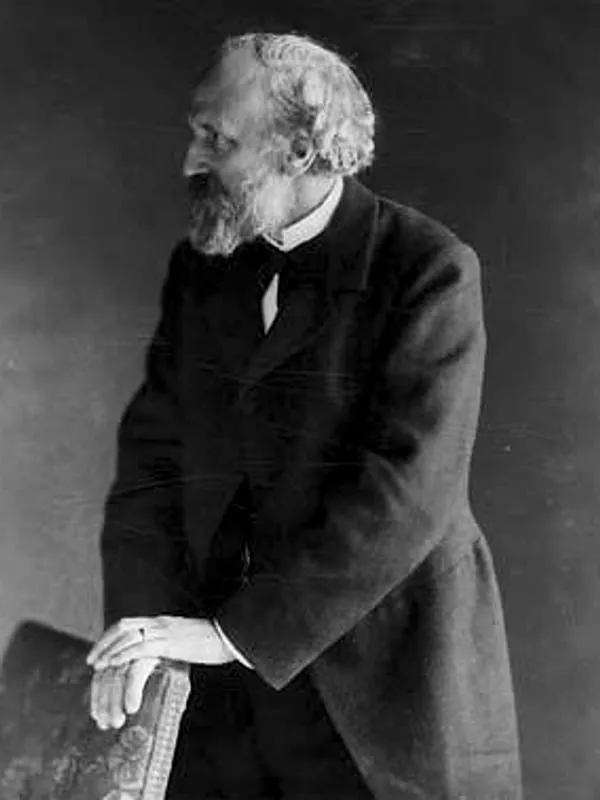
- Born:
- 7 February 1842, Saint-Omer (France)
- Died:
- 13 January 1923, Paris
- Author:
- Łukasz Skowroń
- Photo:
- autor nieznany, domena publiczna, Wikimedia Commons

Alexandre Ribot was the oldest of the leading French politicians of the war. When he took over the Ministry of Finance in August 1914 he was 72, and he had been active in politics since the days when the Third Republic was still taking shape. For two and a half years he financed France’s war effort, above all through loans rather than taxes, and negotiated joint financing of the war with the British. In March 1917, at the age of 75, he became prime minister and foreign minister. His six months in office fell in the hardest period of the war for France: the Nivelle offensive, mutinies in the army, revolution in Russia, the entry of the United States into the war and the first secret peace soundings. Ribot was not a leader equal to these events. He remained unbending, however, on war aims: he rejected any peace without Alsace and Lorraine and any offer in which he saw an attempt to split the coalition.
Before the war
Alexandre Félix Joseph Ribot (originally Ribotte) was born on 7 February 1842 in Saint-Omer in the Pas-de-Calais department. He studied law in Paris and became a respected barrister, and in 1875–1876 he worked at the Ministry of Justice. In 1878 he entered the Chamber of Deputies as a moderate republican and for the next three decades represented his home department. He specialised in finance and the budget, admired British institutions, and his wife was an American, which later eased his contacts with the Allies.
As foreign minister in 1890–1893 he was one of the architects of the Franco-Russian Alliance, the foundation of French policy until 1917. He headed the government three times between 1892 and 1895. He opposed the Radicals and anticlerical policy, though in the end he came to terms with the separation of Church and State. In 1906 he became a member of the Académie française, and from 1909 he sat in the Senate. On 9 June 1914 he formed a government for the fourth time, but the Chamber refused it confidence on its very first day, which earned the cabinet the nickname “the one-day government”. A few days later René Viviani became prime minister.
Minister of Finance
On 26 August 1914, as the French armies were falling back after the Battle of the Frontiers, Viviani reshaped his government into a “Sacred Union” cabinet of all parties. Ribot took finance in it and kept the post in the subsequent governments of Aristide Briand until March 1917. Like most politicians, he counted on a short war. He avoided raising taxes for fear of public resistance and financed expenditure through borrowing. In September 1914 the issue of short-term national defence bonds began, and thanks to extensive propaganda they sold very well. As the war dragged on, the Treasury moved on to large long-term loans: the first national loan was floated in November 1915, the second in the autumn of 1916. A growing share of spending was also covered by advances from the Bank of France, which swelled the money supply and fuelled inflation. Income tax, passed in July 1914, began to be collected only from 1916, and in the same year an extraordinary tax on war profits was introduced. According to French calculations, taxes covered only about 15 per cent of France’s wartime expenditure, roughly half the share in Britain.
France, which had lost its most industrialised departments to the occupier, also had to buy arms, coal, steel and food abroad. Ribot took part in the first inter-Allied financial conferences. In February 1915 in Paris he agreed with David Lloyd George and the Russian finance minister Pyotr Bark on the principles of joint war financing. In August 1916, at the Calais conference, he negotiated with the British Chancellor of the Exchequer, Reginald McKenna, the terms of British credits and shipments of French gold. Relations were not easy: Ribot thought the British were breaking agreements, and they thought the French wanted to live at their expense. As a member of Briand’s war committee, Ribot also spoke on matters of strategy. In December 1916, at the London conference, he demanded that the British agree at once, without consulting the military, to the plan of General Robert Nivelle. Lloyd George noted in his memoirs that he was struck by the transformation of the usually cautious Ribot, carried away by the hope of a quick victory.
Prime Minister
On 17 March 1917 Briand’s government fell, and President Raymond Poincaré entrusted Ribot with forming a cabinet. The new government was formed on 19–20 March. Ribot kept the Ministry of Foreign Affairs for himself and made the mathematician Paul Painlevé minister of war. On 21 March he presented his programme to the Chamber: the recovery of Alsace and Lorraine, reparations and guarantees, and a lasting peace founded on the rights of nations.
The most urgent matter was the Nivelle offensive. Painlevé did not believe it would succeed, and the army group commanders had doubts. According to the British official history, Ribot clearly deferred to the war minister on military matters, but he did not dare to change the plan just before the attack. On 6 April, at a war council in Compiègne, the government refused to accept Nivelle’s resignation and the offensive went ahead. Ribot is said to have remarked then that his hands were tied and that it was too late to turn back. When the attack on the Chemin des Dames on 16 April failed to bring a breakthrough, the prime minister was cautious again: he did not want to change the commander-in-chief twice within a few months, and the British fighting at Arras warned against breaking off the offensive. It ended in a compromise. On 29 April Philippe Pétain became chief of the general staff, and on 15 May he replaced Nivelle. Soon afterwards the army was swept by mutinies, and the government had to bring them under control without the Germans noticing anything.
As foreign minister, Ribot dealt with matters that were to shape post-war Europe. He changed policy towards Greece: his government, less indulgent towards King Constantine than Briand had been, brought about the monarch’s abdication in June 1917. In April, at Saint-Jean-de-Maurienne, he negotiated with the British and Italians the division of spheres of influence in Asia Minor. On 4 June he countersigned the decree establishing the Polish Army in France, justifying it by France’s “moral duty” towards the Poles. Together with the Allies, he refused passports to French socialists who wanted to travel to the international socialist conference in Stockholm.
Secret peace talks
In 1917 Ribot twice faced offers that might have opened the way to negotiations. At the end of March President Poincaré showed him a letter from Emperor Charles I, passed on by Prince Sixtus of Bourbon-Parma, in which the ruler of Austria-Hungary promised to support French claims to Alsace and Lorraine. Ribot showed the letter to Lloyd George on 11 April at Folkestone, but he believed that nothing could be done without the knowledge of the Italians, to whom the Treaty of London had promised Austrian lands. When the Italian foreign minister Sidney Sonnino rejected any concessions, the matter stalled. Historians still argue whether it was a lost chance for a separate peace with Austria-Hungary or an illusion.
In the summer of 1917 the German diplomat Baron Oskar von der Lancken, through Belgian intermediaries, invited Briand to talks in Switzerland, hinting that Germany might even give up Alsace and Lorraine. Ribot judged this a manoeuvre intended to split the coalition, consulted the Allies and refused to allow the meeting. In July, replying to Chancellor Georg Michaelis, he admitted in the Chamber that the Tsar had promised Briand support for the creation of an autonomous state on the left bank of the Rhine, but gave assurances that France was not pursuing a policy of conquest.
Fall
In the summer of 1917 Ribot’s government was losing ground. The right and part of the press, led by Georges Clemenceau, accused the interior minister Louis Malvy of indulgence towards pacifists and German agents, while the socialists regarded the prime minister as the spokesman for annexationist war aims. On 31 August Malvy resigned, and at the beginning of September the whole cabinet stepped down. Ribot was unable to form a new one, because the socialists refused to take part in it. On 12 September Painlevé became prime minister, and Ribot stayed on in his government as foreign minister. It was because of him that the socialists, for the first time since 1914, did not join the government, which marked the end of the “Sacred Union”.
In the end it was the Lancken sounding that brought him down. In October, replying in the Chamber to the emphatic “never” of State Secretary Richard von Kühlmann on Alsace and Lorraine, Ribot called the German offer a trap and suggested that it had been made to “a high political personage”. Briand felt accused of seeking a separate peace, and the socialists and part of the left charged the minister with having rejected a real chance. In the second half of October Ribot resigned, and his place was taken by Louis Barthou. Sources give different dates for his departure, from 16 to 23 October.
After the war
He never returned to government, but he sat in the Senate for the rest of his life, being re-elected for the Pas-de-Calais in 1920. He died in Paris on 13 January 1923 and was buried in his native Saint-Omer. In 1936 his war diary and correspondence were published, an important source for the history of French policy in 1914–1922.
Assessment
Historians respect Ribot as an honest and experienced statesman who in 1914–1916 secured the money France needed to wage war and kept the confidence of the markets. At the same time, his financial policy, based on loans and unbacked money rather than taxes, contributed to the franc’s post-war troubles. As prime minister he was, in the view of many authors, too old and too irresolute for a time of crisis. He deferred to Painlevé on military matters, but lacked the strength to halt in time an offensive in which he had ceased to believe. Clemenceau, his former ally, is said, according to an anecdote, to have called him “the weeping willow”. On foreign policy, opinions are divided. Some see in his distrust of the Austrian and German offers sober realism and loyalty to the Allies; others, especially historians studying the peace initiatives of 1917, reproach him for not testing any of them and argue that his rigidity on war aims contributed to the break-up of the French “Sacred Union”.
Sources
Spotted a mistake?Report an error
Mentioned in battles
(01)Often appears with
People who appear in the same events.