Italy · The Entente
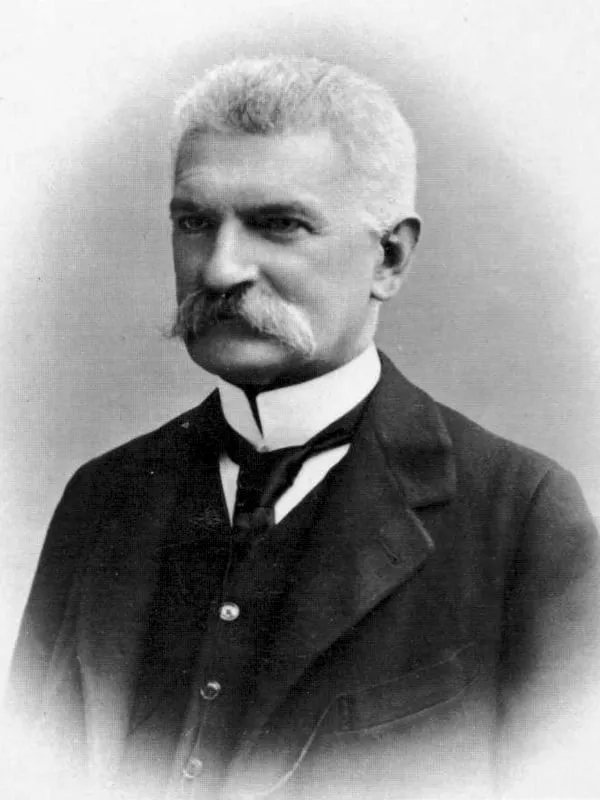
Sidney Sonnino
Minister of Foreign Affairs of Italy (1914–1919), earlier twice prime minister (1906, 1909–1910)
- Born:
- 11 March 1847, Pisa (Italy)
- Died:
- 24 November 1922, Rome
- Author:
- Natalia
- Photo:
- autor nieznany, domena publiczna, Wikimedia Commons

Baron Sidney Sonnino directed Italian diplomacy throughout the war, from November 1914 to June 1919, in three successive governments. Together with Prime Minister Antonio Salandra he bargained with both sides over the price of Italy’s participation in the war, and in April 1915 he signed with the Entente the secret Treaty of London, which promised Italy the Trentino, Trieste, Istria and part of Dalmatia. This agreement became for him the measure of everything. He defended it against the Allies, against the Yugoslav movement, against Wilson’s Fourteen Points and finally at the peace conference in Paris, where he was defeated. Honest, hard-working, stern and taciturn, he was regarded as the most stubborn diplomat of his age.
Before the war
He was born on 11 March 1847 in Pisa. His father, a Livorno banker of Jewish origin, converted to Anglicanism and in 1862 received the title of baron, while his mother was Welsh. Sidney spent part of his childhood in Alexandria in Egypt, where the family had business interests, and was brought up in the Anglican faith. After studying law in Pisa he spent several years as a diplomat in Madrid, Vienna, Berlin and Paris, where he witnessed the Paris Commune. In the early 1870s he left the diplomatic service for politics and scholarship.
He made his name with an investigation he carried out in Sicily in the spring of 1876 with his friend Leopoldo Franchetti. They toured the island on horseback, and in the book “The Peasants of Sicily” (1877) Sonnino described the poverty of the countryside, the Mafia and the system of clientelism, presenting the question of the South as a problem for the whole state. In 1880 he entered the Chamber of Deputies and sat in it for almost forty years. He advocated social reforms and universal suffrage, but also a strong state and the monarchy. In 1893–1896, as minister of finance and of the treasury in the government of Francesco Crispi, he restored the balance of the budget after a severe banking crisis. In 1897, in a celebrated article “Let us return to the Statute”, he proposed strengthening the king’s power over parliament, which his opponents took as an attack on parliamentary government. In 1901 he founded the daily “Il Giornale d’Italia”.
For years he was the main rival of Giovanni Giolitti, who governed Italy in the first decade of the 20th century. He himself twice headed the government, in 1906 and at the turn of 1909 and 1910, but neither of his cabinets lasted longer than a few months. He did not know how to win people over and make compromises, as Italian parliamentary politics required. He never married. In 1914 he was regarded as a man whose time had passed.
From the Triple Alliance to the Entente
In August 1914 Sonnino, who had for years supported the Triple Alliance, was irritated by the government’s decision on neutrality and believed that Italy should fight alongside Germany and Austria-Hungary. Within a few weeks he changed his mind. He accepted the arguments of Salandra and of the foreign minister, Antonino di San Giuliano, that neutrality gave time for rearmament and allowed the best moment to be chosen. After San Giuliano’s death and the reshaping of the government he took over the foreign ministry on 5 November 1914.
In December he opened negotiations with Vienna. Invoking Article VII of the Triple Alliance treaty, which promised Italy compensation for any acquisition by the Monarchy in the Balkans, he demanded lands inhabited by Italians and important for the country’s security, above all the Trentino, as well as a free hand in Albania, where the Italians had already occupied Vlorë. The Austro-Hungarian foreign ministers, first Leopold Berchtold and then István Burián, long delayed, and their concessions were modest and were to take effect only after the war. At the same time Sonnino sounded out the Entente. At the beginning of March 1915 he sent the ambassador in London a list of Italian conditions, and after several weeks of hard bargaining with Edward Grey, the French and the Russian foreign minister Sergey Sazonov, who defended Slav Dalmatia, Italy signed the Treaty of London on 26 April. Sonnino did not demand Fiume, today’s Rijeka, which he later bitterly regretted.
On 3 May he sent Vienna a note renouncing the alliance. When the majority of parliament sided with the neutralist Giolitti, on 13 May he resigned together with the whole government, and returned three days later when the king rejected the resignation. On 20 May he presented to the Chamber the Green Book with documents of the negotiations with Vienna, and on 23 May Italy declared war on Austria-Hungary.
Wartime diplomacy
Sonnino treated the war as an Italian war, waged for specific aims on the Adriatic, and not as a common crusade of the Entente against Germany. For this reason Italy declared war on Turkey only in August 1915, and on Germany in August 1916, and then under strong pressure from Paris and London, when Sonnino transmitted through Switzerland a declaration of a state of war. At the end of 1915 Italy formally acceded to the Allies’ undertaking not to conclude a separate peace. Sonnino was reluctant to send troops beyond the Austrian front, with the exception of Albania, which he considered a sphere of Italian interests. In June 1917 he brought about the proclamation of an Italian protectorate over Albania, which outraged the Allies, the Greeks and the Serbs, while three ministers in Rome protested that it had been done without the cabinet’s consent.
When Russia, France and Britain were dividing Turkey among themselves, Sonnino demanded a share for Italy. At the Saint-Jean-de-Maurienne conference in April 1917 he obtained the promise of a zone in Anatolia including Smyrna, which Russia, however, never ratified. At the same conference he refused any revision of the Treaty of London and any separate peace with Austria, not knowing that Emperor Karl was just then conducting secret talks with France through Prince Sixtus. Under Boselli and, from the autumn of 1917, Vittorio Emanuele Orlando, Sonnino was one of the strongest men in the government, although more and more politicians accused him of rigidity. After the defeat at Caporetto he took part in the Rapallo conference, at which the Allies promised Italy military aid.
In the last year of the war Sonnino’s greatest problem became the Slav question. The Treaty of London assumed the existence of a weakened Austria-Hungary, whereas the break-up of the Monarchy and the creation of a state of Serbs, Croats and Slovenes, which itself laid claim to Istria and Dalmatia, were becoming ever more real. Wilson’s programme of self-determination, and especially the ninth of the Fourteen Points, which called for Italy’s frontiers to follow clearly recognisable lines of nationality, undermined Rome’s claims. Orlando and some liberal politicians wanted an understanding with the Yugoslavs. Sonnino did not attend the April Congress of Oppressed Nationalities in Rome and opposed recognition of Yugoslav aspirations to the end, and when in September 1918 the government finally expressed its support for them, he gave way only under pressure.
Paris
At the peace conference Sonnino was, alongside Orlando, Italy’s chief delegate. He demanded the fulfilment of the Treaty of London and, under the pressure of public opinion, Fiume as well, which in London had been assigned to Croatia. He justified this sometimes by the letter of the treaty and sometimes by the principle of nationality, since the city had an Italian majority, which his opponents pointed out as inconsistency. Orlando was ready to give up Dalmatia in exchange for Fiume; Sonnino was not. Everything divided him from Woodrow Wilson: views, temperament and understanding of diplomacy. On 23 April 1919 the President published an appeal to the Italian people in which he explained why he could not agree to Rome’s demands. The next day Orlando and Sonnino left the conference and returned to Rome, where parliament and the street gave them an ovation. When they returned to Paris on 7 May, it turned out that in their absence the Allies had settled the questions of colonies and mandates without them. The Adriatic question remained unresolved. On 19 June the Chamber of Deputies brought down Orlando’s government, and Sonnino left the ministry with it.
After the war
In the elections of November 1919, the first held under proportional representation, for which he had himself campaigned for years, Sonnino no longer stood. In October 1920 he became a senator, but he never spoke in the Senate. He devoted himself to studies of Dante. He regarded fascism with cautious sympathy, although he doubted whether it would cope with the country’s economic problems. He died in Rome on 24 November 1922, a month after the March on Rome, and was buried on his estate, the castle of Romito at Quercianella on the sea near Livorno.
Assessment
Historians agree in crediting Sonnino with honesty, diligence and consistency, qualities rarer among Italian politicians of the time. To his defenders he was a realist who at a difficult moment bargained for Italy the most favourable terms that could be obtained and secured for it the frontier on the Brenner and Trieste. Critics, among them his biographer Geoffrey Haywood, who entitled his biography “Failure of a Dream”, accuse him of thinking in terms of 19th-century cabinet diplomacy and of failing to understand the strength of national movements and the changes brought by the war, the Russian revolution and America’s entry. His intransigence towards the Yugoslavs and Wilson contributed to Italy leaving the peace conference embittered, with a sense of a “mutilated victory” that the nationalists and fascists exploited. Some Italian scholars point out, however, that disappointment was built into the Treaty of London itself, which promised lands that after the break-up of Austria-Hungary could no longer be given to Italy without violating the principle of self-determination.
Sources
Spotted a mistake?Report an error
Mentioned in battles
(01)Often appears with
People who appear in the same events.
On the timeline
(50)The 40 most important of 50 events. All tagged “Sidney Sonnino” (21) →